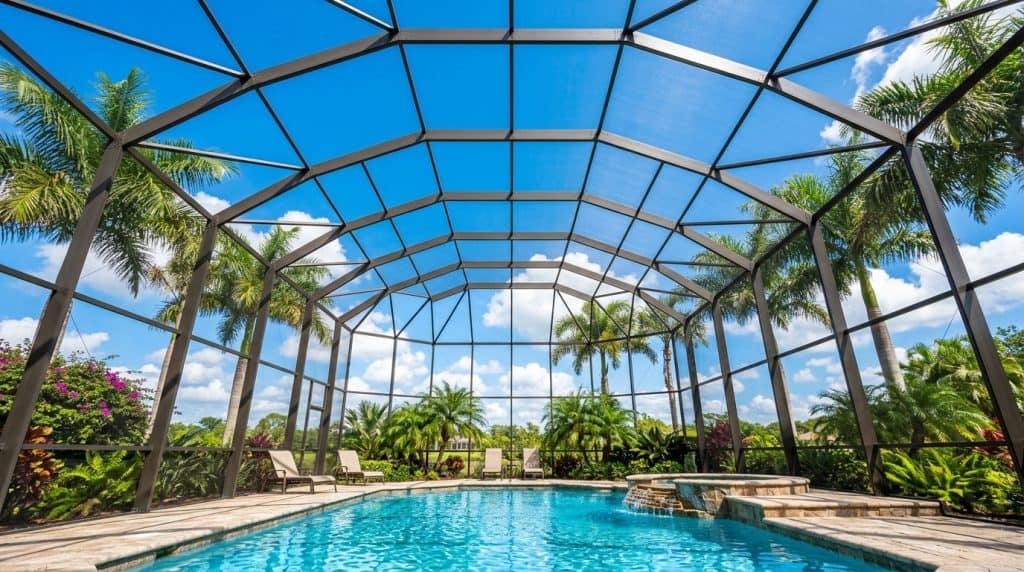
In Florida’s subtropical climate, an aluminum screen enclosure—affectionately known as a pool cage—is the indispensable shield of backyard living. Beyond preventing leaves, pine needles, and biting midges from invading swimming water, pool cages act as first-line barriers against intense solar radiation. When hurricanes and severe summer storms breach screen panels, prompt maintenance is crucial to protect your entire outdoor living space.
The Crucial Role of Screen Enclosures in Florida Pool Ownership
Screen enclosures represent one of the most prominent architectural features of homes throughout Hillsborough, Pinellas, and Pasco counties. When property owners rely on full-service weekly pool maintenance, an intact pool cage cuts organic debris accumulation by over eighty percent, drastically reducing chlorine demand and preventing filter clogs. However, continuous exposure to blistering heat, coastal salt air, and torrential seasonal wind gusts causes screen mesh to weaken and aluminum fasteners to corrode over time.
Investing in timely pool cage repair tampa homeowners can count on preserves structural equity and prevents minor screen tears from blossoming into widespread panel blowouts during coastal storms. Knowing when to patch an isolated tear versus executing a complete re-screening project ensures your lanai remains safe, insect-free, and structurally resilient.
Recognizing Common Enclosure Failures: Mesh, Spline, and Fasteners
A swimming pool cage consists of three interdependent components: the extruded aluminum framing, the vinyl-coated fiberglass mesh, and the rubber spline that locks the screen into aluminum channels. Understanding how each component deteriorates helps homeowners identify failure points early:
- Mesh Brittleness and Sun Rot: Standard 18×14 fiberglass screen mesh typically lasts seven to ten years under Florida’s aggressive ultraviolet rays. As plasticizers evaporate, the fibers turn brittle, developing a silvery sheen before tearing under light finger pressure.
- Spline Dry-Rot and Pull-Out: Rubber spline seals the screen tension inside frame grooves. Over years of thermal cycling, spline shrinks, dries out, and cracks, allowing entire screen panels to blow free during moderate afternoon thunderstorms.
- Fastener Corrosion (Galvanic Reaction): Traditional carbon steel screws connecting aluminum cage members corrode rapidly in Florida’s humid, salty atmosphere. Rusted screws stain pavers with orange streaks and compromise structural load capacity during tropical weather.
- Algae and Mildew Infestation: The moist underside of aluminum framing and lower kickplates provides an ideal substrate for green algae and black mold, which discolors finishes and degrades sealant joints.
Repair Strategies: Patching, Splining, and Full Re-Screening
For minor, isolated tears caused by accidental impacts or wildlife claws, self-adhesive fiberglass screen repair patches provide an effective interim fix. However, when multiple roof panels tear simultaneously, or when screen fabric pulls away from channel corners, localized patching cannot restore structural tension. Attempting to force aged, brittle mesh back into aluminum channels invariably tears adjacent fibers.
A comprehensive re-screening involves cutting away all existing mesh, clearing out deteriorated rubber spline, inspecting structural aluminum beams, and rolling new high-tensile mesh into place using specialized rolling wheels. Many homeowners choose to upgrade roof panels to super-screen or 20×20 no-see-um mesh, which resists wind tears, blocks tiny biting gnats, and offers superior tensile strength capable of withstanding falling palm fronds and heavy storm debris.
Storm Preparation and Emergency Hurricane Safeguards
When tropical storms tear enclosure screens and deposit landscape debris into your basin, follow our actionable post-hurricane pool cleanup checklist. When major named storms or hurricanes threaten Tampa Bay, the greatest hazard to pool cages is wind resistance caused by intact screen panels acting as giant sails. Severe wind shear can twist aluminum frame posts or rip anchor brackets right out of concrete pool decks.
Many enclosure specialists recommend pre-cutting or releasing lower corner screen panels prior to major Category 3 or higher hurricanes. By creating pressure-release pathways for hurricane-force gusts to flow freely through the cage, wind pressure on the structural aluminum skeleton drops substantially, preventing total enclosure collapse and saving thousands of dollars in frame replacement costs.
| Screen Material | Average Lifespan | Pest Protection | Wind & Tear Resistance |
|---|---|---|---|
| Standard 18×14 Fiberglass | 7 – 9 Years | Standard (Mosquitoes/Flies) | Moderate (Baseline) |
| 20×20 “No-See-Um” Mesh | 8 – 10 Years | Maximum (Blocks Tiny Midges) | High |
| Polyester Super Screen | 15 – 20+ Years | Standard / High | Superior (Puncture & Pet Resistant) |
Compliance with Florida Residential Pool Safety Standards
Lanai screen doors must comply with self-closing and self-latching standards mandated under Florida’s Residential Swimming Pool Safety Act. In countless Central Florida homes, the screened enclosure serves as the legally recognized exterior safety barrier protecting children from unsupervised pool access. Enclosure doors must swing outward away from the pool basin and feature self-closing hydraulic hinges with latching mechanisms positioned at least fifty-four inches above the deck threshold.
Intact screen enclosures significantly reduce organic load and chlorine burn-off during extreme weather; read more in our Florida summer pool maintenance guide. Maintaining tensioned screen panels and properly calibrated safety hardware ensures both code compliance and effortless outdoor relaxation.
Technological Advances in Hurricane-Rated Enclosure Engineering
The manufacturing of pool cage enclosures is progressing with high-performance marine-grade stainless steel fasteners, self-healing polymer coatings, and aerodynamic portal vents. By pairing heavy-gauge aluminum extrusions with UV-stabilized polyester yarns, Tampa Bay homeowners can build pool cages that withstand coastal gale forces while preserving unobstructed panoramas of Florida’s legendary tropical sunsets.