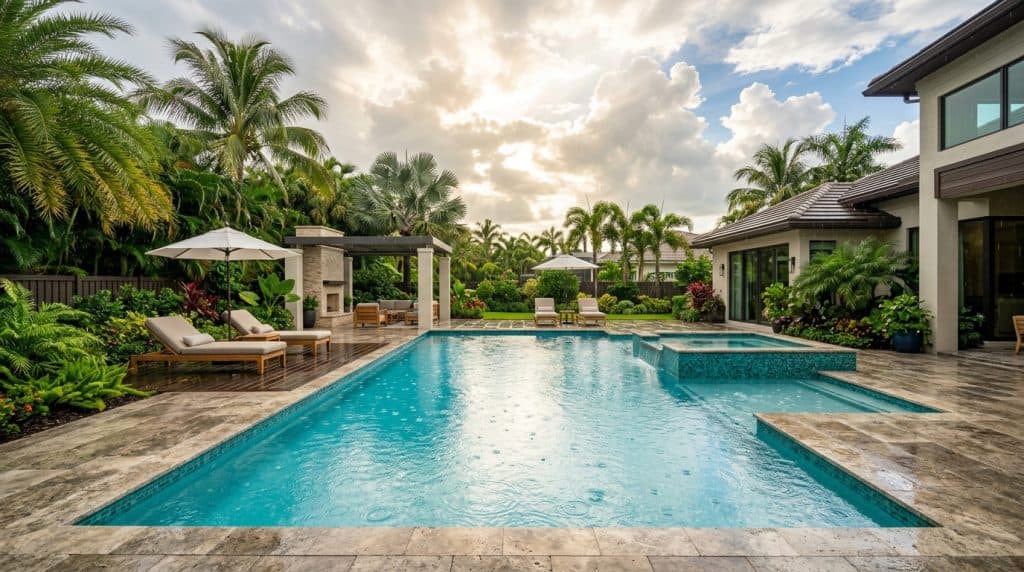
Florida’s summer brings a relentless combination of scorching UV rays and torrential downpours, a unique challenge for any pool owner. These extreme conditions wreak havoc on water chemistry, accelerate equipment wear, and invite persistent algae blooms. Understanding these forces is crucial for maintaining a pristine backyard oasis, ensuring your investment remains a source of joy rather than frustration.
Understanding Florida’s Summer Pool Chemistry Challenges
The relentless Florida sun is arguably the most significant factor affecting your pool’s chemistry during the summer months. High temperatures directly accelerate the degradation of chlorine, leading to what is commonly known as chlorine burn off Florida heat. This means your sanitizing agents dissipate much faster than in cooler climates, requiring more frequent testing and adjustment. Furthermore, intense UV radiation also contributes to this breakdown, reducing the effectiveness of unstabilized chlorine almost immediately. Without adequate chlorine, your pool becomes a fertile breeding ground for bacteria and algae, turning crystal-clear water murky overnight. Regular monitoring of your Free Available Chlorine (FAC) and Cyanuric Acid (CYA) levels is non-negotiable to combat this rapid depletion, often necessitating daily checks during peak heatwaves. For homeowners who find themselves struggling with these constant adjustments, a professional weekly pool service and chemical maintenance plan can provide invaluable peace of mind, ensuring optimal levels are consistently maintained without the daily hassle.
The Impact of Heavy Rains on Pool Water Balance
While the sun depletes your chemicals, Florida’s infamous afternoon thunderstorms present an entirely different set of problems. Heavy rainfall introduces a significant volume of fresh, often acidic, water into your pool, effectively diluting your carefully balanced chemistry. This sudden influx dramatically lowers alkalinity and pH, making your sanitizer less effective and potentially corrosive to pool surfaces and equipment. The sheer volume of water can also cause your pool to overflow, washing away critical chemicals and debris. Learning how to balance pool water after heavy rain Florida is a crucial skill for any local pool owner. It typically involves draining excess water (if necessary), then re-testing and adjusting pH, alkalinity, and calcium hardness before reintroducing sanitizer. Ignoring these post-rain adjustments can lead to rapid algae growth, cloudy water, and long-term damage to your pool’s infrastructure. It’s a cyclical battle, where one extreme follows another, demanding constant vigilance and precise chemical management. When heavy summer storms dilute sanitizer levels, aggressive organisms can take hold, requiring specialized protocols for eradicating stubborn black algae and yellow mustard algae before they penetrate plaster.
Chlorine Burn-Off and UV Degradation
The intensity of the Florida sun, particularly during summer, creates a perfect storm for rapid chlorine depletion. Ultraviolet (UV) radiation from the sun reacts with chlorine, breaking it down into an inactive form. This process, known as photolysis, can reduce free chlorine levels by as much as 90% in just a few hours on a sunny day if not protected. This is why Cyanuric Acid (CYA), often referred to as conditioner or stabilizer, is so vital in Florida pools. CYA acts like a sunscreen for chlorine, shielding it from the sun’s destructive UV rays and significantly extending its lifespan in the water. However, too much CYA can also be detrimental, leading to ‘chlorine lock’ where the chlorine is over-stabilized and becomes less effective at sanitizing. Maintaining CYA levels between 30-50 ppm is generally recommended for outdoor pools in our climate, allowing for effective sanitization without hindering chlorine’s efficacy. Regularly testing for both free chlorine and CYA is essential to prevent fast 48-hour green pool recovery service scenarios that often stem from inadequate sanitization.
Proactive Strategies for Summer Pool Maintenance
Effective florida summer pool maintenance is less about reacting to problems and more about preventing them. This proactive approach saves time, money, and minimizes the stress associated with unexpected pool issues. One of the most fundamental proactive steps is consistent testing and adjustment of water chemistry. During the summer, daily or every-other-day testing of free chlorine and pH is highly advisable. Alkalinity, calcium hardness, and CYA can be tested weekly or bi-weekly. Keeping a detailed log of your readings and chemical additions can help you identify patterns and anticipate your pool’s needs. Furthermore, ensuring your filtration system is running optimally is paramount; a clean, efficient filter is your first line of defense against particulate matter and microscopic organisms that thrive in warm water. Don’t wait for issues to escalate; addressing small imbalances immediately prevents them from becoming major headaches.
Combating Algae: Prevention is Key
Algae, the bane of every Florida pool owner’s existence, thrives in warm, nutrient-rich water with insufficient sanitation. Preventing summer pool algae prevention Tampa Bay requires a multi-pronged approach. First and foremost, maintaining consistent and adequate free chlorine levels (typically 2-4 ppm) is critical. Regular brushing of pool walls and floor helps dislodge any clinging algae spores, allowing the filtration system to capture them and the sanitizer to destroy them. Backwashing or cleaning your filter frequently during the summer ensures it’s operating at peak efficiency, removing the microscopic food sources that algae depend on. Consider using a preventative algaecide, especially during periods of heavy rain or when you anticipate a slight dip in chlorine levels. Even a tiny patch of algae can quickly bloom into a full-blown green pool nightmare under the right conditions, so vigilance is absolutely essential. A proactive approach to these elements dramatically reduces the likelihood of an algae outbreak. Constantly adding stabilized chlorine pucks during hot months often creates a chemical imbalance known as cyanuric acid chlorine lock in Florida pools, rendering free chlorine completely ineffective.
Maintaining Filtration and Circulation
Your pool’s filtration and circulation system are its heart and lungs, working tirelessly to keep the water clean and clear. During the Florida summer, these systems need to work harder and longer. It is generally recommended to run your pool pump for at least 8-12 hours per day, and often longer during peak heatwaves or after heavy usage. This ensures that all the water in your pool passes through the filter multiple times, removing debris, contaminants, and microscopic organisms. Regular cleaning of skimmer and pump baskets is also vital to prevent blockages that can reduce flow and strain your pump. Backwashing sand or DE filters, or cleaning cartridge filters, according to manufacturer recommendations or when pressure rises, ensures optimal filtration efficiency. Neglecting your filtration system can lead to cloudy water, algae growth, and even costly repairs, underscoring the importance of proper maintenance for your entire system, including timely professional pool pump and motor repair in Tampa Bay when issues arise.
Advanced Tips for Florida Pool Owners
Beyond the basics, there are several advanced strategies that Florida pool owners can employ to further safeguard their investment during the challenging summer months. One often-overlooked aspect is the impact of pool covers. While not always practical for daily use, a solar cover can significantly reduce chlorine loss due to UV radiation and evaporation, helping to stabilize water temperature and chemical levels. For pools with automatic chemical feeders, ensure they are calibrated correctly and regularly checked for proper operation, as malfunctions can lead to either under-sanitization or over-chlorination. Furthermore, understanding your pool’s specific needs based on its plaster type, surrounding landscaping, and usage patterns can help you tailor your maintenance routine. For instance, pools surrounded by lush landscaping may require more frequent skimming and filter cleaning due to falling leaves and pollen. These nuanced considerations contribute significantly to maintaining a pristine pool environment.
Addressing Evaporation and Water Loss
Florida’s intense heat and consistent breezes contribute to significant water evaporation, even during the rainy season. While not as dramatic as a leak, cumulative evaporation can lead to substantial water loss over time, which in turn concentrates dissolved solids and alters chemical balance. Regularly checking your water level and topping it off is crucial. For pools with automatic fillers, ensure they are functioning correctly. If you suspect water loss beyond normal evaporation, it’s critical to investigate further. A simple bucket test can help differentiate between evaporation and a leak. Place a bucket of water on a step in your pool, mark the water level inside and outside the bucket, and check after 24 hours. If the pool water level drops more than the bucket’s, you likely have a leak. Addressing leaks promptly is essential to prevent structural damage and excessive water bills, often requiring electronic acoustic pool leak detection to pinpoint the source accurately.
The Value of Professional Pool Care
While DIY pool care is rewarding for some, the complexities of Florida’s climate often make professional assistance an invaluable resource. Expert technicians possess a deep understanding of local water chemistry, common issues like persistent algae strains, and the nuances of various pool equipment. They can identify subtle problems before they escalate, perform precise chemical adjustments, and conduct thorough equipment inspections. Opting for local pool maintenance services in Tampa means having a consistent, trained eye on your pool, ensuring it remains healthy and functional year-round. This is especially beneficial during the summer when rapid changes in weather demand constant vigilance. Professional care frees up your time, reduces stress, and ultimately prolongs the life of your pool, allowing you to simply enjoy your backyard oasis without the constant worry of chemical imbalances or equipment failures. When tropical depressions threaten the Gulf Coast, follow our comprehensive post-hurricane and storm pool recovery checklist to safeguard your circulation pump and pool shell.
As Florida homeowners continue to invest in their backyard pools, understanding the evolving landscape of energy efficiency and preventative maintenance becomes increasingly vital. Upcoming regulations and advancements in smart pool technology promise even greater control and efficiency, but the foundational principles of diligent care remain timeless. Proactive maintenance, especially in anticipation of hurricane season and its potential impact on pool infrastructure, ensures your pool is not only beautiful but resilient, ready to provide enjoyment for years to come.