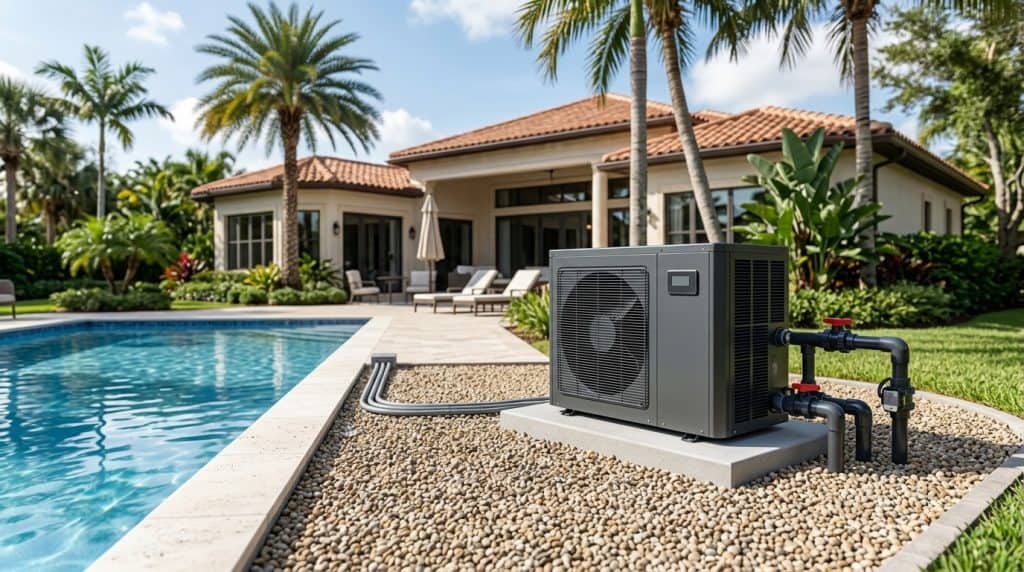
Florida winters present a distinct paradox for residential swimming pool owners across Tampa Bay. While ambient daytime temperatures frequently hover in the low seventies, dropping nighttime mercury quickly drains thermal energy from unprotected water bodies, transforming an inviting backyard oasis into an uncomfortably brisk basin that sits abandoned for months.
Understanding the Winter Heating Challenge in Florida’s Coastal Climate
Maintaining swimmable water between November and March requires a heating system designed around local humidity patterns, seasonal utility rates, and specific household usage habits. Because pool equipment operates alongside hydraulic circulation components, ensuring that your installation coordinates seamlessly with professional pool pump and motor repair in Tampa Bay is fundamental to avoiding premature mechanical strain and unnecessary electricity consumption throughout the colder months.
Unlike northern climates where pools undergo complete winterization and structural shutdown, Tampa Bay pools remain fully operational year-round. This continuous runtime means that heating calculations must balance immediate heating capacity with monthly operational budgets, taking into consideration local ambient air temperature shifts between daytime warmth and brisk evening bay breezes. Running a heat pump during cooler months requires consistent hydraulic flow; discover how to pair heaters with energy-efficient variable speed pool pumps.
How Swimming Pool Heat Pumps Operate in Florida Weather
Electric heat pumps function on refrigeration thermodynamics rather than direct heat generation. Instead of burning a fuel source or utilizing resistive electric heating elements, a heat pump utilizes a high-efficiency scroll compressor and fan to extract ambient thermal energy from the humid surrounding Florida atmosphere, transferring that concentrated warmth directly into the circulating water stream.
Because heat pumps capture existing atmospheric heat rather than generating it from scratch, they achieve exceptional Coefficient of Performance (COP) ratings ranging between 5.0 and 6.5. This efficiency metric indicates that for every single unit of electrical energy consumed by the compressor, the system outputs between five and six units of heating energy into the pool. For homeowners across Pinellas and Hillsborough counties, this translates into an economical solution when determining the best pool heater for florida residences where steady, weekend-ready water temperatures are desired.
However, heat pump efficiency diminishes significantly when ambient air temperatures drop below fifty degrees Fahrenheit. While modern units featuring titanium heat exchangers continue to operate efficiently down to forty-five degrees, they heat water gradually at a rate of one to two degrees Fahrenheit per hour, requiring planned runtime schedules rather than providing instant thermal gratification.
Gas Pool Heaters: Raw Power and On-Demand Performance
Natural gas and propane pool heaters operate on combustion principles, passing circulating water directly through a copper or cupro-nickel finned heat exchanger positioned over an intense flame burner tray. This design delivers enormous thermal output measured between 200,000 and 400,000 BTUs per hour, completely independent of ambient air conditions or seasonal humidity levels. Budgeting for winter electrical demand and routine service visits is simple with our localized weekly pool service pricing guide for Tampa Bay.
For pool owners in coastal communities like coastal pool care in St. Petersburg who frequently entertain guests on spontaneous notice or who operate attached spillover spas, gas heaters offer unrivaled performance. A quality gas heater can elevate a five-hundred-gallon spa from seventy degrees to one hundred and four degrees in under twenty-five minutes, regardless of whether a brisk cold front has swept across Tampa Bay.
The principal drawback of gas heating centers on fuel economics. Propane delivery and natural gas consumption generate significantly higher operating costs per heating cycle than electric heat pump alternatives. Heating an entire sixteen-thousand-gallon swimming pool with propane during a persistent January cold snap can rapidly accumulate substantial monthly fuel bills, making whole-pool continuous heating financially impractical for many homeowners.
Head-to-Head Comparison: Heat Pumps vs. Gas Heaters
| Performance Factor | Electric Heat Pump | Dedicated Gas Heater |
|---|---|---|
| Heating Speed | Gradual (1°F – 2°F per hour) | Rapid (2°F – 5°F per hour on pools, fast on spas) |
| Average Monthly Operating Cost | $75 – $180 / month | $350 – $750+ / month (continuous pool heating) |
| Dependence on Ambient Air | High (requires air above 45°F – 50°F) | None (heats equally well in freezing weather) |
| Equipment Lifespan | 10 to 15 years with titanium exchanger | 6 to 10 years (corrosive flue condensation risk) |
| Ideal Primary Application | Maintaining steady pool temperature daily | Rapid hot tub heating & weekend-only warming |
Determining the Right Solution for Your Lifestyle
Selecting the optimal heating architecture depends primarily on whether your pool features an attached hot tub and how your family utilizes the backyard environment throughout the year. Homeowners living in areas like Pinellas County pool cleaning in Clearwater who swim regularly for daily exercise or family recreation consistently benefit from the sustained, economical baseline warmth delivered by a titanium heat pump.
Conversely, if your swimming pool is paired with a deeply seated concrete spa that you utilize primarily during crisp winter evenings, a gas heater—or an increasingly popular hybrid dual-system utilizing a heat pump for the main pool and a compact gas heater for the spa—provides the ultimate balance of rapid convenience and long-term energy stewardship. Homeowners operating saline generators should select titanium heat exchangers to prevent galvanic corrosion, as explained in our review of saltwater vs chlorine pools in Tampa Bay.
Advancements in variable-capacity inverter compressors and automated solar thermal diverter controls continue to push seasonal heating efficiency to unprecedented levels across the Gulf Coast, ensuring Florida pool owners enjoy prolonged swimming seasons with optimal energy management.