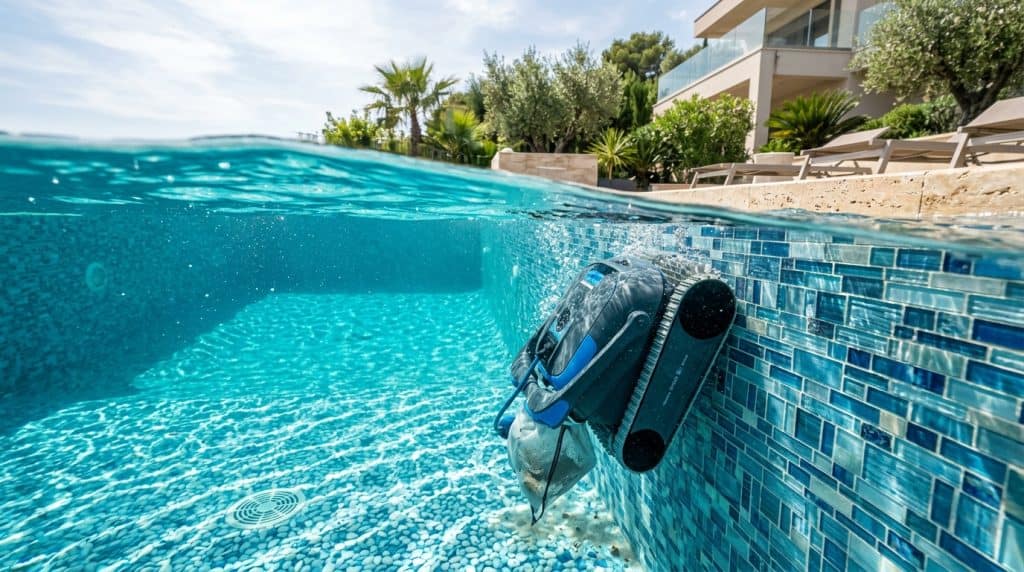
As a certified pool operator (CPO) working in the heart of the Tampa Bay area, I have seen every imaginable backyard pool scenario. From the historic, oak-draped estates of Old Northeast in St. Pete to the sprawling, screen-enclosed oases of Brandon and Riverview, Florida pools face a relentless onslaught of environmental challenges. We deal with daily summer thunderstorms, pollen storms that turn water yellow, invasive palm fronds, and—most frustratingly—that ultra-fine, powdery Florida sugar sand.
When pool owners ask me how to keep their water pristine without spending every Saturday morning manual-vacuuming, the conversation inevitably turns to automatic pool cleaners. Specifically, it is a battle between the traditional suction-side sweep and the modern robotic cleaner.
In this comprehensive guide, we are diving deep into the ultimate backyard battleground: Robotic Pool Cleaners vs. Suction-Side Vacuums. We will look at the real-world performance metrics, energy bills, equipment longevity, and maintenance headaches to help you make the absolute best choice for your piece of Florida paradise.
—
The Florida Pool Ecosystem: Why Our Pools Are Different
Before we look at the equipment, we must understand the unique adversaries your pool cleaner faces in the Sunshine State. If you lived in a dry climate like Arizona, your main issue would be wind-blown dust. In the Northeast, it is fall leaves. In Tampa Bay, we get a brutal combination of everything:
- The Silica Silt (Sugar Sand): Our coastal soil is incredibly fine. This sand easily bypasses cheap pool cleaners, blowing right back out of the return jets or settling into the deepest corners of your plaster.
- The Oak and Pine Onslaught: If you have live oak trees or slash pines near your property, your pool is constantly pelted with small, acidic leaves, acorns, and sharp pine needles that clog traditional sweep throat inlets.
- Extreme Heat and UV Radiation: High water temperatures accelerate algae growth and degrade pool plastics. Your pool cleaner needs to be tough enough to survive 90-plus degree water and relentless UV exposure.
- Frequent Storm Surges: Summer afternoons in Tampa mean torrential downpours that wash organic debris, lawn fertilizer, and soil directly into your pool water.
To keep your water crystal clear and chemically balanced under these conditions, you need a cleaning system that works with your pool’s hydraulics, not against them. That is where our two contenders come in.
—
Contender 1: Suction-Side Vacuums (The Traditional Workhorses)
Suction-side pool cleaners have been a staple of Florida backyards for decades. These units attach directly to your pool’s skimmer or a dedicated suction line. They rely entirely on your main pool filtration pump to pull them along the pool floor as they vacuum up debris.
How They Work in a Florida Pool
When your main pool pump turns on, it creates a vacuum through the suction line. This suction pulls water through the cleaner, activating a mechanical drive assembly (either a diaphragm, hammer, or internal gears) that causes the unit to “hop” or roll across the pool surface. The debris sucked up by the cleaner goes directly through the hose, into your pump basket, and ultimately into your main pool filter (cartridge, sand, or DE).
The Downside: Suction Sweep Wearing Out Pool Pump
While suction-side cleaners are affordable upfront, they carry a hidden, long-term cost that many pool owners do not realize until it is too late. As a CPO, one of the most common mechanical failures I diagnose is a burned-out, noisy pool pump motor caused by a restricted suction line.
When you plug a suction cleaner into your skimmer, you are forcing your pump to pull water through dozens of feet of narrow, corrugated plastic hose and a small intake throat on the cleaner head. This creates massive hydraulic resistance (head pressure). This constant strain can lead to several severe issues:
- Cavitation: When the pump cannot get enough water, vacuum bubbles form around the impeller. This sounds like the pump is pumping gravel and will quickly warp the impeller and damage the shaft seal.
- Motor Overheating: The restricted water flow prevents the pump motor from cooling down efficiently, significantly shortening the lifespan of your expensive variable-speed or single-speed pump motor.
- Reduced Skimming: If your suction cleaner is plugged into the skimmer, you lose your surface skimming action. Floating leaves and pollen settle to the bottom before they can be skimmed, making the pool look dirtier overall.
If you are worried about a suction sweep wearing out pool pump components prematurely, you are right to be concerned. In the heat of a Florida summer, a pump running under high stress is a ticking time bomb.
—
Contender 2: Robotic Pool Cleaners (The Autonomous Revolution)
Robotic pool cleaners are completely independent of your pool’s filtration system. They run on safe, low-voltage electricity (usually 24 volts) from an outdoor power supply or a rechargeable onboard battery. They have their own internal electric motors, drive tracks, and built-in filtration bags or canisters.
The Rise of the Cordless Robotic Pool Cleaner
In recent years, the industry has seen an explosion of battery-powered, cordless models. When evaluating a cordless robotic pool cleaner vs polaris pressure-side or traditional corded units, the convenience factor is unmatched. Cordless robots eliminate the tangled cords that have plagued pool owners for years. You simply charge the unit, drop it in the pool, and let it run its cycle. Once done, you use a hook to retrieve it, clean the filter basket, and plug it back in for the next round.
However, when comparing a cordless robotic pool cleaner vs polaris traditional pressure sweeps, you must weigh the convenience against run-time limitations. While a pressure sweep can run as long as your pool pump is on, cordless robots typically have a battery life of 90 to 150 minutes per charge. For pools with moderate debris, this is plenty of time. But if you have heavy leaf drops, you may find yourself recharging the robot multiple times a day.
—
Head-to-Head: Dolphins vs. Polaris Robotic Cleaner in Florida
If you decide to go the robotic route, two brands dominate the Florida market: Maytronics Dolphin and Polaris. Both manufacturers make exceptional machines, but they handle our specific Florida pool challenges in slightly different ways.
When comparing dolphins vs polaris robotic cleaner florida performance, we have to look at how they handle our unique debris profiles:
| Feature / Challenge | Maytronics Dolphin (e.g., Nautilus CC, Sigma) | Polaris Robotic (e.g., VRX iQ+, Freedom) |
|---|---|---|
| Scrubbing Action | Active brushing (brushes rotate 2x faster than the tracks) to scrub off stubborn green algae. | Stiff, rotating scrubbers that excel at breaking up stuck-on dirt and fine silt. |
| Debris Navigation | CleverClean™ technology maps the pool floor to ensure complete coverage. Excellent at climbing walls. | Vortex vacuum technology and 4WD tracks. Outstanding at climbing steps and traversing deep-end slopes. |
| Filter Accessibility | Top-access filter baskets with multi-layer filtration options. Easy to spray clean. | Easy-access canister filters. Canister size is often larger, which is great for heavy leaf falls. |
In the debate of dolphins vs polaris robotic cleaner florida, the choice often comes down to your pool’s finish and surrounding foliage. If you have a screen-enclosed pool with plaster finish that is prone to fine silt and light algae spots, the Dolphin’s rapid active scrubbing brush is incredibly efficient. If you have an open pool surrounded by live oaks, palms, and pines, the massive debris canister and aggressive 4WD climbing power of a Polaris robotic cleaner often handle the heavy organic load with fewer clogs.
—
The Silt Test: Robotic Pool Cleaner Fine Sand Pickup
One of the biggest complaints from St. Petersburg and Tampa pool owners is the accumulation of fine sand at the bottom of the pool. Whether it is blown in from the beach, tracked in by dogs and kids, or washed in during a storm, this sand is incredibly difficult to capture.
This is where the difference in filtration really shines. A standard suction cleaner pulls sand into your main pool filter. If your sand filter needs its sand replaced, or if your cartridge filter has a slight tear in the pleats, that fine sand will pass right through the system and shoot back into the pool.
An independent robotic pool cleaner fine sand pickup capability is superior for several reasons:
- Ultra-Fine Filtration Cartridges: High-end robotic cleaners come with interchangeable filter panels. You can swap out the standard mesh leaf basket for ultra-fine pleated cartridges. These cartridges can filter down to 2 to 5 microns—fine enough to trap pollen, plaster dust, and microscopic silica sand.
- Localized Trapping: Because the robot traps the sand inside its own onboard canister, there is zero chance of the sand bypassing your pool’s main filtration system and returning through the pool returns.
- Saves Filter Run-Time: You don’t have to run your main pool pump at high RPMs for hours just to vacuum up a patch of sand. The robot does it using a fraction of the energy.
If your backyard has constant issues with silt, looking for a model specifically rated for superior robotic pool cleaner fine sand pickup is a game-changer for your sanity and your bare feet.
—
Diagnostic Checklist: Which Cleaner is Right for Your Tampa Bay Pool?
To help you decide between these two cleaning technologies, walk through this quick diagnostic checklist based on your specific pool setup:
Choose a Suction-Side Cleaner If:
- [ ] You are on a tight upfront budget (typically $150 to $400).
- [ ] Your pool is fully screen-enclosed with almost zero leaf or twig debris.
- [ ] You have a brand new, highly efficient variable-speed pump that can handle low-RPM suction cleaning without straining.
- [ ] You don’t mind manually brushing the steps and sun shelves (suction cleaners rarely climb steps successfully).
Choose a Robotic Cleaner (Corded or Cordless) If:
- [ ] Your pool is surrounded by trees and gets a heavy load of leaves, acorns, or pine needles.
- [ ] You fight a constant battle against fine Florida sugar sand or yellow pollen.
- [ ] You want to save money on your monthly electric bill by running your main pool pump at lower, energy-saving speeds.
- [ ] You want automated waterline and tile-line scrubbing to prevent unsightly organic rings.
- [ ] You want to protect your pool equipment and avoid the risk of a suction sweep wearing out pool pump motors.
For most Tampa Bay homeowners, the long-term energy savings, superior water clarity, and protection of their primary pool equipment make the investment in a robotic pool cleaner the clear choice.
—
The Professional CPO Verdict
In the “True Florida Showdown,” the modern robotic pool cleaner takes the crown. While suction-side vacuums served us well for decades, the technology has simply been outpaced. The strain a suction cleaner puts on your filtration system, combined with its inability to filter out the finest sand without stressing your main pump, makes it an outdated choice for modern, energy-efficient backyards.
Investing in a high-quality robotic cleaner—whether you choose the unmatched convenience of a cordless robotic pool cleaner vs polaris classic pressure units, or go head-to-head with the filtration power of dolphins vs polaris robotic cleaner florida models—will keep your water cleaner, your chemical consumption lower, and your expensive pool pump running smoothly for years to come.
Managing a pool in Florida is a year-round commitment. If you want to spend less time troubleshooting your pool equipment and more time enjoying crystal-clear, refreshing water with your family, let the professionals help. Reach out to Tampa Bay Pool Care today for expert pool maintenance, equipment upgrades, and professional advice tailored specifically to our unique coastal climate.