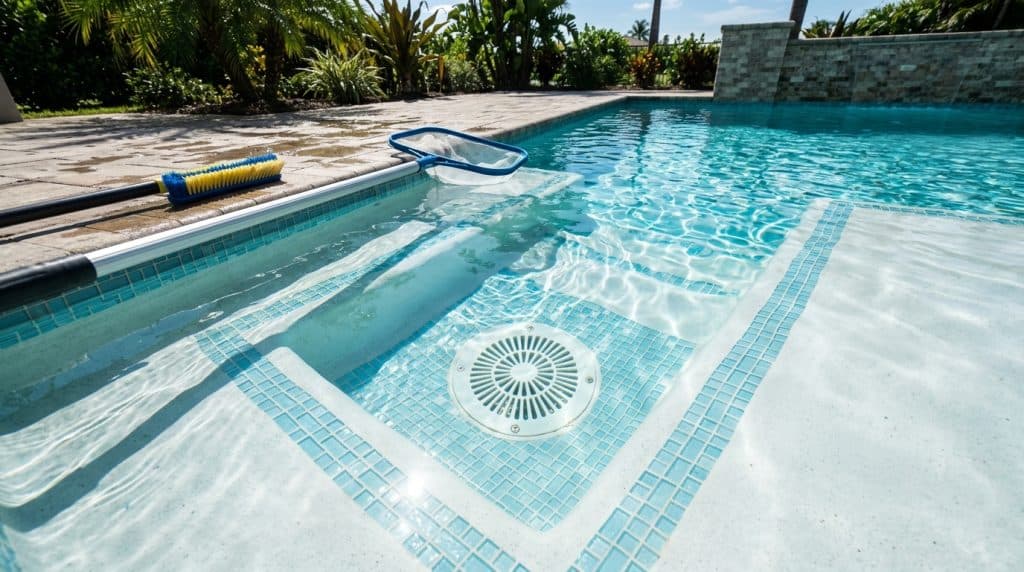
In the heart of Tampa Bay, Florida, pool ownership is practically a rite of passage. With our beautiful year-round sunshine, a backyard pool is the ultimate oasis. However, Florida’s unique geography presents some of the most challenging conditions for pool installations in the entire country. We have sandy soil, a subtropical climate with torrential seasonal rains, and, most importantly, an incredibly high water table.
Underneath your manicured lawn and pristine concrete pool deck lies a massive, invisible force: hydrostatic pressure. Managing this pressure is a tiny, often overlooked mechanical component located at the deepest point of your pool: the hydrostatic relief valve (HRV). When this valve fails, it can cause everything from minor water loss to catastrophic structural failure. As a certified pool operator (CPO) serving the Tampa Bay area, I’ve seen firsthand what happens when groundwater wins the battle against your pool shell. Here is a comprehensive guide to understanding, diagnosing, and resolving a hydrostatic relief valve leaking pool.
The Hidden Anchor of Your Tampa Bay Pool
To understand why a hydrostatic relief valve is so vital, you must first understand the geology of Tampa Bay. Cities like St. Petersburg, Clearwater, and South Tampa sit practically at sea level. During our summer rainy season, or when a tropical system brushes past the Gulf Coast, the ground becomes completely saturated. This rising groundwater creates immense upward force—hydrostatic pressure—against the underside of your pool shell.
An empty or partially full concrete (gunite) pool is essentially a giant concrete boat. If the pressure of the water in the ground beneath the pool exceeds the weight of the water inside the pool, the entire structure will try to float.
To prevent this, pool builders install a hydrostatic relief valve inside the main drain pot (the sump at the very bottom of the pool). This valve acts as a mechanical check valve. Under normal conditions, the weight of the pool water keeps the valve pressed firmly shut, preventing pool water from leaking out into the ground. However, if the pool is drained and groundwater pressure builds up beneath it, the valve is pushed upward (or its internal spring compresses), allowing groundwater to flow safely *into* the pool shell. This equalizes the pressure and prevents the pool from lifting.
The Physics of Hydrostatic Pressure: Why Your Pool Wants to Float
According to Archimedes’ Principle, any object wholly or partially submerged in a fluid is buoyed up by a force equal to the weight of the fluid displaced by the object. Your pool shell displaces a massive amount of dirt and water.
When your pool is full of water, it easily weighs hundreds of thousands of pounds. This weight offsets the buoyant force of the surrounding groundwater. However, when a pool is drained for resurfacing, acid washing, or major repairs, that internal weight is gone. Without a functioning hydrostatic relief valve, the pressure from the surrounding high water table can physically push the pool out of the earth.
The Nightmare Scenario: Pool Popping Out of the Ground
A failed valve or a lack of understanding of groundwater levels can lead to a devastating phenomenon: a pool popping out of ground hydrostatic valve failure. When this happens, the entire concrete vessel lifts several inches, or even feet, out of the ground.
This is not a minor fix. When a pool pops, the consequences are catastrophic:
- Ruptured Plumbing: All underground PVC plumbing lines (returns, suctions, main drains, skimmers) instantly snap under the sheer physical shift of the shell.
- Cracked Decking: The concrete or paver pool deck surrounding the coping is ripped apart as the pool shell forces its way upward.
- Structural Shell Rupture: The gunite shell itself can crack under the uneven stress, rendering the pool completely unfillable.
- Total Financial Loss: In almost all cases, a popped pool cannot be simply “pushed back down.” The entire structure must be demolished, excavated, and rebuilt from scratch—a process costing tens of thousands of dollars that is rarely covered by standard homeowners insurance.
Diagnostic Checklist: Spotting a Hydrostatic Relief Valve Leaking Pool
Fortunately, you don’t have to wait for a catastrophic failure to realize you have an issue. A faulty valve will often show warning signs. If you suspect a hydrostatic relief valve leaking pool issue, walk through this CPO-approved diagnostic checklist.
1. Persistent, Unexplained Water Loss
If your pool is losing water faster than normal evaporation rates (which is typically 1/4 inch per day in Florida), you have a leak. If the leak persists even when the pump is turned completely off, it points to a gravity-fed leak. If the water level stabilizes precisely at the level of the main drain grate, there is a very high probability that your hydrostatic valve is stuck open or leaking.
2. Silt, Sand, or Dirt on the Pool Floor
Have you noticed a fine layer of dark sand or dirt constantly accumulating around the main drain at the bottom of your pool, even after vacuuming? When the water table fluctuates, water can flow backward and forward through a compromised valve. When groundwater enters the pool through a leaking valve, it carries fine Florida silica sand and organic silt with it, depositing it directly onto your pool floor.
3. Dye Testing the Main Drain
This is the definitive field test for pool professionals. To perform this, you must turn off the pool pump to ensure the water is completely still. Using a syringe filled with specialized pool leak detection dye (or simple red/blue food coloring), a diver descends to the main drain. By squeezing a small cloud of dye directly over the grate and the valve housing, you can observe the movement of the water. If the dye is rapidly sucked down into the valve, you have a confirmed main drain spring valve leak.
4. Visual Inspection of the Gasket and Spring
An experienced pool technician can remove the main drain cover to inspect the valve itself. They will look for:
- An accumulation of pebbles, plaster chips, or twigs blocking the valve from closing.
- A degraded, warped, or missing rubber O-ring gasket.
- A rusted, broken, or seized tension spring.
Why Do Main Drain Spring Valves Fail?
To understand why a main drain spring valve leak occurs, we have to look at the anatomy of the valve. Most residential and commercial pools in Florida use a spring-loaded hydrostatic relief valve. This consists of a plastic or brass body, a rubber sealing gasket, and a stainless-steel spring that keeps the valve closed under normal water pressure.
Over time, several factors contribute to their failure:
Chemical Degradation
The water at the bottom of a pool is often poorly circulated compared to the surface water. If your pool water chemistry is neglected—specifically if you have low pH, high acidity, or high chlorine levels—it can corrode the stainless-steel spring. Once the spring loses its tension or rusts away entirely, the valve cannot maintain a tight seal, allowing water to escape constantly.
Physical Obstruction
During pool plastering, renovations, or even heavy storms, small debris can settle into the deepest part of the pool. If a small pebble, grain of sand, or piece of old plaster gets lodged between the rubber gasket and the plastic seating seat, the valve is held slightly open. This small gap is all it takes to cause a continuous leak.
Age and Material Fatigue
Rubber gaskets do not last forever. Decades of immersion in chlorinated, chemically treated water causes the rubber to become brittle, crack, or rot. Once the seal fails, water will slowly seep past it into the gravel bed beneath the pool.
The Solution: Underwater Hydrostatic Valve Replacement in Tampa
If you have diagnosed a failing valve, the next question is: *How do we fix it without risking a popped pool?*
Historically, pool owners were told they had to drain their pool to access the main drain. In Tampa Bay, draining a pool without professional oversight is an extreme safety hazard. If you drain the pool to change a $20 valve, the relief valve is no longer keeping the pool down, and you risk the pool popping out of the ground.
The modern, safe, and cost-effective solution is an underwater hydrostatic valve replacement tampa. This process requires a certified professional diver or CPO with specialized underwater gear to perform the repair while the pool remains completely full of water.
How Underwater Replacement Works
- Safety Preparation: The pool pump and all automated systems are shut off and locked out to eliminate any risk of suction entrapment while the diver is working on the main drain.
- Main Drain Cover Removal: The technician dives to the bottom of the pool with SCUBA gear or a surface-air supply. They unscrew and remove the main drain grate (which must comply with the Virginia Graeme Baker Pool and Spa Safety Act).
- Valve Extraction: Using specialized, long-handled T-tools or socket wrenches, the technician unscrews the old, failed hydrostatic relief valve from the threaded fitting in the bottom of the main drain pot.
- Sump Cleaning: The technician carefully cleans the internal plastic threads of the sump. Any sand, plaster debris, or organic material must be vacuumed or scraped away to ensure a perfect seal for the new valve.
- New Valve Installation: A high-quality, professional-grade hydrostatic valve (usually featuring a self-cleaning mechanism and a heavy-duty silicone or EPDM gasket) is threaded in and hand-tightened to the exact manufacturer-specified torque.
- Re-Testing and Cover Installation: The technician performs a secondary dye test on the brand-new valve to verify that the leak has been completely stopped. Once verified, the VGB-compliant drain cover is securely screwed back into place.
By opting for an underwater repair, you entirely eliminate the risk of hydrostatic pressure lifting your pool shell. There is no need for wellpoint dewatering systems, no risk of structural shifting, and absolutely zero pool down-time.
Preventative Maintenance and CPO Best Practices
As pool care experts, we advocate for prevention over reactive repairs. Here are several steps you can take to safeguard your pool against hydrostatic valve issues:
- Never Drain Your Pool Dynamically: If you must empty your pool for plastering or repairs, never do so during or immediately after the summer rainy season. Always consult a professional who can check the local water table or install a temporary wellpoint dewatering pump to lower the water table around your pool shell before draining.
- Upgrade Your Drain Covers: Ensure your main drain covers are modern, VGB-compliant models. These covers are designed to prevent debris from settling directly onto the hydrostatic valve, reducing the risk of physical obstructions keeping the valve open.
- Maintain Proper Water Chemistry: Balanced pH, total alkalinity, and calcium hardness prevent the premature corrosion of the stainless-steel springs inside your pool’s valves. Keep your pool chemistry within the recommended Langelier Saturation Index (LSI) parameters to protect your underwater equipment.
- Schedule Professional Inspections: Have a certified pool service inspect your pool’s main drain and perform a dye test during major cleanings or whenever you notice unusual water loss.
Trust the Experts at Tampa Bay Pool Care
A leaking pool is more than just a drain on your water bill; it can be a symptom of a much larger, potentially catastrophic structural issue beneath your feet. Dealing with high water tables, main drains, and hydrostatic valves requires professional training, specialized safety equipment, and a deep understanding of local Florida geology.
If you suspect your pool is losing water through its main drain, or if you need professional leak detection and maintenance services, don’t risk DIY methods that could compromise your pool shell. Contact the state-certified experts at Tampa Bay Pool Care today. Our team of certified pool operators is equipped to handle all of your pool safety, chemical balance, and equipment maintenance needs, keeping your backyard paradise safe, clean, and beautiful all year round.