In the Tampa Bay region, backyard swimming pools aren’t just a luxury—they are a way of life. From St. Petersburg to Brandon, pool owners must constantly contend with two aggressive environmental forces: intense subtropical evaporation and torrential summer downpours. During July and August, a pool can lose up to two inches of water per week just from evaporation and wind shear. Conversely, a single afternoon thunderstorm can dump three inches of rain into your pool in less than an hour.
Managing this fluctuating water level manually is a recipe for headache. If your water level drops too low, your skimmer will draw in air instead of water. This creates an airlock, causes your pump to lose prime, and can quickly melt your pump’s internal basket and shaft seals, resulting in a bill for thousands of dollars. On the other hand, if your pool overflows, it bypasses the skimmer entirely, floods your landscaping, dilutes your water chemistry, and can even compromise the structural deck. This is why a reliable water leveling system is essential. But when choosing between a traditional mechanical float valve and a high-tech electronic sensor system, which one is right for your Florida pool?
As a certified pool operator (CPO) with years of hands-on experience under the Florida sun, I’m going to break down everything you need to know about these systems, troubleshoot common automatic pool water leveler problems, and help you make an informed decision for your backyard oasis.
—
The Critical Importance of Pool Water Level Management
Before we dive into the mechanics, let’s look at why maintaining a precise water line is so critical from a hydraulic and chemical standpoint. Your pool’s filtration system is designed as a closed, balanced loop. The skimmer is the gateway. To function properly, the pool water level must sit exactly at the midpoint of your skimmer mouth or pool tile line.
- The Dry Pump Disaster: If the water drops below the skimmer opening, the pump begins pulling air. Because water acts as a natural coolant and lubricant for the pump’s mechanical shaft seal, running dry causes friction heat to build up rapidly. Within minutes, the plastic pump basket can warp, the diffuser can melt, and the pump shaft seal can fail, causing devastating leaks or total motor seizure.
- The Overflow & Dilution Crisis: When the pool fills to the very top of the coping, surface debris can no longer enter the skimmer. Instead of being filtered out, leaves, pollen, and bugs sink to the bottom, fueling algae blooms. Furthermore, excess water dilutes your sanitizer (chlorine), stabilizer (cyanuric acid), and salt levels (in saltwater pools), forcing you to spend more money on chemicals to rebalance the pool.
To automate this balancing act, builders install automatic water levelers. Let’s look at the two primary technologies used to solve this problem.
—
1. Mechanical Auto-Fills: The Traditional Float Valve
Mechanical auto-fill systems have been the industry standard for decades. They operate on a remarkably simple principle: the exact same mechanism found inside your household toilet tank.
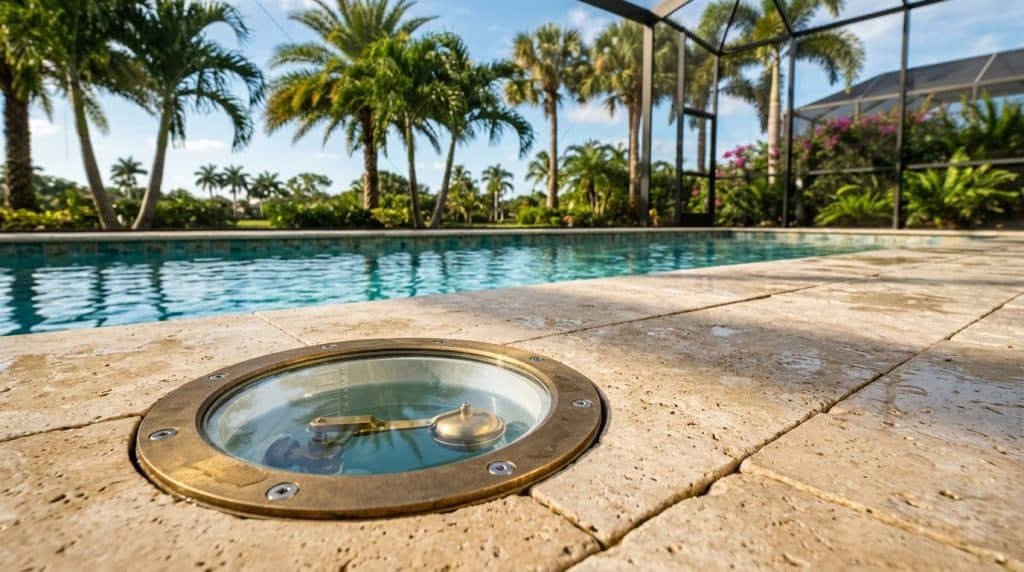
Typically housed in a small, round plastic deck canister (often called a “well”) adjacent to the pool, a mechanical auto-fill consists of a plastic or brass float attached to a valve. A small equalizer pipe connects the bottom of this canister to the pool, ensuring that the water level inside the canister matches the water level of the pool. As the pool water evaporates, the float drops, opening the valve and allowing fresh water to flow in from your home’s main water line. Once the water rises to the pre-set level, the float rises and mechanically shuts off the water flow.
The Reality of Hard Water in Tampa Bay
While simple, mechanical systems face a major adversary in West-Central Florida: the local municipal and well water chemistry. Tampa Bay water is notoriously high in dissolved minerals, particularly calcium carbonate. Over time, this leads to a heavy accumulation of scale.
Dealing with hard water scale auto fill float tampa is one of the most common service calls we receive. Calcium deposits crystallize on the delicate pivot joints of the brass or plastic float arm. As this crust hardens, it creates friction, eventually seizing the arm in place. If the arm freezes in the “down” position, your pool will fill continuously without stopping. If it freezes in the “up” position, it won’t fill at all, leaving your pool vulnerable to a dry-pump event.
Troubleshooting a Float Valve Stuck Running
If you suspect your pool leveler is malfunctioning, the first place to look is the float mechanism. A pool autofill float valve stuck running is a homeowner’s worst nightmare, often noticed only after receiving a shocking water bill.
To diagnose and fix a stuck mechanical float:
- Inspect for Scale: Turn off the water supply to the auto-fill (usually located at a nearby backflow preventer or hose bib). Wiggle the float arm. If it feels stiff or gritty, spray it thoroughly with a commercial scale remover or a 50/50 mix of white vinegar and water. Scrub the joints gently with an old toothbrush to break up calcium build-up.
- Check for Float Saturation: Unscrew the plastic float bulb. Shake it. If you hear water sloshing inside, the float has developed a hairline fracture and lost its buoyancy. Because it can no longer float to the top, it will keep the valve permanently open. Replace the bulb immediately.
- Inspect the Valve Seat: Tiny grains of Florida sand or debris can get wedged inside the rubber seal of the valve. Unscrew the valve cap, clean out any sediment, and replace the rubber washer if it appears dry-rotted or indented.
—
2. Electronic Auto-Fills: Sensors, Solenoids, and Smart Controls
If you want to move away from the mechanical vulnerabilities of float valves, electronic pool water levelers represent the modern, high-tech alternative. Instead of relying on physical buoyancy to open and close a valve, electronic systems use solid-state sensors to monitor the water level and electrical signals to control water flow.
An electronic system consists of three main components:
- The Sensor Probes: These are usually high-grade, corrosion-resistant stainless steel rods installed inside a small wall-mounted fitting, skimmer, or static pipe. They use low-voltage electrical resistance to detect whether they are touching water.
- The Control Panel: A digital brain typically mounted near your main pool equipment pad. It constantly monitors the signal from the sensors.
- The Solenoid Valve: An electronically controlled valve plumbed into your fresh water supply line. When the control panel senses that the water has remained below the sensor probe for a designated period (usually 2 to 10 minutes to account for surface waves), it sends a 24-volt signal to open the solenoid valve, letting water into the pool.
Why Electronic Systems Excel in Florida
Electronic systems completely bypass the mechanical issues caused by hard water scale auto fill float tampa. Because there are no moving parts exposed to the pool water, there are no joints to seize up. While calcium can still deposit on the stainless steel sensor probes, they can easily be wiped clean during routine service, and many advanced systems feature “anti-fouling” software that can read through minor scale buildup.
Furthermore, electronic systems feature safety timeout parameters. If the control panel detects that the water valve has been open for more than an hour, it will automatically shut off the water and trigger an alarm. This prevents catastrophic flooding in the event of a pipe break or a damaged sensor.
Planning an Electronic Pool Water Leveler Installation
If you are building a new pool or undergoing a major renovation, executing an electronic pool water leveler installation is highly recommended. Because these systems require running low-voltage wiring from the pool edge back to the equipment pad, they are easiest to install during initial construction or when replacing your pool deck.
However, retrofitting is highly feasible. Wireless electronic levelers are now available, utilizing battery-powered transmitters at the pool edge that communicate via radio frequency to the control valve at the equipment pad. This eliminates the need to trench your yard or tear up expensive concrete pool decking to run control wires.
—
Diagnostic Checklist: Automatic Pool Water Leveler Problems
No matter which system you have, keeping a diagnostic routine can save you from dry pumps and flooded yards. Use this CPO checklist to troubleshoot common automatic pool water leveler problems:
| Symptom | Potential Cause (Mechanical) | Potential Cause (Electronic) | CPO Diagnostic Action Step |
|---|---|---|---|
| Pool is constantly overflowing | Stuck/scaled float arm; ruptured float bulb; worn valve seat. | Debris caught in solenoid valve; failed control board; fouled sensors. | Shut off the supply valve. If water continues flowing, the valve seal is physically compromised and needs cleaning or replacement. |
| Water level is dangerously low | Float seized in “up” position; clogged inlet screen; shut-off valve closed. | No power to control panel; blown fuse; failed solenoid coil; scaled probes. | Check your main water supply valve first. For electronic systems, verify the control panel has power and clean the sensor probes with steel wool. |
| Water cycles on and off rapidly | Water splashing in the float well due to a missing wave baffle. | Wave action triggering sensors without a built-in time delay. | Install a baffle plate in the mechanical well, or adjust the delay settings on your electronic controller to at least 5 minutes. |
—
Direct Comparison: Mechanical vs. Electronic
Cost and Installation
Mechanical auto-fills are highly affordable upfront. The canisters and plastic valves are inexpensive, and any standard plumber or pool technician can install them. However, they require a dedicated, gravity-fed leveling well, which must be poured into the concrete shell of the pool during construction.
Electronic systems carry a higher initial cost for hardware and require electrical wiring. However, their longevity, reliability, and water-saving safety features often yield a lower total cost of ownership by preventing massive water bills and pump damage.
Lifespan and Maintenance
In Tampa’s humid, salty air, mechanical valves typically last 2 to 5 years before scale and UV degradation require their replacement. Electronic sensors and solenoid valves can easily last 10 to 15 years when properly installed and protected from direct weather elements.
—
CPO Pro-Tips for Tampa Bay Pool Owners
To keep your water leveler working perfectly year-round, implement these expert maintenance habits:
- Exercise the Shut-Off Valve: Every Tampa pool should have a dedicated backflow preventer and shut-off valve for the pool fill line. Turn this valve off and on once a month to prevent the gate from seizing.
- Clear Out the Equalizer Line: Over time, dirt, leaves, and even small frogs can get stuck inside the pipe that connects your mechanical auto-fill well to the pool. Use a garden hose to flush this line from the pool side back into the canister.
- Schedule a Quarterly Acid Clean: If you struggle with hard water scale auto fill float tampa, pour a cup of diluted muriatic acid or vinegar directly into your auto-fill canister every three months. Let it sit for 10 minutes, then flush with fresh water. This dissolves localized scale before it can freeze your mechanical valve.
- Monitor Your Water Bill: A sudden, unexplained jump in your monthly water usage is the number one indicator of a pool autofill float valve stuck running. Keep a close eye on your utility statements.
—
Partner with the Local Pool Care Experts
Maintaining the delicate balance of your pool’s water level, filtration hydraulics, and chemical balance requires constant vigilance. If you suspect your automatic water leveler is malfunctioning, or if you are interested in upgrading to a modern, worries-free electronic system, don’t wait for your pump to run dry or your yard to flood.
The highly trained, CPO-certified professionals at Tampa Bay Pool Care are ready to help. From routine weekly maintenance and scale remediation to advanced electronic leveler installations, we ensure your pool remains a pristine, stress-free haven. Contact us today to schedule an equipment inspection or upgrade your pool automation system!