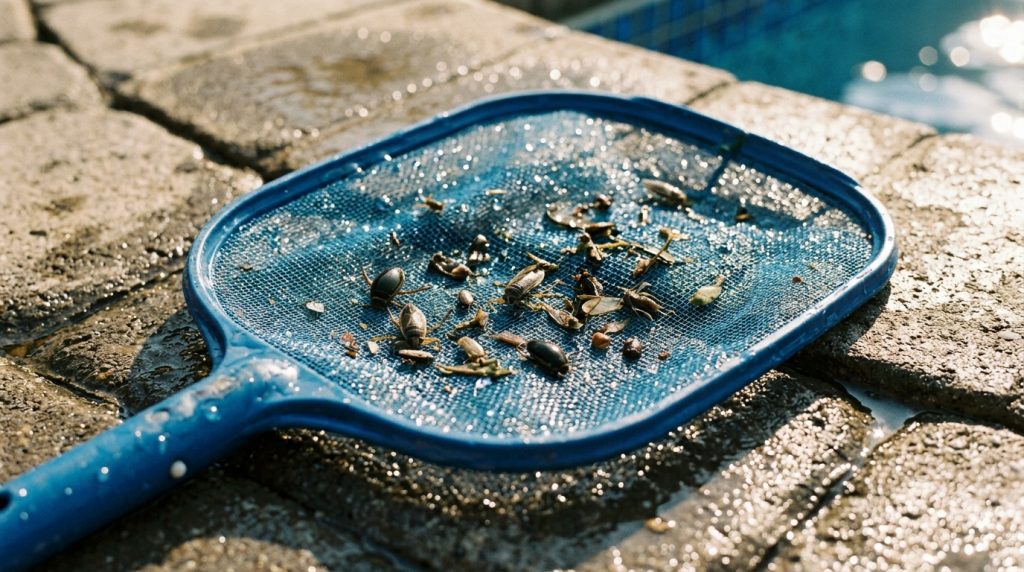
Intense Florida humidity and sudden tropical downpours frequently dilute pool chemistry across the Tampa Bay region, turning pristine swimming pools into attractive breeding grounds for aquatic pests. When diving into what should be a refreshing sanctuary, discovering aggressive, biting insects swimming underwater can instantly ruin your peace of mind. Restoring a safe, pest-free swimming environment requires understanding exactly how these aquatic invaders operate.
Identifying the Invader: Water Boatmen vs Backswimmers Pool Dynamics
Distinguishing between these two common aquatic insects is the crucial first step toward reclaiming your backyard oasis. Homeowners often mistake one for the other, yet their behaviors, diets, and physical traits differ significantly. While water boatmen are harmless herbivores feeding on algae, backswimmers are predatory carnivores that deliver painful, wasp-like stings to swimmers. Maintaining a consistent weekly pool service and chemical maintenance schedule prevents the organic buildup that attracts water boatmen in the first place, effectively starving the predatory backswimmers that hunt them.
The physical differences in a water boatmen vs backswimmers pool infestation are easy to spot if you know what to look for. Water boatmen swim right-side up, using their elongated, oar-like hind legs to glide smoothly along the pool floor where they forage for microscopic algae and plant debris. In contrast, backswimmers swim upside down near the water’s surface, using their keel-shaped backs and powerful hind legs to propel themselves downward to attack prey. Because backswimmers possess a sharp, needle-like proboscis, they are the primary culprits when families search for how to kill swimming pool bugs that bite.
The Biology of Aquatic Invaders and Why They Bite
Understanding the biological drivers of these aquatic pests explains why they choose your swimming pool as their new habitat. Water boatmen do not bite humans; they are simply attracted to the light, warmth, and abundant algae growth that occurs when pool sanitizer levels dip. However, their presence acts as a direct invitation for backswimmers, which are voracious predators that feed on boatmen, mosquito larvae, and small tadpoles. When a human swimmer accidentally brushes against a backswimmer, the insect bites defensively, injecting digestive enzymes that cause immediate burning, itching, and localized swelling.
These insects are also capable of flight, meaning they can easily migrate from nearby retention ponds, lakes, or marshy areas in Pinellas County or Hillsborough County straight into your backyard. If your pool filtration system is struggling or you require a professional pool pump and motor repair in Tampa Bay, stagnant water zones will form, creating the perfect low-flow environment these pests crave. Without adequate water circulation and filtration, organic matter accumulates rapidly, fueling the algae cycle that sustains the entire pest food chain.
How to Kill Swimming Pool Bugs That Bite
To successfully eliminate these pests, you must target both their physical presence and their food source through a multi-step chemical and mechanical strategy. The most effective method on how to kill swimming pool bugs that bite involves breaking their life cycle by destroying their primary food source, which is pool algae. Shocking the pool with a high dose of liquid chlorine or calcium hypochlorite raises free chlorine levels to a point where algae is completely eradicated, forcing water boatmen to migrate elsewhere or starve.
For severe infestations where the pool water has completely turned to an opaque green, a standard shock treatment may not be sufficient to break the pest cycle. In these extreme scenarios, securing a fast 48-hour green pool recovery service is the fastest way to sterilize the environment and eliminate the biological matter harboring these pests. Once the algae is completely gone, the water boatmen will vanish, which naturally forces the predatory backswimmers to leave in search of alternative hunting grounds.
Breaking Surface Tension and Physical Removal Tactics
While chemical sanitization addresses the food source, you can use a clever physical hack involving dish soap pool surface tension bugs to eliminate the adult insects currently swimming in your water. Both water boatmen and backswimmers must carry a bubble of air with them underwater in order to breathe, which they obtain by breaking through the pool’s surface tension. By pouring a small amount of liquid dish soap or surfactant around the perimeter of your pool, you dramatically lower the water’s surface tension.
Once the surface tension is compromised, these insects can no longer hold onto their air bubbles or easily break the surface to breathe, causing them to drown quickly. After applying the dish soap, run your filtration system and use a fine-mesh skimmer net to scoop up the dead insects floating on the surface or settling on the pool floor. This simple yet highly effective method for insects swimming underwater pool extermination provides immediate relief while your primary chlorine shock treatment works to resolve the underlying algae problem.
Comparison Table of Water Boatmen vs. Backswimmers
To help you quickly diagnose which pest has invaded your backyard, we have compiled a direct comparison of their key behavioral and physical characteristics. If you live in Pinellas County, utilizing targeted Pinellas County pool cleaning in Clearwater can help you keep these environmental factors under control before pests ever have a chance to colonize. Reviewing the table below will help you identify the specific insect you are dealing with so you can tailor your eradication efforts accordingly.
| Characteristic | Water Boatmen (Corixidae) | Backswimmers (Notonectidae) |
|---|---|---|
| Swimming Position | Right-side up, crawling along the bottom | Upside down, floating near the surface |
| Diet | Algae, plant debris, microorganisms | Insects, larvae, small tadpoles, fish |
| Do They Bite? | No, completely harmless to humans | Yes, deliver a painful, wasp-like sting |
| Coloration | Dark gray or brown with cross-striped wings | Light-colored, silvery-white back, dark belly |
| Primary Attraction | Algae growth and bright pool lights at night | Abundant populations of water boatmen |
Long-Term Prevention and Maintenance Strategies
Preventing future aquatic insect invasions requires a proactive approach to pool chemistry and physical barriers. Installing a high-quality pool screen enclosure is highly effective at blocking flying insects, though smaller pests can still find their way through tears or open doors. Regularly brushing the pool walls and floor disrupts micro-algae spores before they can bloom, ensuring that water boatmen never find a stable food source to establish a breeding colony.
Additionally, keeping your pool lights turned off at night or switching to yellow LED insect lights can dramatically reduce the number of flying pests attracted to your pool area after sunset. Running your pump for at least 8 to 12 hours a day during the hot summer months ensures proper chemical distribution and eliminates the stagnant surface water that these insects prefer for resting and breathing.
Future-Proofing Your Pool Against Seasonal Invaders
As Florida moves toward more stringent seasonal environmental standards and energy-efficient pool pump regulations, maintaining a balanced aquatic ecosystem is becoming both more sophisticated and more critical for homeowners. Investing in variable-speed pump technology and automated chemical monitoring systems not only lowers monthly utility costs but also provides the continuous, high-efficiency filtration required to keep algae and biting insects entirely out of your swimming space. Preparing your pool infrastructure today ensures your backyard remains a pristine, bite-free sanctuary capable of weathering the intense heat and heavy storm seasons that define the Gulf Coast climate.