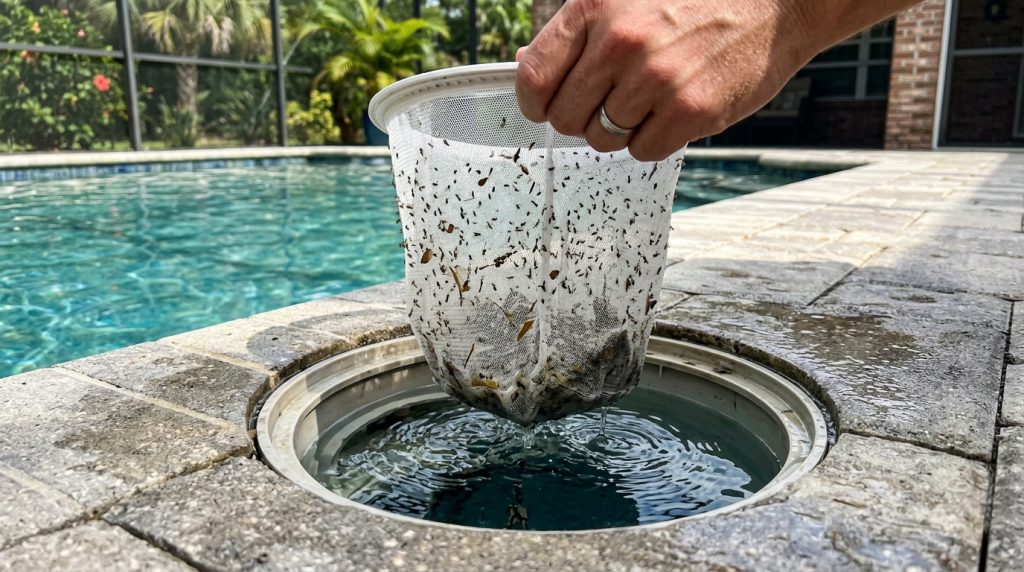
Florida’s humid sub-tropical climate and proximity to freshwater lakes create the perfect breeding ground for massive seasonal swarms of non-biting aquatic insects. These pests quickly transform pristine backyard sanctuaries into unsightly, debris-filled struggles for homeowners trying to maintain water clarity.
Understanding the Chironomid Midge Invasion in Florida Pools
The seasonal emergence of non-biting midges, commonly known as blind mosquitoes, presents a frustrating challenge for residential pool owners across the Suncoast. Unlike true mosquitoes, these insects do not bite, but their synchronized mating flights lead to millions of adults dying simultaneously on the water surface. Homeowners frequently find thousands of blind mosquitoes dead in pool clearwater systems, overwhelming skimmer baskets and clogging filtration systems within a matter of hours. Professional Pinellas County pool cleaning in Clearwater often addresses this exact issue during peak spring and autumn hatch cycles when local lakefront and canal-side properties experience the heaviest infestations. Understanding the biology of these pests is the first step in reclaiming your outdoor living space from their persistent, unsightly presence.
The Life Cycle of Chironomid Midges and Pool Vulnerability
The life cycle of these insects begins in the organic muck of nearby freshwater bodies, where larvae develop before emerging as winged adults. Once airborne, they are naturally drawn to the reflective qualities of water and bright outdoor lighting systems. This behavior results in massive clouds of chironomid midges covering pool water surface areas, where they eventually drown due to the surface tension of the water. This organic overload does more than just ruin the aesthetic appeal of your backyard; it rapidly depletes free chlorine levels as your sanitizer works overtime to oxidize the decaying organic matter. Without immediate intervention and proper filtration adjustments, this biological debris can trigger rapid algae blooms, turning a sparkling pool into a cloudy, green hazard.
Mechanical Solutions: Skimmer Socks and Filtration Upgrades
Standard pool skimmer baskets have mesh openings that are far too large to capture tiny aquatic insects, allowing them to pass directly into the pump basket or the main filter medium. Utilizing fine skimmer socks midge flies get trapped in will prevent this bypass by catching the microscopic debris before it reaches your expensive filtration equipment. These ultra-fine nylon mesh sleeves slip over your existing skimmer basket, acting as a pre-filter that catches even the smallest insect bodies. However, because these socks clog rapidly during a heavy midge hatch, they require daily rinsing to prevent water flow restriction, which can put undue stress on your pump motor. Combining these DIY physical barriers with a professional weekly pool service and chemical maintenance routine ensures your filtration system remains clear and your water chemistry balanced during peak bug seasons.
Optimizing Hydraulic Circulation to Combat Bug Accumulation
Proper water circulation plays a pivotal role in managing insect debris before it sinks to the bottom of the pool shell. Adjusting your return jets to create a gentle, circular vortex pushes floating midges directly toward the skimmer mouth, maximizing the efficiency of your skimmer socks. If your pump is not running long enough or lacks the hydraulic power to create this surface current, insects will absorb water, lose buoyancy, and settle onto the plaster or vinyl floor, requiring laborious vacuuming. Homeowners experiencing poor surface skimming should inspect their equipment for suction-side air leaks or failing impellers, often requiring professional pool pump and motor repair in Tampa Bay to restore optimal flow rates. Maintaining high-velocity circulation during the evening hours when midges are most active is highly effective at keeping the water surface clear.
Behavioral Deterrents: Strategic Lighting Adjustments
Because adult midges are highly phototactic, they are irresistibly drawn to standard incandescent and cool-white LED lighting systems commonly installed around Florida pool decks. By swapping out these high-wavelength bulbs for warm, monochromatic alternatives, you can drastically reduce the number of insects attracted to your pool enclosure. Installing yellow bug lights around pool cage lanai structures is one of the most effective and eco-friendly ways to redirect these pests away from the water. These specialized yellow LED bulbs emit a spectrum of light that is virtually invisible to midges and blind mosquitoes, preventing them from swarming near the screen doors or falling through the mesh overhead. Additionally, turning off interior pool lights during peak evening swarming hours further minimizes the underwater glow that coaxes these bugs to dive directly into the water.
Chemical Management and Surface Tension Modifiers
In addition to physical barriers and lighting modifications, specialized chemical treatments can assist in managing heavy insect infestations. Surface tension reducers, also known as pool surface clarifiers, can be added to the water to break the surface tension that allows insects to float or rest on the water. When dealing with massive swarms of blind mosquitoes dead in pool clearwater systems, these chemical aids can speed up the clearing process significantly by dropping the bugs to the floor. When midges land on a treated pool, they immediately sink to the bottom, where they can be easily vacuumed up by automatic pool cleaners rather than clogging the skimmer throat. However, this method requires diligent vacuuming and filter backwashing to prevent the accumulated organic mass from decaying and spiking chloramine levels. Balancing these chemical interventions with regular water testing is essential to ensure your pool remains safe, sanitary, and clear of biological contaminants throughout the humid summer months.
Long-Term Preventative Care for Florida Pool Ecosystems
As Florida continues to experience shifting weather patterns, rising average temperatures, and evolving environmental regulations, proactive pool preservation becomes increasingly vital. Modern variable-speed pump technology and advanced automation systems allow homeowners to program specialized skimming cycles that align precisely with seasonal insect hatches and daily crepuscular swarming windows. By integrating smart filtration schedules with efficient LED lighting upgrades and routine hydraulic maintenance, pool owners can easily safeguard their backyard investments against seasonal biological surges. Investing in consistent, preventative care not only protects expensive pool components from premature wear but also ensures that your aquatic retreat remains pristine, energy-efficient, and ready for year-round enjoyment regardless of the external environmental pressures unique to the Gulf Coast climate.