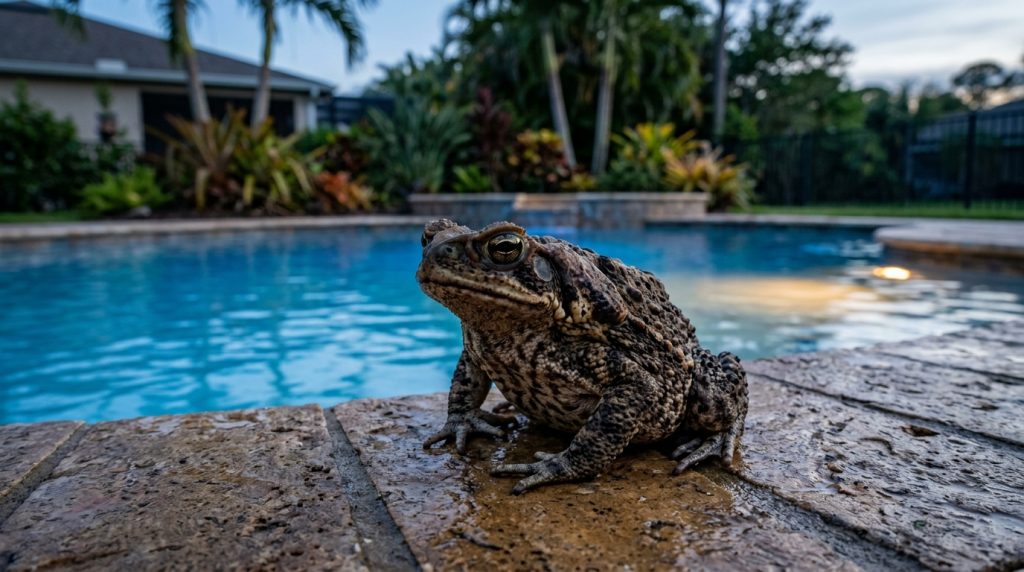
Florida’s relentless summer deluges and high humidity create a hyper-active nocturnal ecosystem right at the edge of your backyard oasis. When tropical downpours saturate the sandy soil of Tampa Bay, invasive pests seek refuge on dry concrete, transforming a pristine pool deck into a hazardous environmental interface. Securing this perimeter protects your pets from hidden, toxic threats.
The Invasive Threat of the Cane Toad in Florida Pool Environments
The introduction of Rhinella marina, commonly known as the cane toad or Bufo toad, has created an ecological and domestic hazard across Central Florida. These massive amphibians are highly attracted to the standing water and ambient warmth of residential swimming pools, particularly during the humid summer months when they seek breeding grounds and hydration. Managing these invasive pests requires a comprehensive approach to backyard safety that goes hand-in-hand with consistent weekly pool service and chemical maintenance to ensure your water remains clean, clear, and free of biological contaminants. When these heavy-bodied toads infiltrate your pool deck, they do not merely disrupt the aesthetic value of your outdoor living space; they introduce a highly potent chemical threat that can prove fatal to domestic pets within minutes of contact.
Understanding the Lethal Toxicity of Bufo Toads to Domestic Pets
The primary hazard associated with finding a bufo toad in swimming pool pet danger zones lies in the powerful bufotoxins secreted by the animal’s parotoid glands. Located just behind their eyes, these large, triangular glands release a milky, highly toxic substance when the toad feels threatened, cornered, or bitten by an inquisitive dog or cat. Unlike native southern toads, which produce mild localized irritation, the chemical cocktail secreted by an invasive cane toad is rapidly absorbed through the mucous membranes of a pet’s mouth, eyes, or nose. If your pet encounters a poisonous cane toad pool deck tampa homeowners must act with extreme urgency, as the systemic absorption of these cardiotoxic and neurotoxic compounds can trigger rapid cardiac arrhythmia, severe seizures, and ultimately death if left untreated.
Identifying Dog Licked Cane Toad Near Pool Symptoms
Recognizing the immediate physical signs of exposure is critical for saving your pet’s life after an unexpected backyard encounter. The classic dog licked cane toad near pool symptoms manifest almost instantly, starting with profuse, foamy salivation that resembles shaving cream, accompanied by bright red, inflamed gums that indicate severe localized irritation. As the toxins enter the bloodstream, the pet will often paw at its mouth, experience difficulty breathing, lose coordination, and exhibit a dangerously elevated heart rate or body temperature. If you observe these clinical signs, you must immediately flush the pet’s mouth with a forward-facing garden hose, ensuring the water drains out of the mouth rather than down the throat, before rushing them to an emergency veterinary clinic.
How to Keep Bufo Toads Away from Pool Areas
Implementing a multi-layered defense system is the most effective way to address the question of how to keep bufo toads away from pool decks and surrounding landscaping. Cane toads are opportunistic feeders attracted to pet food bowls, low-lying insect populations, and moist, shaded environments where they can easily burrow during the hot daylight hours. Homeowners can drastically reduce toad traffic by installing fine-mesh hardware cloth along the base of existing aluminum pool cages, keeping grass cut exceptionally short, and removing debris piles, heavy ground cover, and low-hanging foliage. To complement these physical barriers, utilizing professional electronic acoustic pool leak detection ensures that hidden water losses are not silently saturating your lawn and creating the damp, swampy conditions that draw these invasive amphibians directly to your property.
Lighting and Water Management Tactics
Adjusting your outdoor lighting scheme plays an overlooked but highly influential role in deterring cane toads from congregating around your swimming pool at night. Since toads are nocturnal predators that feed heavily on insects, bright pool deck lights act as a natural beacon, drawing in swarms of bugs and creating an all-you-can-eat buffet for local pests. Switching to warm LED yellow “bug lights” or motion-activated security lighting reduces insect accumulation, thereby eliminating the primary food source that coaxes toads onto your patio. Additionally, maintaining optimal water levels and operating a highly efficient filtration system prevents stagnant water pockets from forming in overflow drains or skimmer baskets, which are highly attractive to breeding amphibians. If you suspect your filtration system is underperforming, investing in professional pool pump and motor repair in Tampa Bay can restore proper circulation, ensuring that water remains highly agitated and less inviting to unwelcome nocturnal visitors.
Sanitizing Your Pool and Safely Removing Cane Toads
When a cane toad manages to bypass your defenses and ends up in your swimming pool, immediate remediation is required to safeguard both your family and your pool’s chemical balance. Dead or stressed toads in the water can release organic waste, bacteria, and trace amounts of toxins that compromise your water quality and pose a sanitation risk. Homeowners should use a long-handled skimmer net to carefully remove the toad, wearing protective heavy-duty gloves to avoid direct skin contact with any potential secretions. Once the physical threat is removed, the pool water must be thoroughly shocked and sanitized to neutralize any lingering pathogens, a process that can be simplified by relying on fast 48-hour green pool recovery service experts who specialize in rapid chemical correction and deep sanitization.
Distinguishing Native Toads from Invasive Cane Toads
Properly identifying the specific type of amphibian traversing your pool deck is essential before taking removal or exclusion measures, as native species play a beneficial role in the local Florida ecosystem. While native southern toads are relatively small and possess prominent cranial crests between their eyes, invasive cane toads can grow to monstrous sizes and feature large, triangular parotoid glands that taper down their shoulders. The table below outlines the key physiological distinctions that will help you quickly identify whether an amphibian on your property represents a minor nuisance or a highly dangerous, venomous threat to your family pets.
| Feature | Native Southern Toad | Invasive Cane (Bufo) Toad |
|---|---|---|
| Size | Small (approx. 1.5 to 3.5 inches) | Large to massive (approx. 4 to 9+ inches) |
| Cranial Crests | High, distinct ridges between the eyes | No crests; smooth, flat area between the eyes |
| Parotoid Glands | Small, oval, or kidney-shaped glands | Large, prominent, triangular glands extending down shoulders |
| Skin Texture | Brownish-grey with small warts and spots | Rough, dry skin with large, prominent warts |
Looking Forward: Proactive Pool Safety and Seasonal Maintenance
As residential pool technology continues to advance alongside changing municipal safety codes and evolving environmental challenges in Florida, maintaining a secure, clean, and highly efficient pool system remains a dynamic responsibility. Looking ahead, integrating smart automation systems, upgrading to energy-efficient variable-speed pumps, and preparing for seasonal tropical weather patterns will play a crucial role in how homeowners manage both water quality and wildlife exclusion. By focusing on preventative perimeter maintenance, structural integrity, and highly responsive chemical care, Tampa Bay residents can ensure their backyard sanctuaries remain safe, pristine, and fully protected against the unpredictable elements of the subtropical Florida climate.