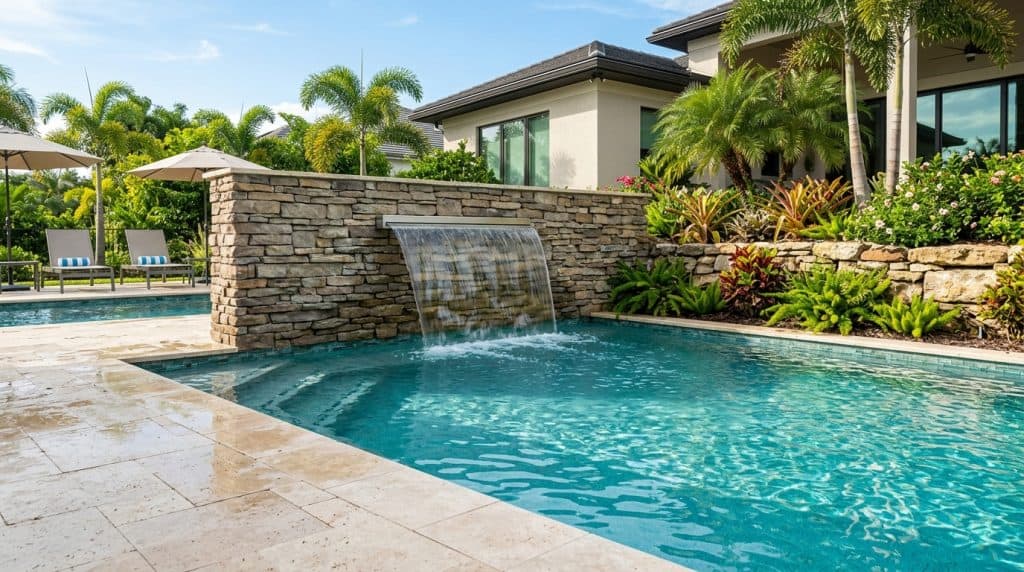
Sheer descent water features transform swimming pools into serene architectural showpieces by producing a continuous, glass-like sheet of falling water. However, when calcium scale, pine needles, or calcified algae lodge within the micro-aperture nozzle, that perfect crystal sheet splits into jagged streams, destroying the aesthetic effect.
The Mechanics of a Sheer Descent: Why Flow Breaks Occur
Unlike bubbling rock grottos or open stone spillways, an authentic sheer descent operates through an engineered internal baffle chamber that narrows to a paper-thin horizontal lip aperture (typically between 1/8-inch and 1/4-inch wide). Pressurized water enters through a rear inlet manifold, fills an internal equalization basin, and discharges across the lip in a laminar sheet.
Because the discharge gap is extraordinarily narrow, minute particulate matter triggers immediate flow distortion. The two most common causes of split water flow are:
- Mechanical Obstruction: Debris such as palm frond fibers, small pebbles, or dead insects that bypass damaged pump strainer baskets and lodge directly in the discharge lip.
- Calcium Carbonate Encrustation: High evaporation rates along the sun-exposed plastic lip leave heavy calcium deposits that distort laminar velocity, causing the water curtain to tear apart prematurely.
Homeowners enjoying waterfront pools along coastal barrier islands such as coastal pool amenities on Treasure Island experience accelerated mineral crusting due to marine salt air and intense daily sun reflection across exposed weir edges.
Step-by-Step Restoration: Clearing and Descaling the Nozzle
Restoring a distorted sheer descent requires gentle, non-destructive tools. Using screwdrivers, utility knives, or metal putty knives will permanently gouge the precision plastic lip, creating permanent flow tears that cannot be smoothed out.
Step 1: Rocker Tool or Credit Card Sweep
Manufacturers (such as Jandy or Pentair) supply a curved plastic clearing tool designed specifically for sheer descent lips. In the absence of a factory tool, a standard plastic credit card or a laminated plastic shim works perfectly. While the pump is running at moderate speed, gently insert the plastic card into the lip gap and slide it smoothly from one end of the waterfall to the other. The rushing water will wash dislodged debris out into the pool.
Step 2: Backflushing the Manifold
If debris is trapped inside the rear equalization baffle, forward water flow will simply pin the obstruction against the exit lip. Shut off the pump, close the waterfall isolation valve, and insert a high-pressure garden hose with a rubber cone nozzle directly into the exterior lip gap. Blasting water backward through the lip flushes trapped sand and organic debris backward toward the filter manifold drain plug.
Step 3: Muriatic Acid Descaling
When white crusty scale lines the waterfall opening, mechanical sweeping is insufficient. Prepare a 1:4 dilution of 31.45% muriatic acid to water in a plastic chemical spray bottle. With the pump powered off and the waterfall dry, carefully mist the diluted acid directly into the lip gap. The acid will fizz aggressively upon contact with calcium carbonate. Allow it to react for three to five minutes, brush with an ultra-soft nylon detailing brush, and rinse thoroughly before powering the pump on. Addressing persistent buildup is closely tied to broader mineral and calcium stain removal on surrounding pool tile lines.
Hydraulic Tuning: Eliminating Gaps and Wave Pulsing
Even a completely clean sheer descent will fail to form a smooth sheet if water velocity is calibrated incorrectly. Waterfalls demand an exact flow rate, calculated by the width of the discharge blade (typically 12 to 15 gallons per minute per linear foot of waterfall):
| Blade Width | Minimum Flow Rate (GPM) | Ideal Operating Flow (GPM) | Fall Profile Limit |
|---|---|---|---|
| 12 Inches (1 Foot) | 10 GPM | 12 – 15 GPM | Up to 36 inches drop |
| 24 Inches (2 Feet) | 20 GPM | 25 – 30 GPM | Up to 48 inches drop |
| 36 Inches (3 Feet) | 30 GPM | 38 – 45 GPM | Up to 48 inches drop |
| 48 Inches (4 Feet) | 40 GPM | 50 – 60 GPM | Up to 60 inches drop |
If pump speed is too low, the water sheet curls inward, hugging the stone wall and splashing erratically. If pump speed is excessive, internal turbulence causes the sheet to balloon outwards and tear apart in midair. Performing a comprehensive pool pump flow diagnostic allows homeowners to program exact variable-speed RPM presets that produce a silent, glass-smooth water sheet on demand.
Installing dedicated cartridge filter rock traps upstream of the feature ensures zero debris reaches the internal baffle, preserving flawless laminar waterfall performance across all seasons.