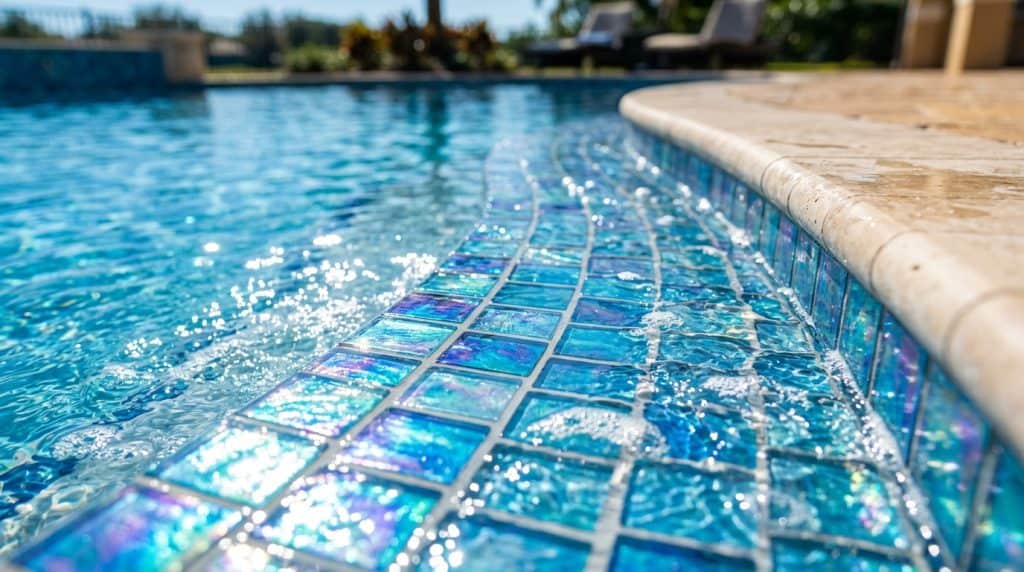
Choosing waterline tile is one of the most critical aesthetic and functional decisions during a pool build or resurfacing project. While iridescent glass mosaic tile delivers unmatched visual brilliance under sunlight, the extreme heat and thermal expansion cycles of the Florida climate demand specialized installation protocols that differ sharply from traditional ceramic tile.
The Physics of Thermal Shock: Why Glass Tiles Crack
Florida pool waterline tiles endure extreme thermal contrast. During summer months, ambient air temperatures exceed 95°F, with direct solar irradiance heating dark tiles above 130°F. Simultaneously, water lapping against the bottom half of the tile keeps it at 86°F. When sudden tropical thunderstorms drop heavy rain at 65°F, the top edge of the tile undergoes rapid thermal contraction while the submerged edge remains stable.
Glass and concrete possess fundamentally different coefficients of thermal expansion. Glass expands and contracts at nearly double the rate of a standard gunite shell. When glass tile is installed with standard rigid portland cement thinset, this expansion differential creates severe shear stress. If the installer failed to use an elastomeric waterproofing membrane and polymer-modified mortar, the glass tiles crack internally or pop clean off the bond beam.
Prominent residential developers and custom pool builders in Tampa mandate strict adherence to ANSI A108.16 installation standards for all exterior glass tile installations to eliminate structural failure under thermal cycling.
Material Comparison: Glass vs. Glazed Ceramic
Evaluating the practical characteristics of glass versus traditional glazed ceramic helps homeowners make informed, long-term investments:
| Performance Factor | Glass Mosaic Tile | Glazed Ceramic Tile |
|---|---|---|
| Porosity & Water Absorption | 0.0% (Completely impervious to moisture) | 0.5% – 3.0% (Vitreous / semi-vitreous) |
| Chemical & Acid Resistance | Immune to pool chemicals, chlorine, and muriatic acid | Glaze protects surface, but back body can etch |
| Thermal Expansion Sensitivity | High (Requires flexible polymer setting systems) | Low to Moderate (Matches concrete expansion closely) |
| Installed Cost per Foot | $65 – $140 per linear foot | $35 – $65 per linear foot |
| Lifespan | 25+ years (When installed with epoxy systems) | 15 – 20 years before glaze wear or crazing |
The Critical Role of Epoxy Grout in Pool Environments
Even the highest-grade glass tile will fail if traditional cementitious grout is utilized along the waterline. Standard cement grout is porous, allowing chlorinated pool water to seep behind the tile body. Over time, calcium silicate dissolves, forming chalky efflorescence that stains the face of the tile.
Modern pool construction requires 100% solid epoxy grout (such as Laticrete SpectraLOCK PRO Premium or Custom Building Products CEG-Lite). Epoxy grout provides unmatched engineering advantages:
- Chemical Immunity: Epoxy resists pure muriatic acid, high chlorine shock levels, and saltwater corrosion without softening or pitting.
- Zero Water Ingress: Completely seals joints, preventing moisture from migrating behind glass sheets.
- Elastomeric Flexibility: Absorbs micro-movements caused by gunite shell settling and thermal expansion, preventing shear cracking across tile faces.
When hard Florida tap water leaves white crusty rings along the waterline, pairing epoxy grout with specialized waterline tile calcium scale removal allows technicians to blast scale off glass without pitting or scratching the smooth tile face.
Expansion Joints and Coping Clearance
A fatal construction error in Florida backyards is allowing concrete pool decks to butt directly against the top edge of waterline tiles without a functional expansion joint. When pavers or cantilever concrete slabs shift during summer ground saturation, they exert direct downward vertical force on the tile line.
A dedicated 1/2-inch horizontal expansion joint filled with closed-cell foam backer rod and high-grade polyurethane sealant (such as Sikaflex 1a or MasterSeal NP 1) must separate the coping or deck from the top of the tile. This joint allows the deck to move independently without transferring shear forces to the pool beam, ensuring that custom installations follow long-term plaster and tile renovation guidelines.
With correct epoxy mortars, elastomeric waterproofing, and proper deck isolation joints, glass waterline tile provides decades of dazzling, maintenance-free beauty under the Florida sun.