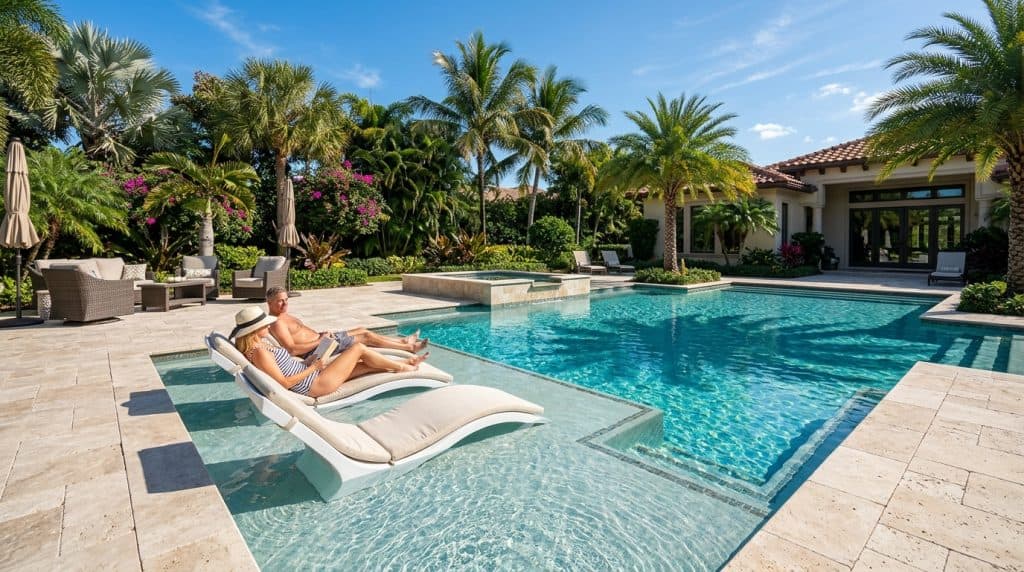
Retrofitting a shallow sun shelf into an existing in-ground pool represents one of the most requested structural upgrades across Florida backyards. Converting wasted deep-end volume or an underutilized shallow corner into a six-to-nine-inch tanning shelf creates a resort-caliber lounging pad that increases usable water surface while elevating property appraisal values.
Structural Engineering and Gunite Bonding Mechanics
Adding a sun shelf to an existing concrete pool requires far more technical precision than simply dumping concrete into the basin. Gunite shells expand and contract under severe thermal cycles. Pouring new gunite directly onto old cured plaster without structural integration creates a cold joint, resulting in hollow spots, delamination, and catastrophic subterranean structural fractures over time.
Professional pool contractors begin by draining the basin and saw-cutting through the existing plaster and gunite substrate down to original structural rebar. A certified structural qualifier must execute a rigorous reinforcement protocol:
- Epoxy Doweling: Technicians drill holes 6 to 8 inches deep into the existing pool walls and floor on 12-inch centers, anchoring Grade 60 #4 rebar using high-tensile structural epoxy.
- Grid Tie-In: A complete dual-curtain steel rebar cage is tied to the dowels, shaping the ledge steps, perimeter edge, and floor slope.
- Hydraulic Core Drilling: Dedicated return plumbing and low-profile LED bubbler lines are run through the floor of the sun shelf before pneumatic gunite application.
- Bond Coating: Applying a polymer-modified bonding slurry ensures the pneumatic gunite bonds monolithically with the host structure.
Homeowners planning upscale exterior enhancements in master-planned communities frequently benchmark luxury pool designs across Cheval to determine whether adding built-in ledge loungers, umbrella sleeves, and flush travertine coping harmonizes with surrounding lanai elevations.
Plumbing Reconfiguration: Circulation, Returns, and Bubblers
A tanning ledge holds water at a shallow depth of 6 to 10 inches. Under intense subtropical sunshine, this thin water layer heats up drastically faster than the main basin, driving rapid chemical depletion and accelerating algae proliferation if left stagnant.
To prevent stagnant warm-water pockets, retrofitted sun shelves demand independent hydraulic circulation. Plumbers tap into the main filtered return manifold, running dedicated 1.5-inch or 2-inch PVC lines to flush mounted directional eye returns or adjustable water bubblers. Installing a dedicated 2-way valve on the equipment pad allows homeowners to balance flow between the ledge and the main basin. When integrating water features or bubblers, verifying variable-speed pump hydraulic calibration ensures sufficient dynamic head pressure without starving suction lines or causing pump cavitation.
Cost Breakdown: Retrofit Budgeting in Florida
The total investment for adding a tanning shelf depends on access, size, finish materials, and whether the project coincides with a full pool resurfacing. The following breakdown outlines realistic expense parameters across the Tampa Bay metro area:
| Construction Phase | Standard Scope (6′ x 10′) | Estimated Cost Range |
|---|---|---|
| Demolition & Doweling | Saw-cutting, plaster stripping, structural rebar dowels | $1,800 – $2,800 |
| Plumbing & Electrical | 2 bubbler returns, umbrella sleeve, pad valve tie-in | $1,500 – $2,600 |
| Gunite / Shotcrete Pour | 4,000 PSI pneumatic concrete placement & hand trowel | $2,400 – $3,800 |
| Surface Plaster Blend | Pebble or quartz aggregate blending across ledge | $1,800 – $3,200 |
| Total Investment | Turnkey completed Baja shelf retrofit | $7,500 – $12,400 |
Because gunite must cure under continuous moisture before receiving a final finish coat, most property owners combine a sun shelf addition with complete pool resurfacing finishes in Florida, guaranteeing a seamless texture transition and consistent aggregate color across the entire basin.
Waterline Tile, Step Markers, and Safety Considerations
Submerged shelves introduce depth transitions that require high-contrast visual cues under Florida safety guidelines. Installing non-skid ceramic or glass step-marker tiles along the outer lip of the tanning ledge alerts swimmers to the sudden depth drop-off, preventing accidental slips or missteps.
Furthermore, core-drilling an umbrella anchor directly into the center of the ledge requires grounding or non-conductive polymer sleeves. Florida electrical code mandates that metal umbrella poles placed near water must not create bonding bridge hazards. Specifying marine-grade stainless or composite fixtures protects swimmers while delivering cool shade during peak summer afternoons.
Advancements in pre-engineered polymer modular shells and rapid-set structural shotcrete now allow homeowners to add luxury tanning ledges with minimal disruption to existing yard hardscapes, turning conventional residential pools into multifunctional outdoor living centerpieces.