In the vibrant heart of Tampa Bay, our backyards aren’t just patches of grass; they are our private oases, our weekend retreats, and our primary entertaining spaces. However, as modern developments in areas like Wesley Chapel, Riverview, and Brandon continue to grow, the distance between neighboring homes is shrinking. For many pool owners, the dream of a relaxing afternoon swim is often interrupted by the “fishbowl effect”—the feeling that every neighbor with a second-story window is watching your every splash.
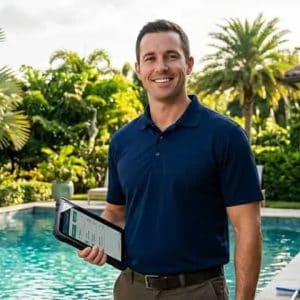
As a CPO (Certified Pool Operator) who has spent years maintaining and renovating aquatic spaces across the Bay area, I’ve seen how landscaping can either be a pool’s best friend or its worst nightmare. Choosing a fast growing privacy hedge around pool cage structures requires a delicate balance. You need something that grows quickly enough to provide seclusion, yet behaves well enough that it won’t drop excessive debris into your water or allow roots to undermine your pool deck. In this guide, we will dive deep into the best evergreen options for the Florida climate and how to maintain them without compromising your pool’s chemistry or structural integrity.
Why Privacy Landscaping is a Necessity for Tampa Lanai Owners
A pool cage, or lanai, is a staple of Florida living. It keeps the mosquitoes out and the leaves at bay, but it offers zero visual privacy. While some homeowners opt for “privacy screens” (darker mesh), these can often block too much airflow, making the pool area stiflingly hot in the July humidity. Living greenery is the superior solution. It provides “soft” privacy, cools the surrounding air through transpiration, and significantly boosts your property value under the Renovation & Resurfacing category.
From a CPO’s perspective, the right hedge acts as a windbreak, which can actually reduce the rate of evaporation and chemical loss in your pool. However, the wrong choice can lead to clogged skimmer baskets, stained finishes, and cracked pavers. Let’s look at the top contenders that thrive in our USDA Zone 9b/10a environment.
1. Podocarpus: The Gold Standard for Pool Perimeters
If you ask any high-end landscaper in South Tampa for a recommendation, the first word out of their mouth will likely be “Podocarpus.” Specifically, Podocarpus macrophyllus (Yew Plum Pine) is perhaps the most reliable podocarpus hedge along pool cage fence lines you can find.
The Benefits of Podocarpus
- Fast Growth: Once established, it can grow 2-3 feet per year until it reaches your desired height.
- Low Mess: Unlike many Florida shrubs, Podocarpus doesn’t have messy flowers or large fruit that attract pests or stain your pool deck.
- Salt Tolerance: For those living closer to the Gulf or the Bay, it handles salt spray remarkably well.
- Controllable Width: You can keep it as narrow as 2 feet, which is vital when space between the cage and the property line is tight.
CPO Pro-Tip: When planting Podocarpus, ensure you leave at least 3 feet of space between the main trunk and your pool cage footer. This allows room for maintenance access and prevents the hedge from “pushing” against the screen during heavy summer storms.
2. Clusia: The “Autograph Tree” Privacy Screen
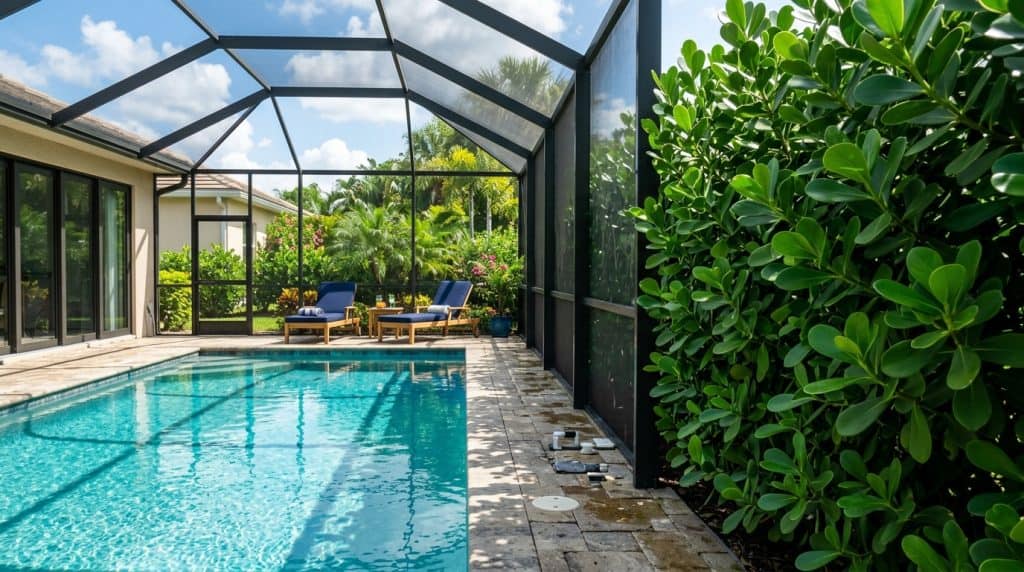
In the last decade, Clusia guttifera (Small-leaf Clusia) has skyrocketed in popularity across Tampa Bay. It’s often referred to as the “Autograph Tree” because you can scratch your name into its thick, succulent-like leaves. A clusia hedge privacy screen tampa bay style offers a modern, upscale aesthetic that fits perfectly with contemporary pool renovations.
Why Clusia is King of Seclusion
Clusia is incredibly dense. Its leaves are thick and leathery, providing a nearly 100% opaque wall of green. It is also exceptionally drought-tolerant once established, which is a major plus during our dry spring months. Because the leaves are so heavy, they don’t blow into the pool easily; when they do fall, they are large enough to be easily grabbed by the skimmer without disintegrating into fine organic “muck” that clogs your filters.
Managing Clusia Growth
While Clusia is fast-growing, it tends to grow “out” as much as it grows “up.” Regular pruning is required to keep it from encroaching on your screen. If you neglect it for a season, you might find the thick branches putting pressure on your aluminum frame, which can lead to expensive cage repairs.
3. Areca Palms: The Tropical Wall
For that “resort” feel, nothing beats areca palms trimmed hedge pool boundary setups. Areca palms grow in clumps and feature beautiful, feathery fronds that create a lush, tropical atmosphere. They are the quintessential Florida privacy plant.
The Areca Advantage
- Instant Height: You can buy Arecas at 6-8 feet tall and have an instant wall.
- Airflow: Unlike a solid hedge, the fronds allow a breeze to pass through, keeping your pool area cooler.
- Aesthetic: They perfectly complement a pool with a pebble finish or rock waterfall features.
The Maintenance Caveat: As a CPO, I must warn you that Arecas are “hungry” plants. They require regular fertilization with a high-quality palm special (8-2-12) to prevent yellowing. Furthermore, they produce “boots” and seeds that can be messy. If you don’t keep them trimmed, the dead fronds can become a haven for pests like palmetto bugs (Florida’s giant cockroaches).
CPO Diagnostic Checklist: Choosing Your Hedge
Before you head to the nursery, run through this checklist to ensure your chosen greenery won’t cause headaches for your Tampa Bay Pool Care routine:
- Sun Exposure: Does the area get at least 6 hours of direct sun? (Podocarpus and Clusia love sun; Arecas can handle some shade).
- Drainage: Is the area near your pool’s overflow drain? Plants like Clusia hate “wet feet” and may develop root rot if they sit in standing water after a tropical downpour.
- Debris Path: Is the plant upwind of the pool? If so, choose a plant with larger leaves (Clusia) rather than tiny leaves (like Privet) that pass right through the screens.
- Underground Utilities: Always call 811 before digging near a pool cage. Your pool’s plumbing, electrical lines for the light, and the grounding wire are all buried in this perimeter zone.
The Impact of Landscaping on Pool Chemistry
Many homeowners don’t realize that their choice of a fast growing privacy hedge around pool cage walls directly impacts their chlorine demand. When plants drop organic matter (leaves, pollen, berries) onto the screen, rain washes those tannins and phosphates into the pool water.
Phosphates are essentially “algae food.” If you have a hedge that sheds excessively, you may find yourself using more shock and algaecide than usual. This is why I advocate for “cleaner” hedges like Podocarpus or Clusia over something like a Bougainvillea, which, while beautiful, drops thousands of tiny paper-like flowers that are a nightmare for filtration systems.
Proper Spacing and Planting Techniques
In Tampa’s sandy “Myakka” soil, plants need a little extra help to thrive. When installing your privacy hedge:
1. The Three-Foot Rule
Always plant at least 36 inches away from the cage. This prevents roots from lifting the concrete footer and gives you space to walk between the hedge and the screen for cleaning. If the hedge is too close, you’ll also see a buildup of green algae on your screens because of the lack of airflow and trapped moisture.
2. Soil Amendments
Our soil is often nutrient-poor. Mix your native soil with 50% organic compost or topsoil to give your new hedge the nutrients it needs to hit that “fast growing” potential.
3. Irrigation Timing
Set your irrigation to run in the early morning. If you water the hedge in the evening, the moisture sits on the leaves all night, which in Tampa’s humidity, is an open invitation for “Sooty Mold”—a black fungus that looks terrible and can spread to your pool cage frames.
Maintaining the “Green Screen”
To keep your privacy hedge looking like a professional Renovation & Resurfacing project rather than an overgrown jungle, follow this seasonal schedule:
Spring (March – April)
This is the time to fertilize. Use a slow-release granular fertilizer. For Podocarpus and Clusia, a balanced 10-10-10 or 8-8-8 works well. For Arecas, use a dedicated Palm fertilizer containing micronutrients like Magnesium and Manganese.
Summer (June – August)
Growth will be explosive during the rainy season. You may need to trim your hedge every 4-6 weeks to maintain a clean line along the pool cage. Always “taper” the hedge so the bottom is slightly wider than the top; this ensures sunlight reaches the lower branches and prevents the bottom of the hedge from becoming “leggy” and thin.
Fall (October)
A final light pruning and a round of potassium-heavy fertilizer will help the plants’ root systems stay strong during the cooler, drier winter months.
Professional Integration: Pool Resurfacing and Landscaping
If you are currently planning a pool resurfacing or a deck renovation, that is the absolute best time to address your privacy landscaping. Removing old, woody, or messy shrubs and replacing them with a sleek clusia hedge privacy screen tampa bay can completely transform the aesthetic. It’s about creating a cohesive environment where the water, the deck, and the greenery work in harmony.
When we resurface a pool at Tampa Bay Pool Care, we often look at the surrounding environment. A new PebbleTec or Quartz finish looks significantly better when framed by a well-manicured Podocarpus wall than when it’s shadowed by an overgrown, dying oak tree or a thinning hedge.
Final Thoughts from the CPO
Creating privacy around your Tampa Bay pool doesn’t have to mean building a fortress. By choosing a fast growing privacy hedge around pool cage structures that suits our local climate and your specific maintenance level, you can reclaim your backyard.
Whether you choose the architectural elegance of the podocarpus hedge along pool cage fence, the lush density of a clusia hedge privacy screen, or the tropical flair of areca palms trimmed hedge pool boundary, remember that the “set it and forget it” rule doesn’t apply to Florida landscaping. A little bit of pruning and the right fertilization will ensure your privacy screen remains a beautiful asset rather than a maintenance liability.
If you’re ready to upgrade your pool’s environment, start with the perimeter. Your pool is your sanctuary—keep it that way with the right green screen. For more tips on maintaining your pool’s health and beauty in the Florida sun, keep following our expert guides.
— |