The relentless Florida sun, while glorious for poolside enjoyment, places immense strain on pool systems, demanding peak performance from every component to maintain crystal-clear water. When your pool’s intricate filtration falters, even subtly, the serene blue can quickly turn murky, signaling a deeper issue that requires immediate attention and expert understanding.
Understanding the DE Filter System and Its Critical Role
Diatomaceous Earth (DE) filters are renowned for their exceptional filtration capabilities, trapping particles as small as 1-5 microns, far surpassing sand or cartridge filters. This microscopic precision is particularly valuable in the Tampa Bay area, where fine wind-blown sand, pollen, and the rapid growth of microscopic algae demand superior water clarity. A DE filter achieves this by using a fine powder, diatomaceous earth, which coats fabric-covered grids inside the filter tank. As water passes through, the DE powder acts as a highly effective sieve, capturing impurities. Maintaining this intricate system effectively is paramount, and often, homeowners find the best way to ensure its longevity and performance, alongside perfect water chemistry, is through consistent weekly pool service and chemical maintenance provided by seasoned professionals.
The core principle behind DE filtration involves the diatomaceous earth itself – fossilized remains of diatoms, microscopic aquatic organisms. These skeletal remains have a porous, honeycomb-like structure that creates an incredibly fine filter medium. When properly applied, the DE forms a filter cake on the grids, allowing water to pass through while trapping even the smallest contaminants. This efficiency is why DE filters are often chosen for pools where pristine water quality is a top priority, offering an unparalleled sparkle that enhances any backyard oasis, especially under the bright Florida sun.
The Unwelcome Cloud: Why is DE Filter Powder Returning to Pool?
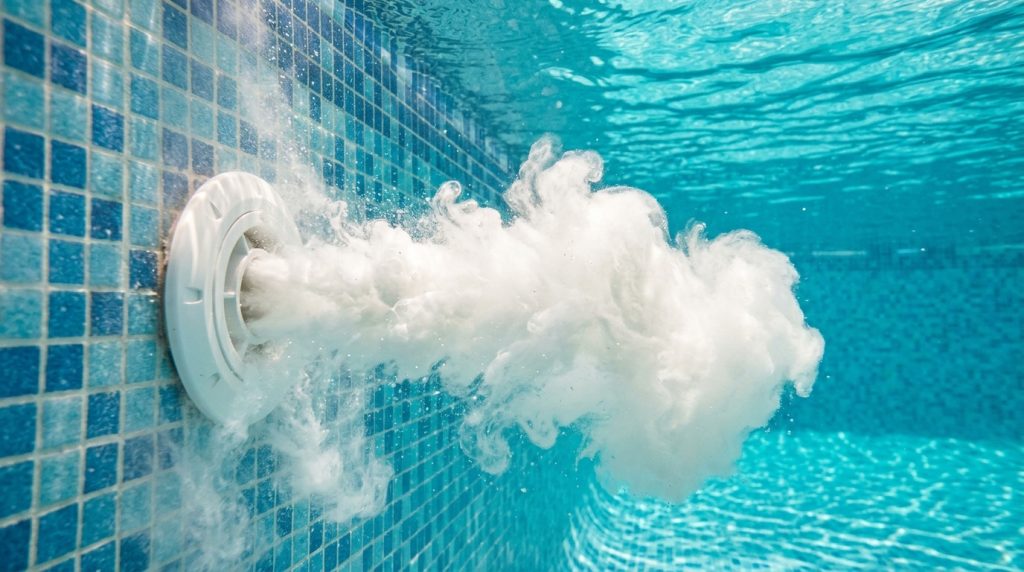
Few sights are as frustrating for a pool owner as discovering a milky cloud emanating from their return jets, especially when that cloud is unmistakably white DE powder. This phenomenon, where de filter powder returning to pool, is a clear indicator of a significant filtration system malfunction. It means the very medium designed to purify your water is now bypassing the filter grids and re-entering the swimming pool, rendering your filtration ineffective and potentially causing further issues. Ignoring this problem can lead to persistent water clarity issues, increased chemical consumption, and even abrasive damage to other pool equipment components.
When you observe DE powder circulating back into your pool, it’s not merely an aesthetic problem; it signifies that your primary defense against contaminants has been breached. The fine DE particles can irritate swimmers’ eyes and skin, clog skimmer and pump baskets more frequently, and even accumulate on the pool floor, requiring extensive vacuuming. More critically, the system is no longer filtering effectively, allowing microscopic algae, bacteria, and other particulates to proliferate, rapidly diminishing water quality and potentially leading to a green pool scenario. Identifying the root cause quickly is essential to restore your pool’s health and prevent escalating repair costs.
Culprit #1: Damaged DE Filter Grids or Manifold
The heart of your DE filter consists of several vertical grids, also known as filter elements, typically made of a strong plastic frame covered with a finely woven fabric. These grids are mounted on a central manifold, which collects the filtered water before it returns to the pool. Over time, these grids endure constant pressure, chemical exposure, and the abrasive action of DE powder, making them susceptible to wear and tear. A breach in these grids is one of the most common reasons you’ll see DE powder in your pool, as the powder simply passes through the damaged fabric.
Recognizing torn de filter grid symptoms is crucial for timely intervention. These symptoms often include visible tears, rips, or holes in the fabric covering the grid frames. Sometimes, the plastic spine supporting the fabric can crack or break, causing the fabric to sag or detach, creating a direct pathway for DE to escape. Less obvious damage might include stretched or worn fabric that, while not overtly torn, no longer holds the DE effectively. Even a single damaged grid can compromise the entire filtration system, allowing significant amounts of DE to bypass the filter and re-enter the pool, causing persistent cloudiness.
Beyond the individual grids, the central manifold plays a vital role in collecting filtered water and directing it out of the filter tank. This component, often made of PVC, can also suffer damage. Cracks in the manifold, particularly around the connection points for the grids, or a dislodged manifold assembly, can create bypass channels. If the manifold itself is compromised, filtered water can mix with unfiltered water or DE slurry, leading to the same problem of DE powder returning to the pool. A thorough inspection of both grids and the manifold during filter cleaning is indispensable for identifying these critical points of failure.
Culprit #2: The Multiport Valve Spider Gasket Failure
The multiport valve (MPV) is a critical component of most DE filter systems, responsible for directing water flow through various operational modes: filter, backwash, rinse, waste, recirculate, and closed. Inside this valve, a rubber “spider gasket” forms a seal that ensures water flows only through the intended pathways. This gasket is designed to withstand continuous pressure and chemical exposure, but like all rubber components, it can degrade over time, especially in Florida’s intense climate conditions.
A worn, cracked, or dislodged multiport valve spider gasket de leak is a common and often overlooked cause of DE powder returning to the pool. When this gasket fails, it creates an internal bypass, allowing DE-laden water from the filter or even the backwash line to leak directly into the return line, circumventing the filtration process. This means that even if your grids are perfectly intact, the DE powder will still find its way back into your pool. The spider gasket’s integrity is essential for maintaining the distinct pathways of water flow within the valve, and any compromise can disrupt the entire filtration cycle.
Other issues within the multiport valve can also contribute to DE blowouts. A broken or worn rotor, the movable part that the spider gasket seals against, can prevent proper sealing. Similarly, a weak or broken spring that holds the valve handle down can prevent the rotor from fully engaging with the gasket, leading to leaks. Diagnosing a multiport valve issue often requires specialized knowledge and, in some cases, a complete disassembly of the valve to inspect the internal components. Prompt repair or replacement of a faulty gasket or valve can quickly resolve the issue and restore your filter’s efficiency.
Culprit #3: Incorrect Backwashing or Operation
While mechanical failures are often the primary culprits, improper operational procedures can also lead to de powder blowing into pool returns. Backwashing a DE filter is a specific process designed to remove the dirty DE cake and accumulated debris from the grids. If this process is not performed correctly, residual DE can be dislodged and then pushed back into the pool during the subsequent filtering cycle.
One common mistake is insufficient backwashing. If the filter is not backwashed long enough or vigorously enough, the old, dirty DE may not be fully purged from the grids. When fresh DE is added, it mixes with the old, loosely adhered powder. Upon restarting the filter, this loose DE can be dislodged and pushed through the return jets. Conversely, backwashing for an excessively long period can sometimes dislodge DE particles that become trapped in the filter’s internal plumbing, only to be released when the filter is returned to normal operation. Similarly, failing to perform the “rinse” cycle after backwashing is a critical oversight. The rinse cycle is designed to settle the DE and any residual debris, preventing it from being returned to the pool.
Another operational error involves the addition of new DE powder. If DE is added too quickly, in too large a quantity, or without proper pre-mixing, it can create a concentrated slurry that overwhelms the grids. This can lead to uneven coating, causing some areas of the grids to be less effective or even allowing a surge of DE to bypass the filter material entirely. Always ensure DE is mixed into a slurry with water and added slowly through the skimmer while the pump is running, allowing it to evenly coat the grids. Adhering to manufacturer guidelines for DE dosage is also crucial, as too much powder can negatively impact filtration and pressure.
Immediate Steps When DE Powder is Blowing Into Pool Returns
Discovering DE powder returning to your pool requires prompt action to prevent further contamination and potential damage. The very first and most critical step is to immediately shut off your pool pump. Continuing to run the pump when DE is bypassing the filter will only exacerbate the problem, pushing more powder into the pool, clouding the water further, and potentially causing abrasive wear on the pump’s impeller or other internal components. Turning off the pump stops the flow, giving you time to assess the situation without making it worse.
Once the pump is off, you can begin a preliminary visual inspection. Check the pressure gauge on your filter – an abnormally high or low reading can sometimes indicate a problem. While a visual check from the outside might not reveal internal grid damage, you can often identify a leaking multiport valve by observing water seeping from the waste line or around the handle even when in the “filter” position. If you recently backwashed or added DE, consider if any steps were missed or performed incorrectly. However, for a thorough diagnosis, especially concerning internal filter components, professional intervention is almost always necessary to avoid further issues.
It is absolutely paramount to avoid running your DE filter with powder actively blowing into your pool. Not only is your filtration system completely ineffective in this state, but the abrasive DE particles can cause long-term damage to your pool’s surface, plumbing, and other equipment. While you await professional service, you might consider running your pump on a “recirculate” setting if your multiport valve allows, which bypasses the filter entirely. This will keep the water circulating and help with chemical distribution, but it will not filter the water. In the interim, manual vacuuming to waste (if possible) can help remove some of the settled DE from the pool floor, though this will also lower your water level and require replenishment.
Professional Diagnosis and Repair: Why Expertise Matters
While the initial signs of DE powder in your pool might seem straightforward, accurately diagnosing the precise cause—whether it’s a torn grid, a faulty spider gasket, or a manifold crack—requires specialized tools and experience. Attempting DIY repairs on a DE filter without proper knowledge can often lead to more significant and costly problems, including incorrect reassembly, overlooked damage, or even further breakage of delicate components. Pool filter systems are complex, and their effective function relies on precise sealing and structural integrity.
When you enlist professionals like Tampa Bay Pool Care, the diagnostic process begins with a thorough inspection of the entire filtration system. This typically involves carefully disassembling the DE filter tank, meticulously removing and inspecting each individual filter grid for tears, stretched fabric, or broken spines. The central manifold is also closely examined for cracks or separation. Furthermore, the multiport valve will be inspected, often requiring removal of the top cover to check the condition of the spider gasket and the rotor assembly. Our technicians also conduct pressure tests and visual checks to pinpoint the exact point of failure, ensuring no underlying issues are missed. For complex issues involving the pump itself, our team is also adept at professional pool pump and motor repair in Tampa Bay, ensuring all related equipment functions harmoniously.
Once the problem is identified, our team will proceed with the necessary repairs. This might involve replacing individual damaged grids, replacing the entire set of grids if multiple are compromised, or installing a new spider gasket or even a complete multiport valve if the existing one is beyond repair. For manifold issues, specific repair kits or replacement of the manifold may be necessary. Our expertise ensures that all components are correctly installed, sealed, and reassembled, restoring your DE filter to optimal performance. We understand the unique challenges Florida pools face, from intense UV exposure degrading plastics and rubber to the constant demand for peak filtration, and we apply this local knowledge to every repair.
Preventative Measures to Avoid Future DE Blowouts
Proactive maintenance is the cornerstone of preventing DE filter blowouts and ensuring the longevity of your pool equipment. Implementing a regular schedule for filter cleaning and inspection is paramount. For DE filters, this typically means a full breakdown and cleaning (often referred to as a “grid clean” or “acid wash”) at least once or twice a year, depending on pool usage and environmental factors like heavy pollen or nearby construction. During these cleanings, technicians can thoroughly inspect all grids, the manifold, and the internal components of the multiport valve for early signs of wear and tear, addressing them before they escalate into a major blowout. This routine check-up is invaluable for catching minor issues before they become significant problems.
Beyond professional cleanings, proper backwashing and DE recharging techniques are crucial for pool owners. Always follow the manufacturer’s guidelines for backwashing duration and frequency. Ensure you perform a proper “rinse” cycle after backwashing to settle the DE and prevent it from returning to the pool. When adding new DE, always pre-mix it into a slurry with water in a bucket, then pour it slowly into the skimmer while the pump is running. This allows the DE to evenly coat the grids, preventing clumping or excessive pressure on specific areas. Using the correct amount of DE, as recommended for your filter size, is also vital to optimize filtration without overloading the system. Adhering to these operational best practices can significantly reduce the risk of future DE blowouts.
Ultimately, the most effective preventative measure is consistent, professional pool care. Regular local pool maintenance services in Tampa ensure that not only is your filter system operating correctly, but also that your water chemistry is perfectly balanced. Proper chemical levels prevent corrosive damage to filter components and keep your water clean, reducing the workload on your filter. A professional eye can spot subtle changes in filter pressure, water clarity, or equipment performance that might indicate an impending issue, allowing for timely intervention. Investing in preventative maintenance saves money in the long run by extending equipment life and avoiding costly emergency repairs, ensuring your Tampa Bay pool remains a pristine oasis for years to come.