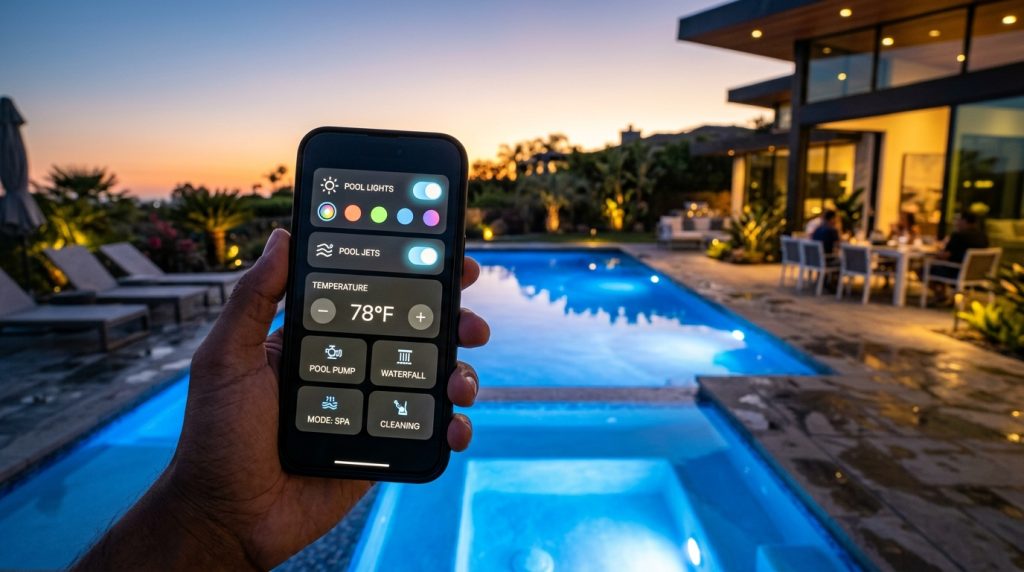
Managing a swimming pool in the intense Tampa Bay heat requires constant vigilance against rapid chlorine degradation from high UV indexes and sudden tropical downpours. Merging this demanding physical upkeep with modern smart home ecosystems shifts the burden of manual operation into an automated, responsive sanctuary. You will discover exactly how to bridge the gap between high-voltage pool equipment and voice commands.
Bridging High Voltage and Smart Homes: The Basics of Pool Relays
High-voltage pool equipment like variable-speed pumps, heaters, and chlorinators cannot connect directly to low-voltage smart home hubs or voice assistants. To safely bridge this gap, homeowners rely on heavy-duty smart relays, such as the Shelly 1PM or Sonoff Elite, which act as smart switches designed to handle the high amperage of pool machinery while communicating over Wi-Fi. When these physical components wear down or suffer from electrical surges during Florida’s frequent lightning storms, seeking professional pool pump and motor repair in Tampa Bay ensures that your automation infrastructure remains safe, grounded, and fully operational without risking damage to your expensive smart home relays.
Installing these relays involves wiring them into your existing pool subpanel, allowing them to interrupt or complete the electrical circuit on command. By integrating these relays with platforms like Apple HomeKit, Amazon Alexa, or Google Home, you gain the ability to control pool pump with siri alexa from anywhere in the world. This setup eliminates the need to trek out to a hot, mosquito-ridden equipment pad just to turn on a pump or check if a system is running. Instead, the relays communicate status updates directly to your preferred smart home app, giving you real-time oversight of your entire filtration system.
Integrating Apple HomeKit and Siri for Seamless Control
Apple HomeKit offers one of the most secure and private smart home ecosystems, but because pool manufacturers rarely build native HomeKit support, achieving this integration requires a bit of clever engineering. Homeowners often utilize software bridges like Homebridge or Scrypted running on a local Raspberry Pi or home server to expose standard Wi-Fi relays to the Apple Home app. Once configured, you can effortlessly control pool pump with siri alexa compatible devices, allowing you to activate your filtration cycle with a simple voice command while preparing for a weekend gathering. This local control ensures that even if your primary internet connection drops, your local network can still execute crucial pool automation schedules.
Beyond simple pump schedules, HomeKit allows for the creation of complex automation scenes that coordinate multiple backyard elements simultaneously. For instance, you can program a “Night Swim” scene that activates your filtration system, turns on your pool lights, and adjusts your patio brightness to a warm, welcoming glow. Incorporating luxury residential pool care in South Tampa ensures that your high-end automated systems are always backed by pristine water chemistry, preventing calcium scaling on your automated salt cells and keeping your system running efficiently. This perfect synergy between cutting-edge smart home automation and elite physical maintenance elevates the entire backyard experience.
Harnessing Alexa and Smart Routines for Backyard Management
Amazon Alexa provides an incredibly versatile platform for pool automation due to its massive library of third-party smart home skills and intuitive routine builder. By connecting smart relays or smart automation panels directly to the Alexa app, you can build custom routines that respond to voice commands, weather changes, or time-of-day triggers. For example, you can configure your system to voice activate pool heater spa mode when you tell Alexa to prepare the hot tub, initiating a sequence that adjusts your motorized valve actuators and fires up the natural gas or heat pump system. This level of convenience makes hosting spontaneous social gatherings completely stress-free, as your spa reaches the perfect temperature without you ever stepping outside to manually turn valves.
Alexa also excels at managing complex schedules that help offset the high energy costs associated with running pool equipment in Florida’s year-round warm climate. You can set up routines that run your variable-speed pump at high speeds during off-peak energy hours and drop it to a whisper-quiet low speed during the day. Integrating smart backyard lighting pool automation into these Alexa routines allows your landscape lighting, color-changing LED pool lights, and water features to synchronize perfectly, creating a stunning visual display as soon as the sun sets over the Gulf.
Advanced Automation: Home Assistant and Pentair Systems
For tech-savvy homeowners who want absolute control over their backyard oasis without relying on cloud servers, Home Assistant represents the gold standard of open-source automation. By leveraging the home assistant pool automation pentair integration, specifically through software projects like pool-controller or IntelliCenter integrations, you can bypass proprietary walls and local-control your entire equipment pad. This setup allows Home Assistant to read real-time data from your Pentair IntelliTouch, EasyTouch, or IntelliCenter panel, displaying chemical levels, water temperature, and pump RPMs on a single, customized dashboard. Keeping these advanced systems running optimally requires consistent weekly pool service and chemical maintenance to ensure that physical sensors remain free of algae, debris, and scale buildup, which could otherwise send faulty data to your smart home dashboard.
Home Assistant’s true power lies in its ability to execute incredibly smart, conditional automations based on real-time environmental factors. For example, if local weather stations detect an impending tropical storm in Pinellas or Hillsborough County, Home Assistant can automatically run an extra filtration cycle to prep the water chemistry, disable the pool heater to conserve energy, and turn off any decorative water features. This proactive approach protects your expensive equipment from electrical surges while ensuring your water remains balanced and clear even when faced with heavy organic debris and sudden downpours.
Safety, Redundancy, and Electrical Considerations
When dealing with high-voltage electricity in close proximity to water, safety must always be the primary consideration during any smart home installation. All smart relays, contactors, and microcontrollers must be housed inside weatherproof, NEMA-rated enclosures and protected by Ground Fault Circuit Interrupters (GFCI) to prevent catastrophic electrical faults. It is vital to maintain physical override switches at the equipment pad, ensuring that pool technicians or emergency services can instantly cut power to the pumps and heaters manually without needing access to your smart home app or Wi-Fi network.
Furthermore, you must ensure that your smart automation routines include built-in safety interlocks to protect your physical equipment from accidental damage. For instance, your programming should strictly forbid the pool heater from activating unless the smart relay confirms that the pool pump is running at a minimum flow rate of twenty-five gallons per minute. Without these software and hardware safeguards, a simple voice command error could cause a heater to fire up dry, leading to melted PVC plumbing, cracked heat exchangers, and incredibly costly repair bills that could have easily been avoided with proper system design.
Navigating Future Energy Standards and Florida Weather Shifts
As Florida continues to implement stricter energy efficiency standards for residential pool equipment, integrating smart automation with variable-speed pumps is transitioning from a luxury upgrade to a practical necessity. Future-proofing your backyard oasis with robust local automation networks ensures your property remains compliant with evolving environmental regulations while significantly lowering your monthly utility bills. Staying ahead of these technological and environmental shifts—whether preparing your automated systems for the next major hurricane season or scheduling preventative maintenance to protect your high-tech investments—guarantees that your pool remains a source of effortless relaxation and pride for years to come.