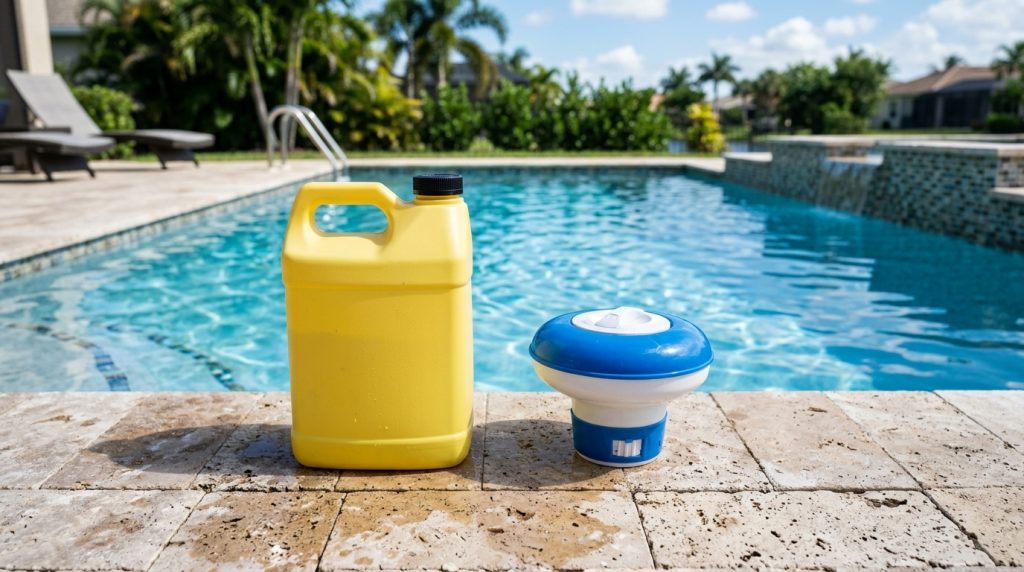
Tampa Bay’s relentless sun, frequent tropical downpours, and naturally hard municipal water present a unique gauntlet for pool owners. Maintaining crystal-clear, healthy water here isn’t just about adding chemicals; it demands a strategic understanding of how sanitizers interact with our specific environment. Choosing the right chlorine variant is paramount to avoiding frustrating water chemistry imbalances and costly repairs, ensuring your investment remains a refreshing oasis rather than a maintenance headache.
Understanding the Core Sanitizers for Florida Pools
In Florida’s intense climate, where UV radiation rapidly degrades chlorine and heavy rains dilute water chemistry, selecting the optimal sanitizer is a cornerstone of effective pool maintenance. Each type of chlorine offers distinct advantages and disadvantages that directly impact your pool’s pH, alkalinity, calcium hardness, and cyanuric acid (CYA) levels. Understanding these nuances is crucial for preventing common issues like algae blooms, scaling, and equipment corrosion. For many Tampa Bay residents, navigating these chemical complexities often leads to seeking expert assistance, making weekly pool service and chemical maintenance an invaluable resource for consistent water quality and peace of mind.
Liquid Chlorine (Sodium Hypochlorite): The Workhorse
Liquid chlorine, chemically known as sodium hypochlorite, is a non-stabilized form of chlorine widely used for its direct and potent sanitizing power. It is essentially the same active ingredient found in household bleach, though pool-grade versions are typically more concentrated (10-12.5% vs. 5-8%). Its primary advantage is that it introduces no additional cyanuric acid (CYA) or calcium into the water, making it an excellent choice for pools where these levels are already optimized or need to be carefully controlled. When added to water, it immediately forms hypochlorous acid, the active sanitizer, and also contributes to a slight increase in pH, requiring careful monitoring and adjustment with muriatic acid.
For Tampa Bay pool owners, using liquid chlorine means avoiding the “chlorine lock” associated with excessive CYA, which is a common problem in sunny climates. The local pool maintenance services in Tampa often recommend liquid chlorine for daily sanitization or shocking, especially in salt-chlorine generator pools where CYA is managed separately. While its shelf life is shorter than stabilized products and it requires more frequent dosing due to rapid UV degradation, its purity and lack of unwanted byproducts make it a preferred choice for many professionals seeking precise chemical control without contributing to long-term water chemistry imbalances that can lead to issues like scaling or equipment damage.
Cal-Hypo (Calcium Hypochlorite): Shocking with a Side Effect
Calcium hypochlorite, or cal-hypo, is a powerful unstabilized granular chlorine product primarily used for shocking pools to rapidly kill algae, bacteria, and other contaminants. It typically contains 65-75% available chlorine and is highly effective at oxidizing organic matter. A significant characteristic of cal-hypo is its contribution of calcium to the pool water. While a certain level of calcium hardness is essential for preventing plaster etching and equipment corrosion, excessive levels can lead to scaling on pool surfaces, heaters, and salt cell plates, a particular concern in areas with naturally hard water like much of Florida.
For pools in Tampa Bay, where municipal water often already has moderate to high calcium levels, the use of cal-hypo must be carefully managed to prevent cal hypo calcium hardness increase Florida pool owners frequently grapple with. This makes it less ideal for routine daily sanitization and more suited for occasional shock treatments. When considering the best pool shock for hard water Tampa, it’s crucial to weigh the immediate sanitizing benefit against the long-term impact on calcium hardness. While effective, pool owners should regularly test their calcium levels and potentially seek alternatives like liquid chlorine for shocking if calcium hardness approaches or exceeds 400 ppm, to avoid the costly and labor-intensive process of scale removal or partial drain-and-refills.
Trichlor (Trichloroisocyanuric Acid): The Convenient Tab
Trichlor, commonly found in slow-dissolving tablets or sticks, is a stabilized chlorine product that offers immense convenience for pool owners. Its primary appeal lies in its slow-release nature and the fact that it contains cyanuric acid (CYA), which acts as a “sunscreen” for chlorine, protecting it from rapid degradation by the sun’s UV rays. This stabilization significantly extends the lifespan of chlorine in outdoor pools, reducing the frequency of dosing. However, this convenience comes with a critical trade-off: every time trichlor is added to the pool, it also adds more CYA.
The core issue with liquid chlorine vs trichlor tabs in Florida’s sun-drenched environment revolves around CYA management. While some CYA (30-50 ppm) is beneficial, levels that climb above 80-100 ppm can lead to “chlorine lock,” where the chlorine becomes too tightly bound to the CYA and loses its sanitizing effectiveness, even if free chlorine levels appear adequate on a test strip. This often results in persistent algae problems despite seemingly sufficient chlorine. Furthermore, trichlor is highly acidic (pH of around 2.8), which will consistently lower the pool’s pH and alkalinity, requiring regular additions of pH increasers and alkalinity buffers to maintain balance, adding another layer of chemical management to consider for Tampa Bay pools.
Navigating Tampa Bay’s Water Chemistry Challenges
The unique environmental factors of Tampa Bay demand a tailored approach to pool water chemistry. The intense Florida sun, with its high UV index, is the primary antagonist of chlorine, necessitating stabilization or frequent dosing. Heavy rainfall, a regular occurrence during our wet season, can dilute pool chemicals, drop pH, and introduce contaminants, further complicating sanitizer choice. Additionally, the region’s municipal water sources often carry a moderate level of calcium hardness and alkalinity, which must be factored into the equation when selecting between chlorine types that either add or deplete these parameters. Neglecting these environmental pressures can quickly turn a sparkling pool into a problematic one, sometimes requiring a fast 48-hour green pool recovery service.
When comparing liquid chlorine vs trichlor tabs, the interaction with these local conditions becomes stark. Liquid chlorine, being unstabilized, is highly susceptible to UV degradation, meaning it needs to be added more frequently, especially during peak sun hours. However, it doesn’t contribute to CYA buildup, making it ideal for maintaining optimal CYA levels. Trichlor, while protected by its inherent CYA, constantly increases that stabilizer level, eventually leading to chlorine lock, which is exacerbated by Florida’s strong sun. Cal-hypo, while effective for shocking, contributes calcium, which can push already hard Tampa Bay water into scaling territory if not managed judiciously, especially concerning for pool heaters and salt cells, which are vulnerable to calcium deposits.
Making the Right Choice for Your Tampa Bay Pool
The “best” sanitizer isn’t a one-size-fits-all answer but rather a strategic decision based on your pool’s specific needs, your maintenance philosophy, and the unique challenges of the Tampa Bay environment. For pool owners prioritizing precise chemical control, especially those with salt chlorine generators or who are diligent about daily dosing, liquid chlorine often emerges as the front-runner. It allows for complete control over CYA and calcium levels, preventing the long-term issues associated with their accumulation, though it demands more frequent additions due to UV degradation and requires regular pH balancing to counteract its alkalinity-raising tendencies.
If convenience is your top priority and you’re prepared to manage CYA levels through partial drain-and-refills, trichlor tabs can offer a hands-off approach to daily sanitization. However, it’s critical to understand the inherent trade-off of rising CYA and dropping pH, which will necessitate more frequent testing and adjustments of other parameters. Cal-hypo, on the other hand, should generally be reserved for shock treatments, especially in Tampa Bay’s hard water, to prevent excessive calcium buildup. Ultimately, a balanced approach often involves a combination: using liquid chlorine for daily sanitation, cal-hypo sparingly for targeted shocking, and perhaps trichlor only in specific, controlled scenarios. Consistent water testing is non-negotiable, and understanding your pool’s unique demands, potentially through professional guidance, is key to maintaining a healthy and enjoyable swimming environment.
The longevity and efficiency of your pool system, from the pump to the plaster, are directly tied to consistent and balanced water chemistry. Proactive maintenance and informed choices about sanitizers not only ensure swimmer comfort and safety but also protect your significant investment. As new technologies and environmental considerations continue to shape the pool industry, staying ahead with preventative care and smart chemical management will always be the most effective strategy for preserving your Tampa Bay oasis for years to come.