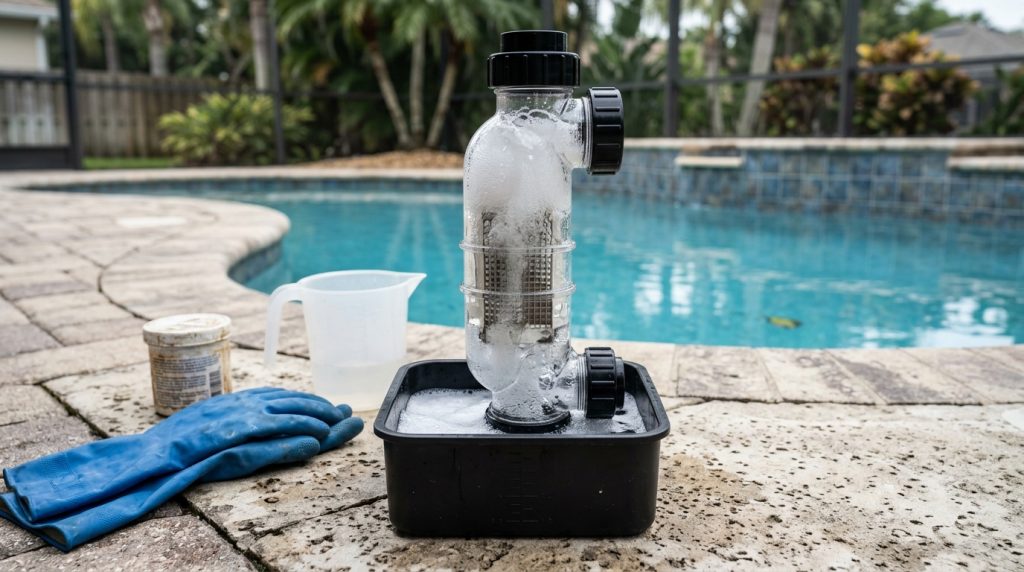
The relentless Florida sun, coupled with our naturally hard water and high ambient temperatures, presents unique challenges for pool owners. Calcium scaling, a common byproduct of these conditions, can quickly diminish the efficiency and lifespan of your salt chlorinator’s turbo cell. Understanding how to properly maintain this vital component is not just about extending its life; it’s about ensuring consistent, crystal-clear water without unnecessary expense or frustration.
Why Your Salt Chlorinator Cell Needs Regular Acid Washing in Florida’s Climate
In the Tampa Bay area, where pool usage is year-round and evaporation rates are high, calcium carbonate buildup on your salt chlorinator cell’s plates is an inevitable reality. As water evaporates, dissolved minerals, particularly calcium and magnesium, become more concentrated. When this super-saturated water passes through the electrolytic plates of your salt cell, the electrical current causes these minerals to precipitate out and cling to the plates as hard, white scale. This scaling acts as an insulator, reducing the cell’s ability to generate chlorine efficiently and significantly shortening its operational lifespan. Ignoring this buildup will lead to diminished sanitization, increased run times for your pool pump, and ultimately, premature cell replacement, which represents a substantial investment for any pool owner.
Understanding the Risks: Protecting Your Platinum Plates
The heart of your salt chlorinator cell consists of titanium plates coated with precious metals, primarily ruthenium and iridium, which function as catalysts in the electrolysis process to convert salt into chlorine. These coatings, often referred to as “platinum plates,” are incredibly durable under normal operating conditions but can be irreversibly damaged by improper cleaning methods. Using too strong an acid solution or allowing the cell to soak for too long can strip away this crucial coating, rendering the cell ineffective. The objective when you clean salt cell with muriatic acid is to dissolve the calcium scale without eroding the underlying metallic layers. This delicate balance requires a precise understanding of acid concentration and contact time, making careful preparation and execution paramount for preserving your cell’s integrity and ensuring its continued performance.
Preparing for a Safe and Effective Acid Wash
Before you even think about mixing chemicals, prioritize safety. Muriatic acid is a highly corrosive substance that can cause severe burns to skin and eyes, and its fumes are damaging to respiratory systems. Always work in a well-ventilated outdoor area, away from children and pets. Essential safety gear includes heavy-duty rubber gloves, eye protection (goggles, not just safety glasses), and a long-sleeved shirt and pants to protect your skin. Have a source of fresh water readily available for immediate rinsing in case of accidental contact. Begin by turning off your pool pump and ensuring the chlorinator cell is completely isolated from the electrical supply. Carefully disconnect the cell from the plumbing unions, making sure to drain any residual water. Some cells come with a cleaning stand or cap; if yours does, utilize it to seal one end of the cell, preparing it to hold the acid solution.
The Crucial Muriatic Acid to Water Ratio for Salt Cell Cleaning
Achieving the correct muriatic acid to water ratio clean salt cell is the most critical step in preventing damage to your cell’s delicate platinum plates. A general guideline for light to moderate scaling is a 10:1 water-to-acid ratio (ten parts water to one part muriatic acid). For heavier, more stubborn scale, you might cautiously increase the acid concentration to a 4:1 or 5:1 ratio, but never use undiluted acid. The cardinal rule when mixing is always to add acid to water, never water to acid, as this can cause a violent, exothermic reaction. Fill your cleaning vessel (a dedicated plastic bucket or the cell’s cleaning stand) with the appropriate amount of water first. Then, slowly and carefully pour the measured muriatic acid into the water, stirring gently with a plastic stirrer. This dilution process minimizes the acid’s corrosive power while still allowing it to effectively dissolve calcium carbonate, protecting your cell’s critical components.
Step-by-Step Guide to Acid Washing Your Salt Chlorinator Cell
Once your diluted acid solution is prepared and your cell is ready, the cleaning process can begin. Carefully submerge the salt cell into the solution, ensuring the plates are fully covered. You will immediately observe effervescence, which is the acid reacting with the calcium scale, releasing carbon dioxide gas. Allow the cell to soak for no more than 10-15 minutes, or until the bubbling subsides and the scale is visibly gone. It’s crucial not to leave the cell in the acid for extended periods, even if scaling persists, as prolonged exposure can damage the coating. For cells like a Hayward T-Cell acid wash instructions typically emphasize similar principles of dilution and limited contact time. If stubborn scale remains after the initial soak, remove the cell, rinse it thoroughly, and then gently brush the remaining scale with a soft plastic brush, like a toilet brush, before considering a second, brief soak in a fresh, diluted solution. Never use metal brushes or abrasive pads, as these will scratch the precious metal coating.
When and How Often to Clean Your Salt Chlorinator Cell
Determining how often clean Pentair chlorinator cell (or any brand) largely depends on your pool’s specific conditions and water chemistry. In Florida, where calcium hardness levels can be higher and water temperatures accelerate scaling, cleaning might be required more frequently than in cooler climates. A good rule of thumb is to visually inspect your cell every 2-3 months. Look for white, crusty deposits on the plates. Other indicators include a noticeable drop in chlorine production, even after adjusting the chlorinator’s output, or an error message on your chlorinator’s control panel indicating low flow or a dirty cell. If you observe significant scaling, it’s time for an acid wash. Regular monitoring and proactive cleaning, alongside consistent weekly pool service and chemical maintenance, are key to extending the life of your salt cell and ensuring your pool remains properly sanitized throughout the year.
Post-Cleaning Care and Reinstallation
After the acid wash is complete and all visible scale has been removed, thoroughly rinse the salt cell with fresh water, both inside and out. This step is critical to neutralize any residual acid that could continue to corrode the plates or be introduced back into your pool water. Inspect the cell’s O-rings for any signs of wear, cracking, or damage; replace them if necessary to prevent leaks. Carefully reattach the cell to your pool’s plumbing unions, ensuring a snug fit without overtightening. Once reinstalled, turn your pool pump back on and check for any leaks around the unions. Finally, restart your salt chlorinator system. It’s a good practice to monitor your pool’s chlorine levels closely for the next 24-48 hours to confirm the cell is operating efficiently again. If you encounter any issues during reinstallation or notice persistent problems with chlorine generation, it may be time to consult with professionals who can diagnose and address underlying system problems, potentially even requiring professional pool pump and motor repair in Tampa Bay if related issues arise.
Beyond the Acid Wash: Proactive Cell Maintenance
While periodic acid washing is essential, it’s just one component of comprehensive salt chlorinator care. The most effective way to minimize calcium buildup and prolong your cell’s life is through vigilant water chemistry management. Maintaining proper pH levels (7.4-7.6) and alkalinity (80-120 ppm) is crucial, as high pH and alkalinity accelerate scale formation. Regularly testing and adjusting your calcium hardness (200-400 ppm) can also help. Consider using a calcium sequestrant product, especially if you have naturally hard water, as these chemicals bind with calcium ions, preventing them from precipitating onto the cell plates. For many pool owners in the region, the complexities of balancing these parameters can be overwhelming. Engaging local pool maintenance services in Tampa provides peace of mind, ensuring your water chemistry is consistently optimized, reducing the need for aggressive cleaning, and ultimately extending the life of your valuable pool equipment.
As Florida continues to experience growth and evolving environmental considerations, the emphasis on efficient and sustainable pool maintenance practices will only intensify. Proactive care, from precise acid washing techniques to regular professional oversight, not only preserves your investment in equipment like your salt chlorinator cell but also contributes to the overall energy efficiency and longevity of your entire pool system. Understanding and implementing these preventative measures today means enjoying a cleaner, healthier, and more cost-effective pool experience for years to come.