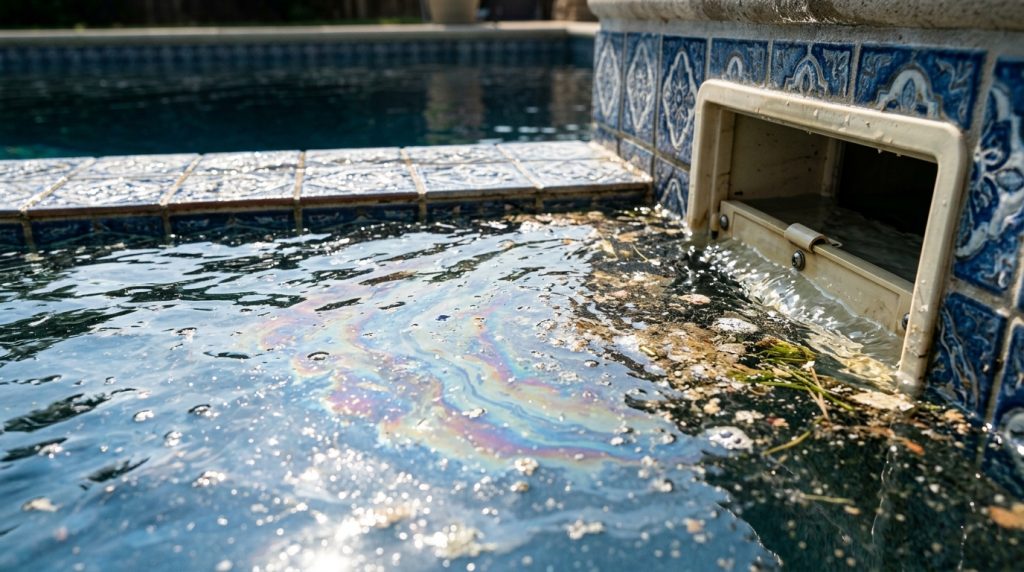
In the relentless Florida sunshine, where the UV index frequently soars and pool use is virtually year-round, organic contaminants relentlessly challenge water quality. These invisible pollutants accumulate, creating persistent issues that diminish clarity and strain your pool’s systems. Understanding the subtle forces at play unlocks truly pristine water.
The Unseen Battle: Why Tampa Bay Pools Need Specialized Care
The subtropical climate of Tampa Bay, with its abundant sunshine and high humidity, creates a unique environment for swimming pools. Every bather introduces a cocktail of organic substances: lotions, hair products, sweat, and, most notably, sunscreen. These seemingly innocuous additions don’t just disappear; they form a greasy, often invisible film that clings to pool surfaces and circulates within the water. This organic load directly competes with your sanitizer, demanding more chlorine or bromine to break down these compounds, rather than focusing on bacteria and algae. Without proactive intervention, this leads to increased chemical consumption, diminished water quality, and a frustrating cycle of maintenance. This is precisely why a comprehensive approach, often including regular weekly pool service and chemical maintenance, becomes indispensable for maintaining optimal conditions.
Beyond the immediate visible issues like cloudy water or a greasy sheen, the persistent presence of organic contaminants has deeper implications for your pool’s health. These substances create a fertile ground for algae growth by providing nutrients and shielding microscopic organisms from sanitizers. They also contribute to the formation of chloramines, the compounds responsible for that irritating “chlorine smell” and red eyes, which are signs of an overburdened sanitation system, not excessive chlorine. Florida’s high bather loads, common in residential and especially commercial settings, exacerbate this problem, making the efficient breakdown of these organic materials critical for both swimmer comfort and the longevity of your pool’s infrastructure.
Understanding Pool Enzymes: Nature’s Little Helpers
What Are Enzymes and How Do They Work?
Enzymes are fascinating biological catalysts, naturally occurring proteins that significantly accelerate specific biochemical reactions without being consumed in the process. In the context of pool care, these specialized enzymes are designed to target and break down non-living organic matter into smaller, more manageable compounds. Think of them as microscopic Pac-Men, each type specifically engineered to “eat” certain kinds of organic molecules. Unlike traditional sanitizers that oxidize and destroy a broad spectrum of contaminants, enzymes work by hydrolysis, breaking complex chains of molecules into simpler components. This specificity allows them to efficiently process oils, fats, and proteins that often escape or overwhelm conventional chemical treatments, making them invaluable tools in maintaining water purity.
The efficacy of pool enzymes lies in their ability to perform their function continuously and efficiently within the pool environment. Different enzymes are formulated to target specific organic compounds. For instance, lipases are excellent at breaking down fats and oils, proteases tackle proteins, and amylases work on starches. A high-quality pool enzyme product typically contains a blend of these enzymes, creating a synergistic effect that addresses the full spectrum of organic contaminants introduced by bathers and the environment. This targeted action means that instead of merely encapsulating or oxidizing these substances, the enzymes dismantle them at a molecular level, transforming them into harmless, filterable byproducts or gases that can easily exit the water. This process significantly reduces the overall organic load, paving the way for clearer, healthier water.
The Science Behind Enzyme Action on Sunscreen and Oils
The bane of many Florida pool owners is the greasy film left by sunscreen and body oils. These substances are complex mixtures of hydrocarbons, fatty acids, and waxes that are notoriously difficult for chlorine alone to fully break down. This is where fast 48-hour green pool recovery service often includes addressing the underlying organic load that contributed to the algae bloom. Pool enzymes for sunscreen scum are specifically formulated with lipolytic enzymes (lipases) that target the ester bonds in fats and oils. These enzymes attach to the large, insoluble oil molecules and catalyze their breakdown into smaller, water-soluble fatty acids and glycerol. This enzymatic action effectively liquefies the greasy film, preventing it from coalescing into visible scum lines or forming persistent cloudy water.
Beyond simply breaking down visible residues, the continuous action of enzymes plays a crucial role in preventing the formation of biofilms and other stubborn organic accumulations. Sunscreen and body oils, when not properly addressed, can adhere to pool surfaces, plumbing, and filter media, creating a sticky matrix where bacteria and algae can thrive. Enzymes work proactively to dismantle these organic precursors, preventing them from establishing a foothold. By reducing the surface tension of the water and breaking down the hydrophobic (water-repelling) nature of these oils, enzymes ensure that these contaminants remain suspended and are either filtered out or rendered inert. This biochemical process is particularly vital in high-bather-load environments, where the constant influx of organic material can quickly overwhelm a pool’s sanitation system, leading to persistent water quality issues.
The Tangible Benefits for Tampa Bay Pool Owners
Eliminating the Stubborn Waterline Scum Ring
The dreaded local pool maintenance services in Tampa frequently encounter the persistent issue of a waterline oil scum ring pool fix. This unsightly ring is primarily composed of body oils, sunscreens, and environmental pollutants that accumulate at the water’s surface and adhere to the tile line. Traditional cleaning often involves vigorous scrubbing with harsh chemicals, which is not only labor-intensive but can also be detrimental to tile grout over time. Enzymes, however, offer a proactive and continuous solution. By constantly breaking down these organic compounds as they enter the water, enzymes prevent them from ever forming that tenacious ring. They work at a molecular level to keep the water surface clean and reduce the adhesive properties of these organic residues, meaning less physical effort is required to maintain a pristine waterline.
Implementing an enzyme treatment program significantly reduces the need for manual scrubbing and specialized tile cleaners. This translates directly into less maintenance time and effort for pool owners, allowing for more enjoyment of their aquatic oasis. Furthermore, preventing the formation of a scum line contributes to the overall aesthetic appeal of the pool, ensuring that the water looks inviting and crystal clear from edge to edge. For pools with decorative tiles or intricate finishes, this preventative measure is particularly valuable, as it protects surfaces from staining and the abrasive effects of frequent scrubbing. The consistent breakdown of these organic molecules by enzymes ensures that the waterline remains free from the greasy film that detracts from a pool’s beauty, enhancing both its visual appeal and the overall swimming experience.
Enhancing Filtration and Reducing Maintenance
One of the most significant, yet often overlooked, benefits of using pool enzymes is their profound impact on your filtration system. Organic contaminants like oils, lotions, and dead algae cells are notorious for clogging filter cartridges and sand beds. These sticky substances bind to the filter media, reducing its efficiency and necessitating more frequent backwashing or cleaning. This constant strain on the filtration system can lead to premature wear and tear on components, including the pump. Enzymes actively break down these organic clogs into smaller, more soluble particles that either pass through the filter harmlessly or are captured more easily without gumming up the media. This process directly contributes to a substantial reduction in the frequency and intensity of filter maintenance, extending the life of your expensive filter cartridges and media, and minimizing the need for professional pool pump and motor repair in Tampa Bay.
The ability of enzymes to reduce pool filter cartridge clogging with enzymes translates into more efficient water circulation and better overall water quality. When filters operate at peak efficiency, they remove more particulate matter from the water, resulting in superior clarity and reduced strain on the pump motor. This not only saves on electricity costs due to a less-stressed pump but also prolongs the lifespan of your entire circulation system. For pool owners in Florida, where pumps run for extended periods due to high temperatures and heavy usage, this efficiency gain is particularly valuable. Less time spent cleaning filters means more time enjoying a sparkling clean pool, and fewer unexpected repair bills for overworked equipment, making enzymes a smart investment in preventative maintenance.
Improving Water Clarity and Sanitizer Efficiency
The presence of organic contaminants in pool water creates a constant battle for your primary sanitizer. Sunscreen, body oils, and other bather-introduced gunk act as a significant chlorine demand, meaning your sanitizer is consumed breaking down these non-living organics instead of effectively disinfecting the water. This leads to depleted sanitizer levels, allowing bacteria and algae to proliferate, and ultimately resulting in cloudy water and increased chemical usage. Enzymes, by systematically breaking down these organic “food sources,” alleviate this burden on your sanitizer. When the organic load is reduced, your chlorine or bromine can work more efficiently and effectively, primarily targeting harmful pathogens, leading to consistently clearer, more brilliant water with less effort.
Furthermore, the breakdown of organic matter by enzymes helps to minimize the formation of combined chlorine, or chloramines. Chloramines are formed when chlorine reacts with nitrogenous compounds from sweat and urine. While they do have some sanitizing ability, they are significantly less potent than free chlorine and are responsible for the strong chemical odor and eye irritation often associated with pools. By actively reducing the organic precursors that form chloramines, enzymes help maintain higher levels of free available chlorine, ensuring superior sanitation and a more pleasant swimming experience. The result is water that not only looks sparkling clean but also feels and smells fresh, requiring fewer shock treatments and overall chemical adjustments.
Ideal for High-Traffic and Commercial Pools
Commercial pools in Florida, such as those found in hotels, resorts, community centers, and apartment complexes, face an exponentially greater challenge in maintaining water quality due to extremely high bather loads. The constant influx of bathers introduces massive amounts of organic contaminants, making it incredibly difficult to keep up with sanitation demands using traditional methods alone. This is where a commercial pool enzyme cleaner becomes an indispensable tool. These specialized formulations are designed to handle the intense organic loads of public pools, proactively breaking down sunscreen, oils, and other residues before they can overwhelm the filtration system or deplete sanitizers. The result is consistently pristine water that meets stringent health department standards without constant chemical adjustments or excessive backwashing.
For commercial operators, the benefits extend beyond just water quality. Reduced chemical consumption translates to lower operational costs, and less frequent filter cleaning minimizes labor expenses and downtime. More importantly, crystal-clear, fresh-smelling water significantly enhances the guest experience, leading to higher satisfaction and repeat visits. Preventing issues like cloudy water, scum lines, and strong chlorine odors is paramount for maintaining a positive reputation and ensuring swimmer comfort and safety. Enzymes provide a reliable, continuous defense against organic pollution, allowing commercial pools to maintain optimal conditions even under the heaviest usage, ensuring a clean, inviting environment for all patrons.
Integrating Enzymes into Your Pool Care Routine
Dosage and Application Best Practices
Successfully integrating enzymes into your pool care routine in Florida requires understanding proper dosage and application. Most enzyme products are liquid concentrates designed for easy addition directly to the pool water. The initial dose is typically higher to establish an enzymatic baseline, followed by a regular maintenance dose, often applied weekly or bi-weekly depending on bather load and environmental factors. It is crucial to follow the manufacturer’s specific instructions, as concentrations can vary between brands. For pools with exceptionally high bather loads or during peak summer months, a slightly increased maintenance dose might be beneficial. Enzymes are generally compatible with all common sanitizers and other pool chemicals, but it’s always wise to add them separately and allow for proper circulation between additions to prevent any localized concentration issues. Consistent application is key to preventing organic buildup rather than reacting to it.
When applying enzymes, ensure your pool pump is running to facilitate even distribution throughout the water column. While enzymes are highly stable, direct exposure to extremely high concentrations of certain sanitizers, like freshly added shock treatment, can temporarily reduce their activity. Therefore, it’s often recommended to add enzymes a few hours after shocking the pool or when sanitizer levels have normalized. For inground pools, pouring the enzyme solution slowly into the skimmer or directly into the water while walking around the perimeter ensures optimal dispersal. Above-ground pools can benefit from adding the solution in front of a return jet. Regular testing of water chemistry, including pH and alkalinity, remains vital to ensure the enzymes can perform optimally, as extreme pH levels can affect enzyme stability and activity.
Complementing, Not Replacing, Sanitizers
It is absolutely critical to understand that pool enzymes are a complementary treatment, not a replacement for your primary sanitizer, whether that be chlorine, bromine, or an alternative system. Enzymes are designed to break down non-living organic contaminants, thus reducing the workload on your sanitizer. They do not kill bacteria, viruses, or algae directly in the same way a sanitizer does. Think of them as a highly efficient pre-treatment system that cleans up the “food” for these microorganisms and removes the substances that consume your sanitizer. By reducing the organic load, enzymes allow your sanitizer to perform its essential disinfection duties much more effectively and efficiently, leading to a synergistic effect that results in superior water quality and clarity. Maintaining proper sanitizer levels according to health guidelines is always paramount for swimmer safety.
The beauty of using enzymes in conjunction with your sanitizer lies in achieving a more balanced and stable water chemistry. When your sanitizer isn’t constantly battling a heavy organic load, its levels remain more consistent, preventing the fluctuations that can lead to cloudy water or algae blooms. This means less need for reactive chemical adjustments, fewer shock treatments, and a more predictable pool environment. Enzymes contribute to a holistic approach to pool care, where each component works in harmony to maintain a healthy, inviting swimming space. They represent a sophisticated layer of preventative maintenance that enhances the performance of your existing systems, ensuring your Tampa Bay pool remains a pristine oasis with less effort and more enjoyment.
As Florida continues to experience rapid growth and evolving environmental considerations, the emphasis on efficient, sustainable pool maintenance will only increase. Proactive measures, like the consistent use of natural pool enzymes to manage organic loads, are not just about immediate water clarity; they represent a forward-thinking approach to preserving pool infrastructure and optimizing resource use. Embracing such preventative maintenance strategies ensures pools remain resilient against the elements and heavy usage, aligning with future standards for both operational efficiency and environmental stewardship in our unique subtropical climate.