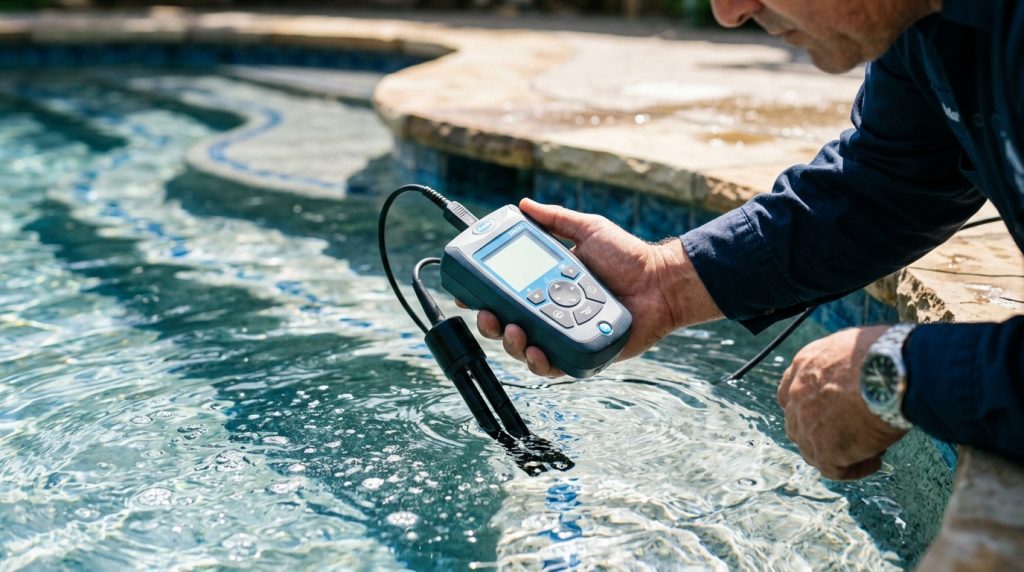
In the relentless Florida sunshine, where evaporation is constant and tropical downpours are frequent, your pool water faces unique challenges. Over time, these environmental factors, combined with regular chemical additions, can subtly transform your crystal-clear oasis into a chemically saturated environment. This saturation point, often signaled by frustratingly ineffective chemical treatments, is a critical indicator that your pool needs more than just another dose of sanitizer.
Understanding Total Dissolved Solids (TDS) in Your Florida Pool
Total Dissolved Solids (TDS) is a measure of everything dissolved in your pool water, excluding pure H2O. This includes a complex cocktail of inorganic salts (like calcium, magnesium, sodium, potassium), metals (copper, iron), organic matter (sweat, sunscreen, leaves, dirt), and, critically, the residual byproducts of the chemicals you add to sanitize and balance your pool – chlorine, algaecides, pH adjusters, and alkalinity increasers. In the Tampa Bay area, where tap water often has a naturally higher mineral content and intense evaporation concentrates these substances, TDS levels can climb steadily. As water evaporates, the dissolved solids are left behind, increasing their concentration. Each time you add a chemical, it contributes to the overall TDS, even if it’s performing its intended function. This accumulation is a silent, ongoing process that can eventually overwhelm your water’s capacity to maintain balance.
Maintaining optimal water chemistry is a delicate art, and understanding your TDS levels is a crucial component of this. While some level of dissolved solids is natural and even necessary for water to feel “right,” excessively high concentrations can lead to a cascade of problems that undermine your efforts to keep the pool pristine. This is why regular, professional weekly pool service and chemical maintenance is not just about adding chlorine, but about comprehensive water analysis that includes monitoring parameters like TDS. Without this oversight, you might find yourself in a constant battle against an unseen enemy, pouring in more chemicals only to see diminishing returns and persistent water quality issues.
The Subtle Signs: Recognizing High TDS in Pool Symptoms
When your pool water becomes saturated with dissolved solids, it begins to exhibit a range of frustrating and often misinterpreted symptoms. You might find yourself scratching your head, convinced you’re doing everything right with your chemical adjustments, yet your pool still isn’t quite right. The most common and often earliest indicator of high TDS in pool symptoms is a general dullness or cloudiness of the water. Even after shocking or adding clarifiers, the water lacks that sparkling clarity you expect. This isn’t just an aesthetic issue; it’s a sign that the water’s ability to hold suspended particles in solution is compromised, and light isn’t refracting properly.
Beyond visual cues, total dissolved solids too high in pool can manifest in several other ways. You’ll notice an increased demand for sanitizers; chlorine seems to disappear faster, requiring more frequent or higher doses to maintain residual levels. This is because the high concentration of other dissolved substances interferes with chlorine’s ability to effectively oxidize contaminants. Consequently, you might experience persistent algae outbreaks, even when your chlorine levels appear adequate. Swimmers may also report eye and skin irritation, not necessarily due to low pH or high chlorine, but because the overall chemical load in the water is simply too high. Furthermore, metals in the water can become more corrosive, leading to premature wear on heating elements, pump parts, and other metallic fixtures, while calcium and other minerals can precipitate out, causing scaling on surfaces and equipment. In extreme cases, especially with salt system pools where salt is a major contributor to TDS, you might even detect a slightly salty taste in the water.
The Science Behind Saturation: Why Chemicals Stop Working
The core problem with high TDS is its direct impact on water chemistry and the efficacy of your pool chemicals. Water has a finite capacity to dissolve substances. Once this saturation point is approached or exceeded, the chemical reactions necessary for effective sanitation and balance begin to falter. The high ionic strength created by a dense concentration of dissolved solids essentially “ties up” the active ingredients in your pool chemicals. For example, chlorine’s ability to kill bacteria and algae relies on its active form, hypochlorous acid (HOCl). When TDS is high, the water’s ionic strength increases, which can reduce the amount of available HOCl, making your chlorine less potent and requiring you to use more of it to achieve the same sanitizing effect. This creates a vicious cycle where more chemicals are added, further increasing TDS.
Moreover, high TDS can destabilize other critical water parameters. It can make pH and alkalinity levels harder to manage, leading to wild swings that stress your pool’s surfaces and equipment. The buffering capacity of the water, which helps resist drastic changes in pH, can be compromised, making your pool more susceptible to becoming acidic or alkaline. In Florida’s hot climate, high TDS also exacerbates issues like calcium scaling, as the water struggles to keep minerals in solution, causing them to precipitate out onto pool surfaces, tile lines, and inside plumbing. This not only detracts from your pool’s appearance but can also reduce the efficiency of your filter and heater. When these issues combine, even the most diligent chemical balancing efforts can feel like bailing water with a sieve, leading to frustration and potentially costly repairs if not addressed promptly. If you’re seeing persistent algae despite chemical treatments, it might be time to consider our fast 48-hour green pool recovery service to get things back on track.
Proactive Management: How to Lower TDS in Pool Without Draining (Mostly)
The most effective and often unavoidable method to significantly reduce TDS is through dilution – partially draining your pool and refilling it with fresh water. However, there are several preventative and management strategies that can help delay the need for a full or partial drain, focusing on how to lower TDS in pool without draining completely. Regular backwashing of your filter, especially for sand and DE filters, helps remove accumulated contaminants and some dissolved solids, providing a small but consistent reduction. Ensuring your pool is free of debris like leaves, dirt, and organic matter prevents these substances from dissolving and contributing to TDS. Encouraging swimmers to shower before entering the pool can significantly reduce the introduction of body oils, lotions, and other organic materials that contribute to dissolved solids. Additionally, using high-quality, reputable pool chemicals that leave fewer inert byproducts can slow the rate of TDS accumulation.
While these methods are valuable for slowing the inevitable rise of TDS, it’s crucial to understand that they primarily manage the *rate* of accumulation rather than providing a complete solution. Eventually, the only way to truly “reset” your pool’s chemistry and bring down a critically high TDS level is by removing a portion of the old, saturated water and replacing it with fresh water. In Florida, where water is a precious resource, partial drains are often preferred over full drains. A professional pool technician can help you determine the optimal amount of water to replace based on your current TDS levels and other water chemistry parameters, ensuring you conserve water while effectively restoring your pool’s balance. Identifying and repairing any pool leaks promptly also prevents unnecessary water loss and subsequent refilling with potentially high-TDS tap water, which can exacerbate the problem. Professional electronic acoustic pool leak detection can pinpoint these issues before they become major problems.
The Florida Factor: Combating Dull Pool Water High TDS Florida
Pool owners in Florida face a unique set of challenges that make managing TDS particularly critical. The intense solar radiation and high ambient temperatures lead to rapid evaporation, which, as discussed, concentrates dissolved solids at an accelerated rate. This constant evaporation means that even if you’re not swimming much, your pool’s TDS levels are steadily climbing. Furthermore, our frequent, heavy tropical rains, while seemingly diluting the pool, can often introduce a host of new contaminants – runoff from landscaping, atmospheric dust, and even dissolved minerals from your roof or deck. This paradox means rain can sometimes contribute to the TDS problem rather than solving it, especially if your pool is not properly maintained to handle the influx of new substances. The naturally higher mineral content in much of Florida’s tap water also means that every time you top off your pool due to evaporation or perform a partial drain, you’re introducing more dissolved solids, making it a continuous battle to keep levels in check.
These specific environmental pressures make the problem of dull pool water high TDS Florida a pervasive issue that requires vigilant monitoring and proactive intervention. Without a comprehensive understanding of these factors, pool owners can find themselves in a frustrating cycle of endless chemical additions with little to no improvement in water clarity or quality. This is where the expertise of a local pool care professional becomes invaluable. They understand the nuances of Florida’s water sources, climate patterns, and their impact on pool chemistry. Regular, precise testing by an experienced technician can accurately track your TDS levels and advise on the most effective strategies, whether it’s adjusting your chemical regimen or recommending a timely partial drain. For residents of the area, understanding these local challenges is key to maintaining a beautiful pool, and our local pool maintenance services in Tampa are specifically tailored to address these regional demands.
When Professional Intervention Becomes Essential
While understanding TDS and implementing preventative measures are crucial, there comes a point when DIY efforts may no longer suffice. If you’ve been diligently testing your water, adding chemicals as recommended, and still battling persistent cloudiness, algae, or increased chemical consumption, it’s a strong indicator that your TDS levels have reached a critical threshold. At this stage, professional intervention isn’t just a convenience; it’s an essential step to restore your pool’s health and prevent more significant, costly problems down the line. Professional pool technicians possess advanced testing equipment that can provide a more accurate and comprehensive analysis of your water chemistry, including precise TDS measurements and the identification of specific contributing dissolved solids. Their expertise allows them to diagnose the root cause of your pool’s issues, distinguishing between a simple chemical imbalance and a more complex TDS saturation problem.
Beyond diagnosis, professionals can implement targeted solutions. They can advise on the optimal timing and extent of partial draining and refilling, ensuring that the process is efficient and effective without wasting water or resources. They also have access to specialized products and techniques that can help manage TDS and other water quality issues more effectively than over-the-counter solutions. In some rare, extreme commercial cases, or for owners seeking the absolute purest water, advanced filtration systems like reverse osmosis (RO) can be employed to strip nearly all dissolved solids from the water, though this is typically not necessary for residential pools. Ultimately, partnering with a knowledgeable pool care company like Tampa Bay Pool Care ensures that your pool benefits from expert oversight, preventing the insidious creep of TDS saturation and safeguarding your investment. Our professionals understand the intricate balance of Florida pool chemistry and are equipped to keep your water pristine, ensuring you spend more time enjoying your pool and less time troubleshooting it.