If you live in Tampa Bay, you know that our landscape is as beautiful as it is volatile. Between the intense afternoon thunderstorms, the high humidity, and the unique composition of our sandy Florida soil, maintaining a backyard oasis requires more than just skimming leaves and balancing chlorine. One of the most common—and potentially devastating—issues I see as a CPO (Certified Pool Operator) is soil washout beneath pool decks.
When you step out onto your lanai and notice a slight dip in the pavers or a gap opening up between the pool coping and the deck, you aren’t just looking at an aesthetic flaw. You are looking at the early warning signs of structural shifting. If left unaddressed, these minor “dips” can lead to cracked pipes, collapsed pool walls, and expensive renovations. Understanding the mechanics of sunken pavers around pool edge repair is essential for every homeowner from St. Pete to Clearwater.
At Tampa Bay Pool Care, we believe that education is the first line of defense in pool maintenance. In this guide, we will dive deep into why soil washout occurs, how to diagnose voids, and the modern technologies available to stabilize your ground.
The Anatomy of Your Pool Deck: Why It Shifts
To understand why your deck is sinking, you first have to understand what lies beneath those beautiful travertine or brick pavers. A properly installed pool deck consists of several layers:
- The Subgrade: The native Florida soil (mostly sand and organic material).
- The Base Material: Usually a compacted layer of crushed concrete or lime rock.
- The Bedding Sand: A thin layer of fine sand that allows pavers to be leveled perfectly.
- The Pavers: The visible surface you walk on.
In a perfect world, these layers remain compacted and dry. However, Florida is anything but dry. When water introduces itself into these layers—whether through heavy rain or a subsurface leak—the fine particles of the bedding sand and subgrade begin to migrate. This migration creates voids under pool deck concrete settling areas, leading to the “sunken” look that plagues so many Tampa backyards.
Common Causes of Soil Washout in Florida
Soil doesn’t just disappear; it moves. In our region, there are three primary culprits behind the displacement of the earth beneath your pool.
1. The “Power Washer” Effect: Pool Pipe Leaks
This is perhaps the most insidious cause of deck failure. Your pool’s plumbing—return lines, suction lines, and main drains—runs directly beneath your deck. If a PVC joint cracks or a pipe develops a pinhole leak, it releases pressurized water directly into the soil. This pool pipe leak washing away paver sand acts like a slow-motion power washer, carving out massive caverns beneath your pavers while the surface remains seemingly intact—until it suddenly drops.
2. Poor Drainage and Roof Runoff
Tampa’s torrential rains can dump inches of water in minutes. If your gutters are clogged or your deck isn’t properly sloped, water can pool at the edges of your pavers. As this water seeps down the side of the pool beam, it carries the supporting sand with it, depositing it deeper into the ground or washing it out through the lanai’s perimeter.
3. Hydrostatic Pressure and Soil Compaction
Sometimes, the issue isn’t a leak but the soil itself. Florida’s sandy soil is prone to “settling” over time. If the area around the pool wasn’t properly compacted during the initial construction, the weight of the water in the pool and the concrete of the deck will eventually compress the earth, creating gaps.
Diagnostic Checklist: Is Your Deck Sinking?
As a homeowner, you don’t need a degree in geology to spot the warning signs. Use this diagnostic checklist to evaluate your pool area once a month:
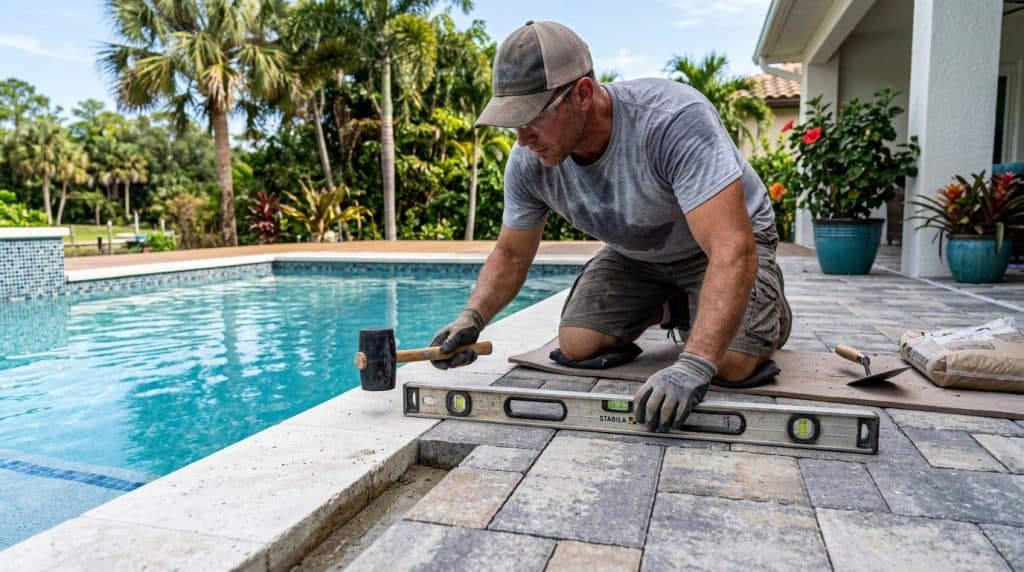
- The “Hollow” Tap: Walk across your pavers and tap them with a rubber mallet or the heel of your shoe. Do some areas sound “hollow” while others sound “solid”? A hollow sound usually indicates a void has formed beneath the paver.
- Coping Separation: Look at the “coping” (the edge tile of the pool). Is there a widening gap between the coping and the rest of the deck? This is a classic sign of structural shifting.
- Tripping Hazards: Are individual pavers starting to “toe up,” where one edge is higher than the other? This indicates the bedding sand has shifted unevenly.
- Disappearing Water: Are you losing more than 1/4 inch of water a day? If so, you likely have a leak that is actively contributing to soil washout.
- Cracked Grout or Polymeric Sand: If the sand between your pavers is constantly disappearing or the grout lines are cracking, water is likely migrating through those joints and washing away the base.
The Dangers of Ignoring Structural Voids
It is tempting to look at a slightly sunken paver and think, “I’ll fix that next summer.” However, in the world of pool maintenance, a small void today is a catastrophic failure tomorrow. When voids under pool deck concrete settling occur, the weight of the deck is no longer supported by the ground. This puts immense “shear stress” on your pool’s plumbing lines. Eventually, the weight of the sinking deck will snap the PVC pipes, leading to a massive leak that accelerates the washout even further.
Furthermore, structural shifts can lead to “beam shear,” where the top of the pool wall actually cracks off because of the lateral pressure from the sinking deck. At this point, you are no longer looking at a simple repair; you are looking at a total pool renovation.
Modern Solutions: Sunken Pavers Around Pool Edge Repair
In the past, the only way to fix a sinking deck was to rip up all the pavers, haul in new dirt, compact it, and relay the stone. This was messy, expensive, and often didn’t solve the underlying issue. Today, we have much more sophisticated methods.
The Power of Polyurethane Foam Injection
One of the most effective ways to address these issues is polyurethane foam injection pool deck leveling. This process involves drilling small, penny-sized holes through the pavers or the concrete base and injecting a high-density, structural-grade polymer foam into the void.
As the foam expands, it:
- Fills every nook and cranny of the void.
- Compacts the loose soil around it.
- Gently lifts the sunken pavers back to their original height.
- Creates a waterproof barrier that prevents future washout.
This method is preferred in Tampa Bay because the foam is lightweight—it won’t add more weight to our already unstable soil—and it is permanent. Unlike mud-jacking, which uses heavy concrete slurry, polyurethane foam won’t wash away.
Traditional Re-Sanding and Compaction
If the washout is minor and caused by surface drainage rather than a subsurface pipe leak, a traditional repair may suffice. This involves pulling up the affected pavers, adding a stabilizing base material (like crushed lime rock), compacting it with a plate vibrator, and re-laying the pavers with polymeric sand. Polymeric sand contains a binding agent that turns to a “glue-like” consistency when wet, preventing the sand from washing out of the joints in the future.
Preventative Measures for Tampa Bay Homeowners
The best way to handle sunken pavers around pool edge repair is to prevent the sinking from happening in the first place. Here are my top professional tips for maintaining your deck’s integrity:
1. Maintain Your Polymeric Sand
The sand between your pavers isn’t just for looks; it’s a seal. If you see gaps in your paver joints, replenish them with high-quality polymeric sand immediately. This prevents rainwater from getting under the pavers.
2. Check Your Gutters
Ensure your roof runoff is directed away from the pool deck. In Florida, a single broken downspout can dump thousands of gallons of water directly into your pool’s subgrade during a hurricane or tropical storm.
3. Watch the Water Level
If you find yourself constantly refilling the pool, call a leak detection specialist. A pool pipe leak washing away paver sand is the number one cause of sudden deck failure. Catching a leak early can save you $10,000+ in deck repairs.
4. Professional Inspections
Have a CPO or a pool structural specialist walk your property once a year. We know how to spot the subtle “waves” in a deck that indicate the beginning of a void. Early detection allows for “deep injection” stabilization before the pavers even begin to sink.
Why “DIY” Deck Leveling Often Fails
I’ve seen many well-intentioned homeowners try to fix sunken pavers by simply pouring more sand into the cracks or shoving bags of concrete into the holes. This is like putting a band-aid on a broken leg. If there is a void underneath, adding more material on top just adds more weight, which can actually cause the void to collapse faster.
True voids under pool deck concrete settling require pressure-injected solutions or complete base reconstruction. Without addressing the “why”—whether it’s a leak or a drainage issue—the pavers will simply sink again after the next heavy rain.
Conclusion: Protecting Your Florida Investment
Your pool is likely one of the largest investments you’ll make in your home. In the unique environment of Tampa Bay, the ground beneath our feet is constantly in motion. Soil washout is a reality of Florida living, but it doesn’t have to mean the end of your pool deck.
By staying vigilant, checking for hollow sounds, and understanding the benefits of modern polyurethane foam injection pool deck leveling, you can keep your backyard safe, level, and beautiful for decades. If you notice the tell-tale signs of sunken pavers around pool edge repair needs, don’t wait for the problem to grow. Addressing the “void” today ensures your pool remains the relaxing retreat it was meant to be.
For more expert advice on maintaining your Florida pool or to schedule a professional leak detection and deck assessment, trust the experts at Tampa Bay Pool Care. We understand the specific challenges of our local climate and are here to help you navigate them with ease.
—