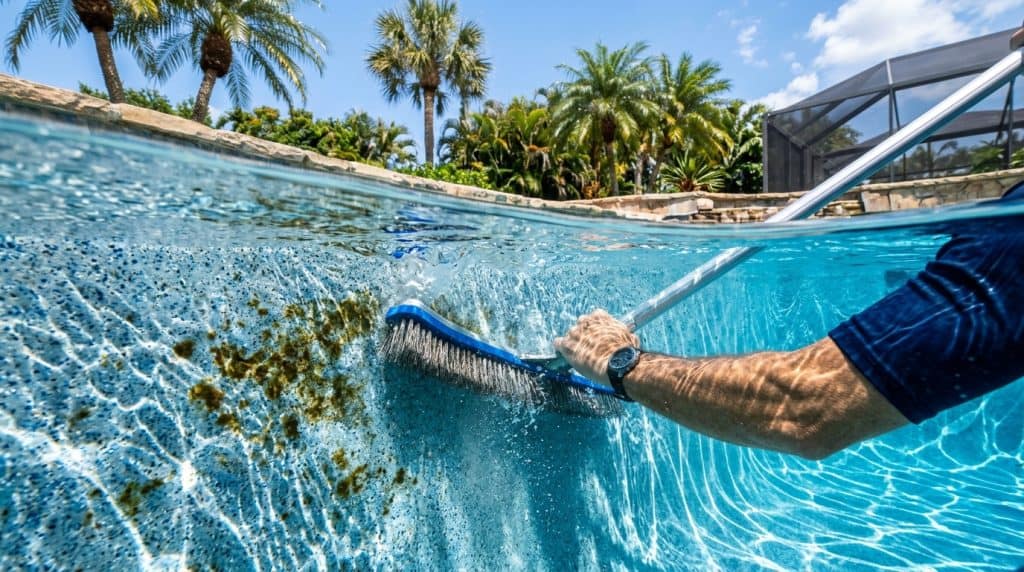
The relentless Florida sun and tropical humidity create an ideal breeding ground for microscopic invaders in your swimming pool. Even with diligent care, persistent algae can transform your sparkling oasis into an unsightly challenge. Understanding the unique characteristics of these resilient organisms is the first step toward reclaiming your crystal-clear water.
Understanding the Enemy: Black Algae vs. Yellow Mustard Algae
Differentiating between black algae and yellow mustard algae is crucial for effective treatment, as their biological makeup and adherence to surfaces demand distinct approaches. Black algae, often mistaken for dirt or stains, are actually cyanobacteria that form tough, protective layers, making them incredibly resistant to standard chlorine levels. They typically appear as small, dark spots, ranging from black to deep blue-green, and can be found on plaster, gunite, and even fiberglass surfaces, often concentrating in rough areas or crevices where they can firmly anchor themselves. Their robust cellular structure and mucilaginous sheath allow them to withstand harsh chemical treatments and UV exposure, making weekly pool service and chemical maintenance an essential preventative measure against their establishment.
Conversely, yellow mustard algae, also known as brown algae or golden algae, is a much finer, powdery organism that often clings to pool walls, steps, and even pool equipment. Unlike black algae, it doesn’t form deep roots or hard spots but rather a dusty film that can be easily brushed away, only to quickly resettle. This type of algae is notoriously resistant to normal chlorine levels and can spread rapidly, giving the impression of pollen or sand on the pool floor and walls. Its ability to survive in low-chlorine environments and even on pool toys or swimsuits makes cross-contamination a significant concern for Tampa Bay pool owners. While black algae requires deep physical scrubbing, sudden green blooms respond to our fast emergency protocol on how to turn a green pool crystal clear in 48 hours.
The Menace of Black Algae: Identification and Characteristics
Black algae pool removal is one of the most challenging tasks a pool owner can face due to its unique biological defenses. These organisms are not true algae but rather prokaryotic cyanobacteria, which possess a multi-layered cell wall and a protective gelatinous sheath. This sheath acts as a formidable barrier, shielding the underlying cells from chemical attack, particularly from chlorine. When black algae spots appear, they are typically circular and raised, feeling gritty to the touch, and attempting to brush them off with a standard pool brush often proves futile, as only the outer layers are disturbed, leaving the core intact to regenerate. They thrive in areas with poor circulation or rough surfaces, like worn plaster or grout lines, where they can establish deep roots and resist dislodgement, making their eradication a multi-step process that requires patience and precision.
Yellow Mustard Algae: A Persistent, Powdery Problem
Yellow mustard algae, while less aggressive than its black counterpart, presents its own set of frustrations for pool owners in the humid Florida climate. This strain of algae is characterized by its fine, yellowish-brown powder appearance that easily brushes off surfaces but quickly resettles, creating a constant battle. It has a remarkable resistance to chlorine, allowing it to persist even in pools with seemingly adequate sanitizer levels. The challenge with mustard algae lies in its ability to cling to almost any surface – pool walls, steps, ladders, toys, and even swimwear – making cross-contamination a significant risk. If not treated thoroughly, it can quickly re-establish itself from spores brought back into the pool, demanding a comprehensive and systematic approach to ensure complete eradication. Understanding its pervasive nature is key to developing an effective treatment strategy.
The Eradication Blueprint: Step-by-Step Treatment Protocols
Successfully eliminating both black algae and yellow mustard algae requires a meticulous, multi-pronged approach that goes beyond routine shocking. The Florida environment, with its intense UV radiation and frequent rainfall, necessitates a more aggressive and sustained treatment plan. This blueprint outlines the critical steps involved, from initial preparation to chemical application and ongoing prevention, ensuring that every phase is executed with precision. Ignoring any step can lead to a quick recurrence of the problem, underscoring the importance of a thorough and consistent application of these eradication protocols to restore and maintain your pool’s pristine condition.
Phase 1: Preparation and Physical Removal
Before any chemicals are introduced, thorough physical preparation is paramount for effective algae eradication. Begin by meticulously cleaning or removing all pool accessories, including ladders, diving boards, and any toys or floats, as these can harbor algae spores and lead to re-infestation. Pay particular attention to scrubbing these items with a strong chlorine solution or an algaecide to kill any lingering organisms. For the pool itself, an aggressive brushing regimen is essential. When tackling brushing black algae plaster pool surfaces, use a dedicated stainless steel algae brush or a stiff nylon brush designed for plaster. For mustard algae, a stiff nylon brush is usually sufficient. Focus on every inch of the pool surface, including steps, coves, and behind skimmer mouths, to physically disrupt the algae’s protective layers and expose them to subsequent chemical treatments. This mechanical disruption is a critical first step in weakening the algae’s hold and preparing it for the more potent chemical assault that follows.
Phase 2: Chemical Warfare – Shocking and Algaecides
Once the physical removal is complete, it’s time to unleash chemical warfare on the remaining algae. For both black and yellow mustard algae, a super-chlorination (shocking) is the cornerstone of treatment. For black algae, aim for a free chlorine level of 20-30 ppm, and for mustard algae, 15-20 ppm. Use a calcium hypochlorite (cal-hypo) or sodium dichlor shock product, dissolving it first in a bucket of water before slowly pouring it into the pool, preferably at dusk or night to minimize UV degradation. After shocking, immediately apply a specialized algaecide. For black algae, a copper-based algaecide is highly effective due to its ability to penetrate the tough cell walls, but exercise caution with plaster pools to avoid staining. For yellow mustard algae, a quaternary ammonium algaecide or a polyquat algaecide is typically recommended, as these are formulated to disrupt the cell structure of this particular type of algae. Always follow manufacturer instructions precisely for dosing and application, as improper use can lead to further complications or ineffective treatment. If you’re struggling with persistent issues, consider contacting local pool maintenance services in Tampa for professional assistance.
Phase 3: Filtration, Vacuuming, and Ongoing Maintenance
Following the chemical treatment, diligent filtration and vacuuming are crucial to remove dead algae and spores from the water. Run your pool filter continuously for at least 24-48 hours after shocking, backwashing or cleaning cartridges frequently as pressure rises, which indicates the filter is collecting debris. For black algae, it is often recommended to backwash or clean your filter daily until the water is clear. For mustard algae, vacuuming to waste is highly effective for removing large quantities of settled algae without recirculating it back through the filter. Remember to clean your filter thoroughly after the treatment period to prevent re-contamination. Maintain elevated chlorine levels (3-5 ppm) for several days after treatment and continue brushing daily to dislodge any lingering spores. Regular testing of your water chemistry is non-negotiable during this phase, ensuring pH, alkalinity, and calcium hardness are within optimal ranges to support chlorine efficacy and prevent future outbreaks. Consistent and thorough maintenance is the ultimate defense against persistent pool algae treatments. Algae spores frequently anchor inside porous mineral scaling along the water edge; protect perimeter surfaces by learning about pool tile calcium removal without damaging glazes.
Advanced Strategies for Stubborn Algae
Even with diligent application of standard protocols, some algae strains, particularly in the challenging Florida climate, can prove exceptionally stubborn. When faced with persistent black algae or recurring mustard algae, advanced strategies become necessary. These methods often involve specialized tools, stronger chemical combinations, or professional intervention to break the cycle of re-infestation. Understanding when and how to deploy these advanced techniques can save pool owners significant time and frustration, ultimately restoring the pool to its pristine condition and preventing future outbreaks that can escalate into costly problems. For severe cases, especially those involving potential structural damage or equipment issues, professional assessment is invaluable.
Targeted Spot Treatment for Black Algae
For particularly entrenched black algae spots that resist general shocking and brushing, targeted spot treatment is essential. One highly effective method involves direct application of granular trichlor chlorine. Carefully place a small amount of granular trichlor directly onto the black algae spot using a sock or a specialized applicator, allowing it to sit for a few minutes. The high concentration of chlorine will aggressively attack the protective layers of the cyanobacteria. Alternatively, a concentrated algaecide formulated specifically for black algae can be squirted directly onto the affected area. After the chemical has had time to work, vigorously scrub the spot with a stainless steel algae brush to dislodge the now-weakened organisms. This method is particularly effective for treating individual, stubborn spots that have developed deep roots, ensuring that the chemical penetrates the tough outer sheath. Always ensure proper safety precautions, including eye protection and gloves, when handling concentrated pool chemicals, and monitor your overall water chemistry closely after such localized treatments.
Addressing Pool Equipment and Surrounding Areas
A common oversight in algae eradication is neglecting the pool equipment and surrounding areas, which can act as reservoirs for spores. All pool equipment, including filters, pumps, and heaters, should be thoroughly cleaned and sanitized. For sand filters, consider a deep cleaning or even replacing the sand if it’s old and potentially harboring algae. Cartridge filters should be soaked in a strong filter cleaner solution. All pool toys, floats, brushes, and vacuum heads must be disinfected by soaking them in a strong chlorine solution (e.g., 1 part bleach to 10 parts water) for at least 30 minutes, or by using a dedicated algaecide. Even the pool deck and patio furniture can harbor spores that get blown back into the water, so a good pressure washing or scrubbing with a bleach solution is recommended. This comprehensive approach ensures that all potential sources of re-infestation are addressed, preventing the algae from making a quick return after the pool water itself has been treated. Proper sanitation of all accessories is a critical, often underestimated, step in long-term algae prevention.
Preventative Measures for a Sparkling Pool
Preventing algae outbreaks, especially in the challenging Florida climate, is far more cost-effective and less labor-intensive than treating an existing infestation. A proactive approach to pool care involves consistent attention to water chemistry, circulation, and cleanliness, creating an environment where algae cannot thrive. Implementing these preventative measures will not only keep your pool sparkling but also extend the life of your equipment and ensure a healthier swimming experience for everyone. Investing in regular maintenance habits is the cornerstone of a beautiful, algae-free pool throughout the year. For optimal year-round care, consider professional services like fast 48-hour green pool recovery service, which can also include preventative strategies.
Consistent Water Chemistry and Circulation
Maintaining balanced water chemistry is the single most important preventative measure against all forms of algae. Regularly test and adjust your pH (7.4-7.6), alkalinity (80-120 ppm), and calcium hardness (200-400 ppm) to ensure optimal conditions for chlorine efficacy. Crucially, consistently maintain adequate free chlorine levels, typically 2-4 ppm, adjusting upwards during periods of heavy use, high temperatures, or after rain. Shock your pool regularly, at least once a week during peak season, to oxidize contaminants and kill nascent algae spores. Beyond chemistry, proper water circulation is vital. Run your pool pump for a minimum of 8-12 hours daily, ensuring that all water passes through the filter. Position return jets to create a swirling motion that prevents dead spots where algae can settle and grow. A properly functioning professional pool pump and motor repair in Tampa Bay ensures this essential circulation, preventing stagnant areas where algae thrive. Good circulation distributes chemicals effectively and physically moves spores into the filter, significantly reducing the likelihood of an algae bloom.
Regular Brushing and Cleaning
Even with excellent water chemistry and circulation, microscopic algae spores can still settle and begin to grow on pool surfaces. Regular, thorough brushing is a simple yet incredibly effective preventative measure. Make it a habit to brush your pool walls, steps, and floor at least 2-3 times a week, paying extra attention to corners, crevices, and areas with poor circulation. This physical action dislodges any nascent algae, preventing it from forming colonies and making it easier for your sanitizer to kill them. Similarly, consistent vacuuming, either manually or with an automatic cleaner, removes organic debris that could serve as a food source for algae. Skim the surface daily to remove leaves, pollen, and other floating contaminants. Don’t forget to clean your skimmer and pump baskets regularly to maintain efficient flow. These routine physical cleanings are your first line of defense, significantly reducing the opportunities for both black and yellow mustard algae to take root and flourish in your Florida pool. Aggressive algaecides and heavy brushing often leave water hazy; troubleshoot filtration clarity with our guide on cloudy pool water after chemical treatments.
The subtropical climate of Tampa Bay presents unique challenges for pool owners, demanding a proactive and informed approach to water chemistry and maintenance. As new energy efficiency standards emerge and the hurricane season approaches, understanding the resilience of organisms like black and mustard algae underscores the critical value of consistent, professional pool care. Investing in preventative strategies and prompt treatment not only preserves the aesthetic appeal of your pool but also safeguards its longevity and ensures a safe, enjoyable swimming environment for years to come.