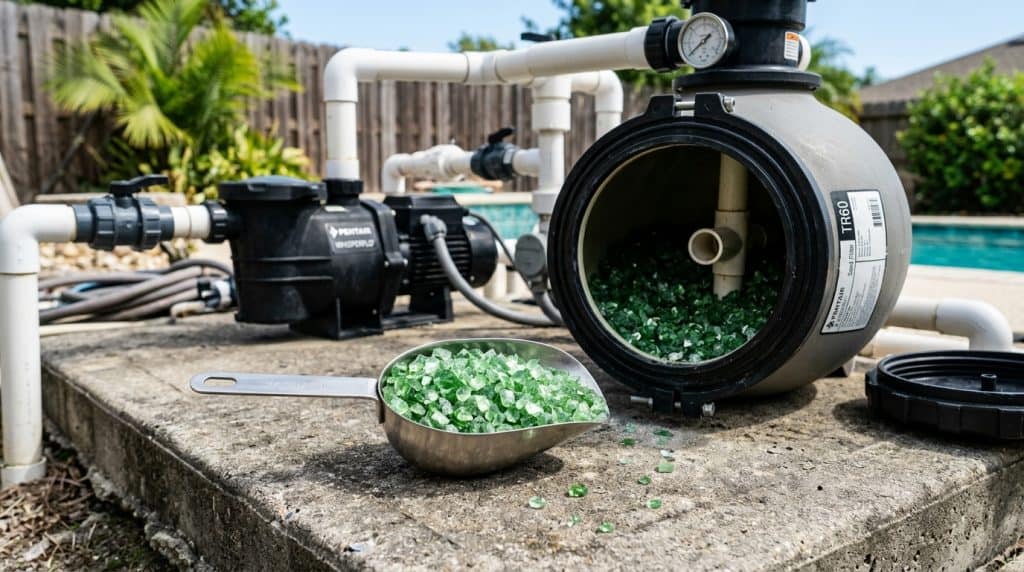
Greetings, fellow Tampa Bay pool owners! Your friendly neighborhood CPO here, with over two decades of sun-baked, storm-tested experience keeping our sparkling backyard oases pristine. From the relentless UV beating down on Clearwater to the live oak pollen explosions in Brandon, and the ever-present humidity across St. Pete, our pools face unique challenges that demand the absolute best in care and equipment. And nowhere is this more evident than in the heart of your pool’s filtration system: the sand filter.
For generations, silica sand has been the undisputed champion of sand filters. It’s affordable, readily available, and gets the job done – mostly. But as technology evolves, so do our options for maintaining that coveted, crystal-clear water. Lately, one question has been buzzing louder than a hungry mosquitocidal drone after a summer rain: “Is recycled filter glass media better than silica sand?”
It’s a fantastic question, and one that every savvy Tampa Bay homeowner should consider. Given our subtropical conditions – where algae thrives on warmth, and the sheer volume of organic debris (hello, lanai enclosures catching every leaf!) tests even the best filters – choosing the right media isn’t just about clear water; it’s about efficiency, longevity, and ultimately, your peace of mind. Let’s dive deep into the real-world advantages and considerations of upgrading your sand filter media, straight from the field.
The Tried-and-True: Understanding Silica Sand and Its Tampa Bay Limitations
Silica sand, in essence, works by trapping particles as water flows through its granular bed. The sharp, angular edges of fresh sand grains create an effective barrier, sifting out everything from everyday dust to microscopic algae spores. It’s a simple, robust system that has served us well.
However, after years of servicing pools from the limestone-rich soils of Plant City to the Gulf-side breezes of Tarpon Springs, I’ve observed several key limitations of traditional silica sand, particularly in our demanding climate:
- Biofouling and Clumping: Our warm water and high humidity create a perfect breeding ground for bacteria and algae. Over time, these microorganisms form a sticky biofilm on the surface of sand grains. This not only reduces filtration efficiency but can also lead to the sand clumping together, creating channels where unfiltered water can bypass the media entirely. You’re essentially backwashing clear water through clogged channels, leaving your pool less clean.
- “Fines” and Channeling: With repeated backwashing, the sharp edges of silica sand wear down, producing tiny particles called “fines.” These fines can be so small that they return to your pool, contributing to that frustrating haziness. This also exacerbates channeling, where water finds the path of least resistance, bypassing significant portions of the filter media. This is often the culprit behind a persistent problem of fine dust bypassing pool sand filter.
- Limited Filtration Capability: While silica sand is effective, its typical filtration range is 20-40 microns. While good for larger debris, many microscopic particles – including some bacteria, algae, and protozoa – can slip right through. This means a greater reliance on chemical sanitizers to pick up the slack.
- Shorter Lifespan in High-Use Conditions: In a region like ours, where pools are often used year-round and filter systems run for extended periods, silica sand typically needs to be replaced every 5-7 years. This is a messy, labor-intensive job that many homeowners dread.
Introducing Recycled Filter Glass Media: A Smarter Solution for Florida Pools
Now, let’s talk about the game-changer: recycled filter glass media. This innovative material is typically made from 100% recycled glass, crushed and processed to specific sizes and angularity, making it an eco-friendly option right off the bat. But its benefits extend far beyond sustainability.
What Makes Glass Media Different?
- Superior Filtration: Unlike traditional sand, glass media often filters down to 5-10 microns – a significantly finer level. This means it can trap much smaller particles, including many that contribute to cloudiness, algae spores, and even some bacteria. This superior clarity is instantly noticeable and reduces the burden on your chemical balance.
- Smooth Surface & Reduced Biofouling: The individual particles of glass media possess a smoother, more negatively charged surface compared to silica sand. This characteristic actively resists the adhesion of biofilm, reducing the potential for clumping and channeling. Fewer bacteria clinging to the media means less demand on your sanitizers and a cleaner filter bed.
- Longer Lifespan: Because glass media is more durable and less prone to breaking down into fines, it typically lasts much longer than silica sand – often 10-15 years, or even more. While the initial investment is higher, the extended lifespan offers considerable long-term savings and less frequent, messy media changes. This directly answers the question, “how often replace glass pool filter media?” The answer is much less frequently!
- Reduced Backwashing: Due to its greater dirt-holding capacity and resistance to channeling, glass media often requires less frequent backwashing, and when it does, it’s more efficient. This saves you water (a precious resource, especially during dry spells), energy, and reduces the amount of treated water going down the drain, thus saving on chemical replenishment.
- Lower Chemical Consumption: By filtering out more organic matter and resisting biofilm formation, glass media reduces the demand on your pool’s sanitizers. Less organic load means chlorine can work more effectively on pathogens, potentially allowing you to use fewer chemicals overall.
The Core Comparison: Recycled Glass Media vs. Silica Sand in Tampa Bay
When we weigh recycled glass media vs silica sand, especially through the lens of a Tampa Bay pool owner, the advantages of glass become abundantly clear. Here’s a side-by-side look at what truly matters:
Filtration Performance & Water Clarity
- Silica Sand: Filters typically down to 20-40 microns. Good, but leaves room for microscopic particles that can lead to haze or facilitate algae growth. Think of it like a standard window screen; it keeps out the big bugs but lets the gnats through.
- Recycled Filter Glass Media: Filters typically down to 5-10 microns. This is a game-changer for water clarity. It catches what sand misses, resulting in consistently clearer, more sparkling water. Imagine a fine mesh screen – it catches almost everything. This improved clarity is especially valuable during pollen season or after subtropical storms churn up fine sediment.
Maintenance & Operating Costs
- Silica Sand: Requires more frequent backwashing due to quicker clogging and channeling. The media degrades faster, leading to more frequent replacement (every 5-7 years) and the associated labor costs. Chemical consumption can be higher due to less efficient filtration.
- Recycled Filter Glass Media: Less frequent backwashing, saving water and energy. Its longevity means replacement is a rare event (10-15+ years), significantly reducing long-term maintenance costs and hassles. Superior filtration often translates to reduced chemical usage, directly impacting your wallet and the environment.
Environmental Impact
- Silica Sand: Mined resource, finite, and its production can have environmental impacts. Ultimately ends up in landfills.
- Recycled Filter Glass Media: Made from 100% recycled glass, reducing landfill waste and demand for virgin materials. A truly sustainable choice that aligns with modern eco-conscious living.
“Activate Glass Pool Filter Media Review”: Is Activated Glass Even Better?
Beyond standard recycled glass media, some manufacturers offer “activated” glass media. An “activate glass pool filter media review” often highlights that this specialized media undergoes additional treatment, usually through a patented process involving heat, chemical, or electrostatic charges. This treatment further modifies the surface of the glass particles, making them even more effective at filtration.
The primary benefit of activated glass is its enhanced ability to remove non-organic substances, particularly heavy metals like iron and manganese, which can be prevalent in some Florida well water sources and cause staining. It also boasts even better resistance to biofouling. While traditional recycled glass is already a significant upgrade, activated glass takes performance a step further, offering ultra-fine filtration and potentially reducing the need for specialized chemical treatments for certain water issues. For those dealing with persistent water quality challenges or seeking the absolute peak of filtration, activated activated glass media can be a worthwhile consideration, though it comes at a higher price point.
The Upgrade Process: What to Expect When Making the Switch
Considering the switch? Here’s a general overview of what an upgrade from silica sand to glass media entails. While this isn’t a DIY guide (please, always consult professionals for this), it gives you an idea of the process:
- Pre-Inspection & Diagnosis: A qualified technician will inspect your filter, pump, and plumbing to ensure everything is in good working order. They’ll also diagnose any existing issues like a cloudy pool or issues with fine dust bypassing pool sand filter.
- Draining the Filter Tank: The first step is to isolate the filter from your pump and plumbing, then carefully drain all water from the tank.
- Removing Old Sand: This is the messy part. The old silica sand, often heavy with accumulated debris and biofilm, is carefully removed from the tank. This is where you’ll often see signs of channeling and degradation.
- Thorough Cleaning: The inside of the filter tank and the laterals (the internal components that distribute water) are meticulously cleaned. Any calcium buildup or remaining sand particles are removed to ensure optimal flow and prevent cross-contamination.
- Inspecting and Replacing Laterals: While the tank is open, it’s the perfect time to inspect the laterals for cracks or damage. Damaged laterals are a common cause of media loss and poor filtration. They should be replaced if necessary.
- Adding New Glass Media: The new recycled filter glass media is carefully added to the tank, typically in layers of different grades (coarser at the bottom, finer at the top) if specified by the manufacturer. Care is taken to protect the laterals during this process.
- System Reassembly & Backwash Cycle: The filter head is reinstalled, and the system is primed. A crucial initial backwash cycle is performed to rinse out any manufacturing dust from the new media and settle the bed.
- Final System Check & Startup: After backwashing, the system is returned to filter mode, and all connections are checked for leaks. Water clarity and pressure are monitored to ensure optimal performance.
This process requires specific tools, experience, and adherence to safety protocols. Attempting it yourself without the proper knowledge can lead to damage, leaks, or inefficient filtration. Always entrust this job to a licensed and insured pool professional like those at Tampa Bay Pool Care.
FAQ: Your Top Questions About Glass Media Upgrades
Q1: Is the initial cost of recycled glass media significantly higher than silica sand?
A: Yes, the upfront cost of recycled filter glass media is typically higher than silica sand. However, when you factor in its significantly longer lifespan (often 10-15+ years vs. 5-7 years for sand), reduced backwashing frequency (saving water and energy), and potentially lower chemical consumption due to superior filtration, the long-term total cost of ownership often makes glass media a more economical choice. It’s an investment that pays dividends in both performance and savings over time.
Q2: Can I mix recycled glass media with my existing silica sand?
A: Absolutely not. Mixing different filter media types is a recipe for disaster. The different densities, shapes, and filtration characteristics of sand and glass will lead to inefficient filtration, potential channeling, and can even damage your filter laterals. If you’re upgrading to glass media, a complete removal of the old sand and a thorough cleaning of the filter tank are essential for optimal performance.
Q3: My pool is constantly cloudy, and I see fine dust bypassing pool sand filter. Will glass media fix this?
A: In many cases, yes! Fine dust bypassing the filter is a classic symptom of worn-out silica sand, channeling, or laterals that are failing. Because recycled glass media filters down to a much finer micron level (5-10 microns vs. 20-40 microns for sand) and is less prone to channeling and degradation, it is highly effective at removing those microscopic particles that contribute to cloudiness and fine dust. However, it’s crucial to first have a professional diagnose the root cause of your cloudy water, as other factors like chemical imbalance, pump issues, or damaged laterals could also be at play. A new glass media bed, combined with proper water chemistry, offers the best chance for consistently clear water.
The Clear Choice for Tampa Bay: A Forward-Looking Filtration
As your local pool expert with years of battling everything from hurricane debris to relentless red tide events, I can confidently say that upgrading your sand filter to recycled filter glass media isn’t just a trend; it’s a smart, sustainable investment for your Tampa Bay pool. It offers a tangible improvement in water clarity, reduces your ecological footprint, and often simplifies your long-term maintenance routine – all while standing up to our uniquely challenging climate.
No more struggling with a hazy pool after a summer downpour, or battling persistent fine particles that make your water look less than inviting. By embracing glass media, you’re choosing a future of superior filtration, lower operating costs, and a pool that truly sparkles, reflecting the beautiful Florida sky.
Don’t just dream of clearer water; achieve it. If you’re considering a media upgrade for your sand filter or have any questions about keeping your pool in top shape, please don’t hesitate to reach out to licensed professionals. Whether you’re in Tampa, Clearwater, St. Petersburg, or Brandon, let us put our experience to work for you, ensuring your backyard oasis remains the envy of the neighborhood.