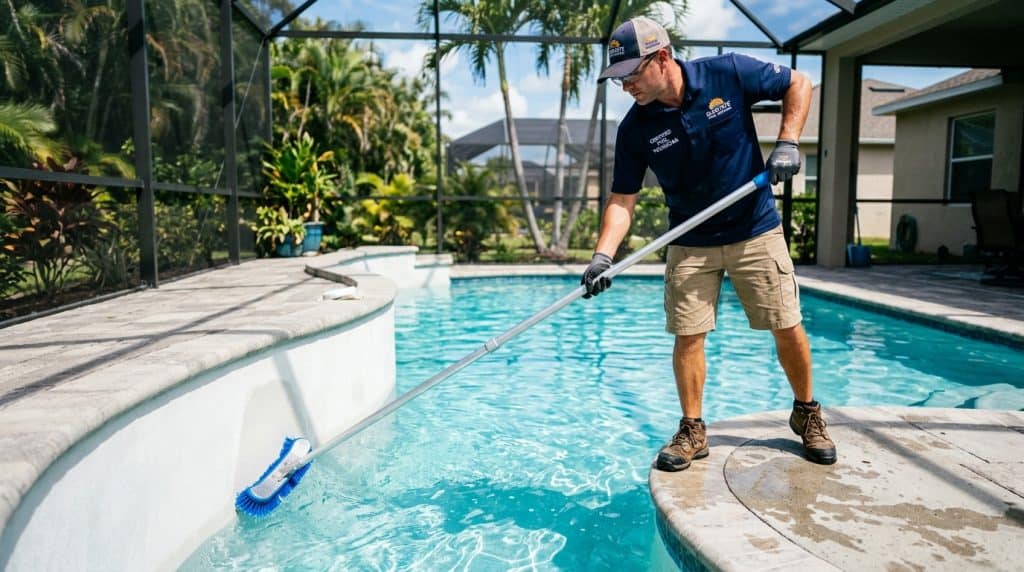
The Engineering Reality of Pool Depth Conversions
Florida’s relentless humidity and high water tables create unique hydrostatic pressure challenges for any sub-surface modification. When a homeowner decides to transform a classic 9-foot diving pool into a contemporary sport pool, the structural integrity of the existing gunite shell must be assessed against regional soil composition. As a technician who has managed thousands of service routes across the Tampa Bay area, I have seen too many deep-end conversions fail due to improper ballast compaction or inadequate bonding between new and old concrete, resulting in the need for comprehensive pool resurfacing and maintenance to correct structural cracking and finish failure.
The primary driver for this renovation is usually a shift in lifestyle. The deep end of an older residential pool often sits unused, consuming excessive water and chemical volume while presenting a significant drowning hazard for small children or pets. By choosing to make pool shallower cost Florida homeowners a significant investment, but the trade-off is a more functional, energy-efficient backyard space. The conversion process requires careful engineering to ensure that the new floor can withstand the weight of the water column without compromising the structural stability of the original pool walls, which were designed to support different pressure loads at greater depths.
Evaluating the Methodology: Gravel Fill vs. Structural Concrete
When you research how to convert diving pool to sport pool depth, you will encounter two distinct engineering approaches: the structural concrete pour and the aggregate-fill method. The structural method involves pouring a new, reinforced concrete floor at the desired depth, often 4 to 5 feet, which is tied into the existing walls with steel dowels. This is the gold standard for long-term durability. Alternatively, the gravel fill approach uses a compacted base of crushed stone topped with a concrete cap. While the gravel fill structural gunite pool bottom method is technically possible, it requires a precise drainage system to prevent hydrostatic pressure from lifting the new floor during our heavy Florida rainy seasons.
The cost of filling in the deep end of a swimming pool varies wildly based on the chosen methodology and the accessibility of your backyard. If your property in St. Petersburg or Clearwater has limited access for heavy machinery, labor costs will increase significantly. You must also account for the volume of material required, which is substantial. A standard 9-foot deep end holds thousands of gallons that must be displaced or accounted for in the structural load. Failure to properly account for this weight can lead to shifting ground or uneven stress distribution on the shell, which eventually necessitates energy efficient pool pump troubleshooting and repairs to manage the altered hydraulic flow requirements of the now-smaller pool volume.
Technical Comparison of Conversion Approaches
| Feature | Structural Concrete Pour | Aggregate/Gravel Fill |
|---|---|---|
| Structural Integrity | High (integrated with shell) | Moderate (relies on base compaction) |
| Installation Time | Longer (curing requirements) | Faster |
| Hydrostatic Risk | Low (with proper drainage) | High (requires venting) |
| Cost Efficiency | Higher initial investment | Lower initial investment |
Managing Hydraulic and Chemical Shifts
Reducing your pool depth fundamentally alters the fluid dynamics of your circulation system. When you decrease the total gallonage, the turnover rate of your pump and filter changes. A pool that once required an 8-hour cycle to filter the entire volume may now reach its turnover threshold in 5 hours. If you do not adjust your equipment, you risk excessive wear on your pump seals and potential over-filtration. Many of our clients who undergo this renovation find that they need to recalibrate their chemical dosing, as a smaller water volume reacts more rapidly to temperature spikes and intense Florida sunlight.
Professional management of these chemical shifts is essential to protecting your pool finish. During the conversion, you will likely need to drain the pool entirely, providing the perfect opportunity to inspect the plumbing lines for leaks or scale buildup. After the project is complete, maintaining a consistent chemical balance is easier, but the margin for error is slimmer. We often assist residents with routine weekly pool servicing across Tampa Bay to ensure that the new, shallower pool remains crystal clear and chemically balanced, preventing the rapid staining that can occur in smaller, high-traffic pools where bather load per gallon is significantly higher.
Regulatory Compliance and Long-Term Value
Before breaking ground on a depth conversion, you must verify your local municipality’s requirements regarding building permits and safety barriers. In counties like Hillsborough and Pinellas, any modification to the pool shell is considered a major renovation. You will likely be required to bring your entire pool up to current safety standards, which includes updating main drain covers to prevent suction entrapment and ensuring your fence height and gate self-closing mechanisms meet updated residential codes. Ignoring these administrative steps can lead to significant fines and complications during future property sales.
Investing in a high-quality conversion ensures that your pool remains a functional asset for decades. By creating a uniform depth, you effectively double the usable area of the pool for games, water aerobics, and social gatherings, which significantly increases the return on your renovation investment. Furthermore, a shallower pool heats more evenly and is less prone to the deep-water stratification that can make older pools difficult to maintain. By focusing on structural integrity and proper hydraulic design today, you ensure that your backyard remains a safe, efficient, and enjoyable retreat, protected against the inevitable wear of the Florida climate while maintaining optimal water quality through every season of the year.
Need Dependable Pool Care in Tampa Bay?
Our licensed, background-checked route technicians keep your residential pool crystal clear, balanced, and fully code-compliant across Hillsborough, Pinellas, and Pasco counties.