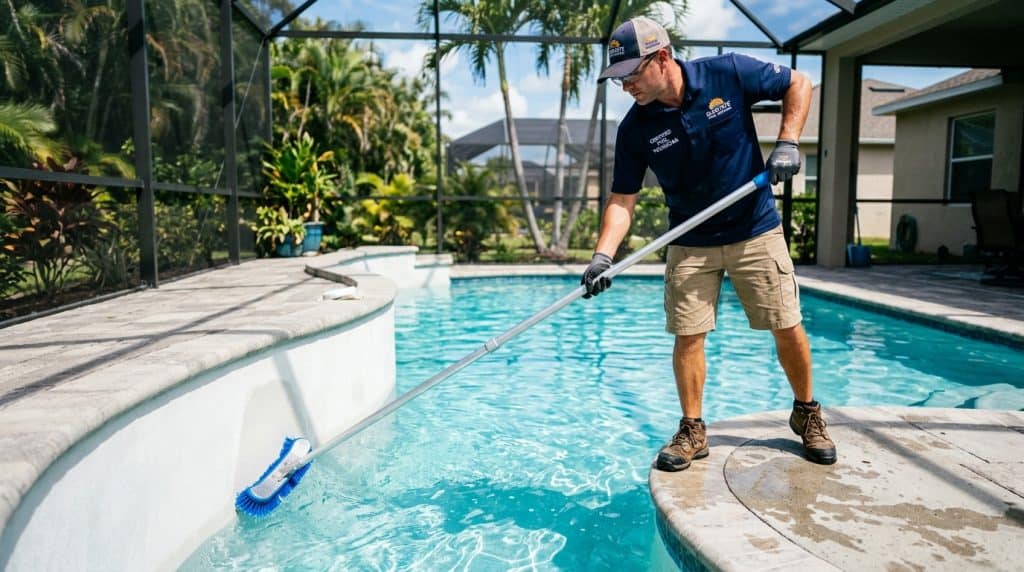
When the Florida heat index pushes surface temperatures past 100 degrees, the structural integrity of residential pool shells in Tampa Bay faces extreme thermal expansion stress. A rust spot on pool bottom rebar bleeding through the plaster is rarely a cosmetic nuisance; it is a structural warning sign that moisture has compromised the shotcrete or gunite, signaling an urgent need for intervention before the steel oxidizes further and creates a delamination hazard.
Diagnostic Assessment of Rebar Rust Bleed-Through
Identifying the root cause of metallic staining is the first step in our comprehensive pool resurfacing and maintenance protocols. When you notice a localized rust stain, it indicates that the steel reinforcement cage—positioned too close to the surface during the original build—has been exposed to chemically treated water. This chemical exposure triggers oxidation, causing the metal to expand and exert outward pressure on the plaster. If left untreated, this pressure forces a “popout,” where the plaster shears away from the shell, creating a jagged, unsightly, and potentially sharp hazard for swimmers. Our field team approaches these repairs by first determining if the issue is isolated to a single tie wire or if it indicates a broader failure of the shell’s protective concrete cover.
Performing a proper diagnostic involves chipping away the affected plaster to expose the source of the stain. We utilize a hammer and masonry chisel to carefully open the area until we reach the sound, non-oxidized metal. In many cases, we find that the rebar was placed with less than an inch of concrete coverage, making it highly susceptible to the corrosive nature of the Tampa Bay water table and high-salinity pool environments. Once the steel is exposed, we evaluate the depth of the corrosion. If the structural integrity of the steel bar remains largely intact, we can proceed with a spot repair. However, if the rebar has lost significant cross-sectional area due to deep-pitting corrosion, the structural implications require a more aggressive engineering approach to ensure the shell remains sound.
Step-by-Step Methodology for Subsurface Rust Remediation
Effective repair of exposed rebar requires a strict adherence to moisture mitigation and material bonding standards. After exposing the corroded steel, the first technical step is to grind the metal back to a clean, bright surface using an angle grinder with a wire wheel or flap disc. We must remove all traces of iron oxide to prevent future bleeding. Once the steel is clean, we apply a high-quality, zinc-rich rust inhibitor or a specialized epoxy primer designed for underwater applications. This creates a barrier that prevents oxygen and water from reaching the steel, effectively halting the oxidation process. Ensuring this surface is completely dry before applying any bonding agent is the most common point of failure for inexperienced technicians.
Following the preparation of the steel, we fill the void with a hydraulic cement or a structural epoxy mortar. We prefer products that offer rapid-set capabilities and high compressive strength to match the surrounding gunite shell. When applying the patch, it is imperative to pack the material tightly to eliminate air pockets, which could harbor moisture and lead to future failure. For homeowners who rely on our routine weekly pool servicing across Tampa Bay, we monitor these patch areas during subsequent visits to ensure the chemistry remains balanced. Proper pH and alkalinity levels are essential to prevent the curing patch from leaching or reacting negatively with the surrounding plaster finish.
Comparison of Repair Materials and Expected Durability
| Material | Application Context | Bonding Strength | Water Resistance |
|---|---|---|---|
| Hydraulic Cement | Deep structural voids | High (Mechanical bond) | Excellent |
| Epoxy Mortar | Small, shallow popouts | Superior (Chemical bond) | Impermeable |
| Standard Pool Plaster | Cosmetic surface patching | Moderate | Permeable |
Selecting the correct material depends largely on the depth of the popout and the specific type of interior finish currently installed in the pool. For traditional white plaster pools, hydraulic cement is often the industry standard because it integrates well with the existing substrate. However, for pools with aggregate finishes like pebble or quartz, an epoxy-based filler is often preferred due to its superior adhesion properties and ability to be blended with matching aggregate. Regardless of the material, the success of the repair hinges on the thoroughness of the cleaning process. Even a microscopic amount of rust remaining on the steel will inevitably lead to a recurrence of the stain, necessitating a repeat of the entire labor-intensive process.
Preventative Maintenance and Long-Term Shell Integrity
Preventing rebar rust requires more than just reactive repair; it demands an understanding of how pool chemistry impacts the concrete shell over decades of service. We often see rust spots emerge in older pools where the plaster has become porous, allowing water to penetrate deep into the concrete. Maintaining balanced calcium hardness is a primary defense, as aggressive, low-calcium water will actively leach minerals out of the plaster and concrete, accelerating the path to the rebar. Furthermore, ensuring that your equipment, such as your filtration system, is operating correctly—which may involve energy efficient pool pump troubleshooting and repairs—prevents the buildup of stagnant, chemically imbalanced water in dead zones along the pool floor.
Beyond chemistry, environmental factors in our region play a massive role in the lifespan of your pool interior. The seasonal shift between intense summer humidity and the occasional winter dry spell causes the ground around your pool to shift, which can lead to microscopic cracks in the shell. While these cracks are often invisible to the naked eye, they serve as conduits for water to reach the steel cage. Regularly inspecting the pool floor for hairline cracks and addressing them early prevents the moisture ingress that leads to deep-seated rust. By staying ahead of these minor structural imperfections, you ensure that your pool remains a safe, aesthetically pleasing asset for your home, protecting your property value and extending the service life of your interior finish by years.
Maintaining the structural health of your pool shell ensures that your backyard environment remains a reliable retreat through every season. As we look toward future maintenance cycles, the focus remains on early detection of hydrostatic pressure issues and consistent chemical management. By treating the pool shell as a living, breathing mechanical system rather than a static container, you mitigate the risk of major renovations down the line. Protecting the integrity of the concrete ensures that your investment remains watertight, structurally secure, and ready for use regardless of the Florida climate fluctuations, providing peace of mind that your infrastructure is prepared for the years ahead.
Need Dependable Pool Care in Tampa Bay?
Our licensed, background-checked route technicians keep your residential pool crystal clear, balanced, and fully code-compliant across Hillsborough, Pinellas, and Pasco counties.