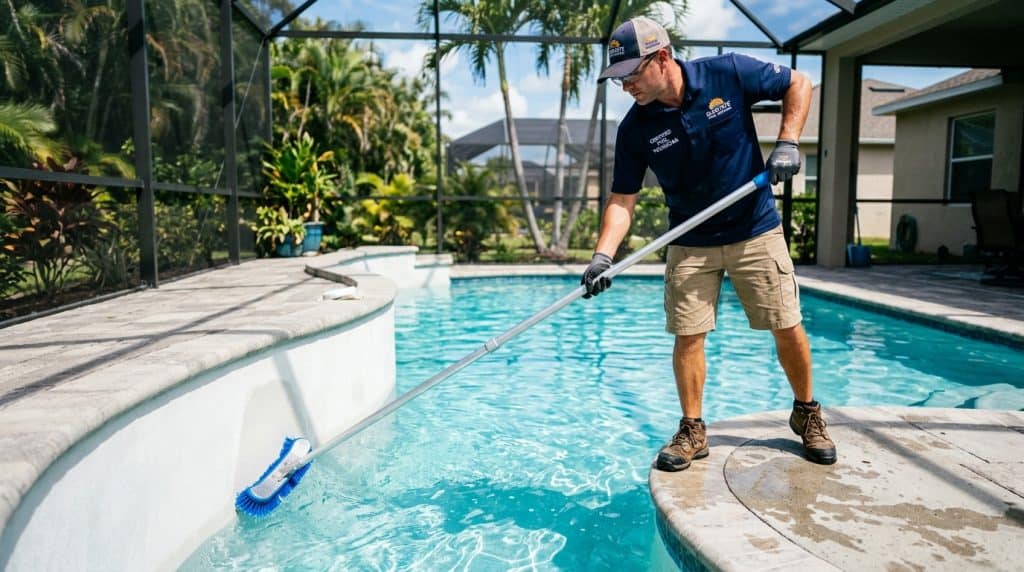
Evaluating Coping Systems Under Florida’s Thermal Stress
Florida’s extreme summer heat index and consistent humidity levels create a brutal environment for pool structures, specifically regarding the expansion and contraction of concrete interfaces. When the bond between the pool beam and the deck fails, water intrusion leads to subsurface erosion, which often manifests as a cantilever concrete pool coping cracked condition that compromises the structural integrity of the shell. Managing these assets requires professional oversight, which is why our team prioritizes comprehensive pool resurfacing and maintenance to mitigate the long-term damage caused by Florida’s unique hydro-geological shifts.
Cantilever Concrete Coping: Engineering and Failure Points
Cantilever coping is a poured-in-place concrete edge that extends over the water line, creating a seamless, modern aesthetic that eliminates the need for traditional cap stones. From an operational perspective, the primary advantage is the lack of mortar joints, which theoretically reduces the entry points for water. However, because this concrete is structurally tied to the pool beam, it is highly susceptible to thermal movement. When the expansion joint between the deck and the pool shell fails, the cantilever edge loses its ability to move independently, leading to horizontal stress fractures. These cracks are not merely cosmetic; they allow chlorinated water to seep behind the pool shell, causing the rebar within the bond beam to rust and expand, which eventually leads to spalling.
Addressing a cantilever concrete pool coping cracked scenario requires precise diagnostic techniques to determine if the damage is limited to the surface or if the bond beam itself is compromised. We often see this in pools that lack adequate drainage or those where the original construction did not account for the high soil moisture content common in areas like Brandon or Wesley Chapel. The repair process involves grinding out the fracture, cleaning the debris, and applying a flexible, high-grade sealant that can withstand the extreme temperature fluctuations of the Tampa Bay summer. Failing to properly seal these gaps allows hydrostatic pressure to build up behind the tile line, eventually causing the tiles to pop off or the coping to shift entirely.
Bullnose Brick Coping: Maintenance and Paver Stability
Bullnose brick coping remains a staple in traditional pool design, offering a rounded edge that is both aesthetic and comfortable for swimmers. Unlike monolithic cantilever concrete, brick coping is installed in sections, which provides inherent relief points for movement. However, the mortar joints between these bricks are the weak link. Over time, the constant freeze-thaw-heat cycle—or more accurately in our region, the constant expansion under intense sun—causes these joints to crumble. When the mortar fails, you will often find bullnose brick pool coping loose pavers, which creates a tripping hazard and allows water to penetrate the space between the coping and the concrete deck.
Maintaining these brick edges requires a proactive approach to re-pointing and joint stabilization. If you notice a loose paver, it is essential to remove the existing mortar, clean the substrate, and re-set the brick using a high-strength, flexible adhesive designed for submerged or splash-zone environments. Ignoring loose coping can lead to the erosion of the sand base beneath the pool deck, resulting in uneven surfaces and potential drainage issues that could impact your routine weekly pool servicing across Tampa Bay. By keeping these joints tight, we prevent the “heaving” effect that occurs when moisture gets trapped beneath the pavers and expands during the heating of the day.
Managing the Expansion Joint: The Role of Deck-O-Seal
The expansion joint, often referred to as the “caulking joint between pool coping and deck,” is the most critical line of defense for a swimming pool. This gap is intentionally left between the pool coping and the deck to allow both structures to expand and contract independently. When this joint is filled with a high-quality sealant like Deck-O-Seal, it prevents water from migrating into the subgrade. If this sealant has hardened, shrunk, or cracked, you are essentially inviting water to undermine the foundation of your pool deck. Replacing this sealant is a technical process that involves removing the old, degraded material, ensuring the joint is completely dry and free of debris, and installing a backer rod before applying the new sealant.
Properly executed deck-o-seal expansion joint replacement pool maintenance is a cost-effective way to prevent major structural repairs. A well-sealed joint prevents the saturation of the soil surrounding the pool shell, which is particularly important in regions with high water tables. When we perform this service, we ensure the sealant is leveled correctly to prevent ponding water, which can lead to calcium scaling and algae growth along the transition line. If you notice the sealant pulling away from the stone or concrete, it is already failing in its primary function. Integrating this into your annual maintenance schedule ensures that your pool’s mechanical systems, including energy efficient pool pump troubleshooting and repairs, are not being taxed by water-logged equipment pads or shifting deck slabs.
Comparison of Coping Systems
| Feature | Cantilever Concrete | Bullnose Brick/Paver |
|---|---|---|
| Thermal Expansion | Low (Prone to cracking) | High (Joints act as relief) |
| Maintenance Needs | High (Crack repair/sealing) | Moderate (Re-pointing mortar) |
| Structural Risk | High (Direct beam stress) | Low (Localized to pavers) |
| Aesthetic Style | Modern/Seamless | Traditional/Textured |
Long-term Structural Integrity and Safety Compliance
The longevity of a pool structure in Florida is directly tied to the precision of the interface between the coping and the surrounding deck. By maintaining the integrity of the expansion joints and addressing hairline fractures in cantilever concrete before they expand, you protect the pool shell from the invisible damage caused by water intrusion and soil erosion. These preventative measures ensure that your pool remains compliant with safety standards and continues to function as a reliable recreational asset for years to come. As the seasons shift, keeping a close eye on the transition zones around your pool will minimize the risk of expensive, large-scale renovations and ensure that the mechanical equipment, plumbing, and structural shell operate in perfect harmony, providing a safe, stable environment for every swim season.
Need Dependable Pool Care in Tampa Bay?
Our licensed, background-checked route technicians keep your residential pool crystal clear, balanced, and fully code-compliant across Hillsborough, Pinellas, and Pasco counties.