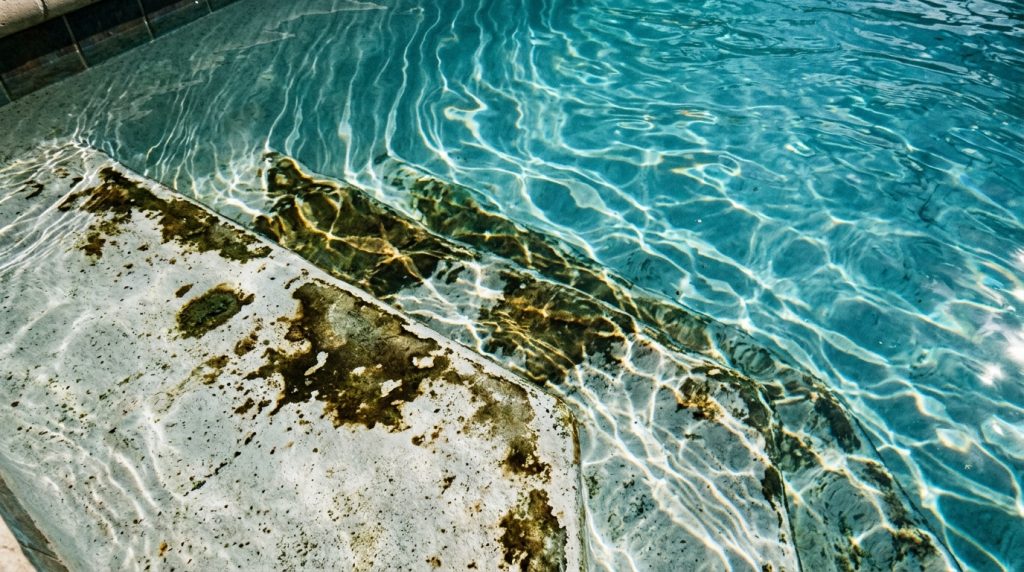
Tampa Bay’s high water table and intense subtropical climate subject residential swimming pools to relentless chemical shifts. Beneath the sparkling blue surface, a silent chemical reaction often takes place as dissolved minerals interact with shifting pH levels, threatening to permanently discolor expensive plaster finishes. Understanding how these invisible metals behave is the key to preserving your pool’s pristine aesthetic.
The Chemistry of Metal Precipitation in Florida Pools
Maintaining pristine water chemistry in Florida requires more than just adding chlorine; it demands a deep understanding of how dissolved minerals behave under varying pH levels. When you invest in professional weekly pool service and chemical maintenance, you prevent the dramatic chemical swings that cause dissolved metals to fall out of solution. Once metals precipitate, they bind directly to the calcium in the pool finish, leaving unsightly, stubborn copper stains on pool plaster that resist standard brushing and chlorine shocks.
The physics of metal precipitation rely heavily on the Langelier Saturation Index (LSI). When pool water becomes highly alkaline or experiences sudden spikes in pH, it loses its ability to keep dissolved minerals in a liquid state. These microscopic metallic particles then crystallize and adhere to the porous surface of the plaster, marring the finish with dark, blotchy discolorations that require specialized, aggressive chemical treatments to lift safely without damaging the underlying quartz or pebble structure.
Well Water vs. Heater Corrosion: Two Paths to the Same Ruined Plaster
The Well Water Threat in Tampa Bay
Homeowners relying on private wells for irrigation or pool filling face a unique set of water quality challenges due to the deep limestone aquifers of Florida. Utilizing untreated ground source water frequently results in severe well water pool filling stains tampa area homes struggle with, as this water is naturally saturated with iron, manganese, and copper. As this mineral-heavy water is introduced to the highly chlorinated, high-pH environment of a swimming pool, the metals oxidize instantly, turning your bright pool finish into a canvas of rusty brown and dark green streaks.
Low pH, Galvanic Corrosion, and the “Green Hair” Phenomenon
While well water introduces metals from external sources, pool equipment corrosion generates metals from within the filtration system itself. When pool water pH drops below 7.2, it becomes highly acidic and aggressive, actively leaching copper from the copper heat exchangers inside pool heaters. This process of galvanic corrosion dissolves the metal into the water stream, leading to the infamous green pool hair copper heater corrosion dynamic where swimmers’ hair absorbs the copper ions, and the pool plaster slowly turns a dull, teal-green hue.
Preventing this internal destruction requires keeping a close eye on your equipment’s physical health, particularly if you notice sudden pressure drops or pool heating inefficiencies. If your heater has already begun to degrade, the metal bypasses filtration and deposits directly into the pool basin, which often coincides with pump failures or plumbing leaks that require professional pool pump and motor repair in Tampa Bay to restore proper system equilibrium. Once copper is introduced via heater degradation, it remains in the water permanently until chemically sequestered or physically filtered out.
How to Identify and Differentiate Copper vs. Iron Stains
Diagnosing the root cause of pool discoloration is essential before purchasing expensive chemicals, as iron and copper require different treatment protocols. Copper stains typically manifest as light green, teal, or deep blue-black smudges, often concentrated around the return jets or pool floor where water circulation slows down. In contrast, iron stains exhibit a distinct rust, orange, or dark brown coloration, frequently appearing after heavy rainstorms or when filling the pool from a shallow well system.
| Metal Type | Typical Stain Color | Primary Source | Diagnostic Test Reactivity |
|---|---|---|---|
| Copper | Teal, light green, blue-black | Heater corrosion, low pH water, copper algaecides | Reacts to low pH / citric acid spot test |
| Iron | Rust, orange, dark brown | Well water, iron plumbing, fertilizer runoff | Lifts quickly with ascorbic acid (Vitamin C) |
To accurately determine the metal type, pool professionals utilize a simple localized diagnostic test using ascorbic acid (Vitamin C) or citric acid. Placing a small handful of ascorbic acid tablets directly on a brown iron stain will typically lift the discoloration within minutes, confirming an iron-based deposit. If the stain resists the ascorbic acid but responds to a low-pH localized spot treatment, copper is the likely culprit, signaling that a targeted copper-removing chelating agent is necessary to restore the plaster.
How to Get Metal Stains Out of Pool Surfaces
Learning how to get metal stains out of pool surfaces involves a multi-step chemical process designed to break the bond between the metal ions and the calcium plaster. The process begins by lowering the free chlorine levels to near zero, as high chlorine levels oxidize the treatment chemicals and render them useless. Next, a high-dose ascorbic or citric acid treatment is distributed across the pool, which reduces the metal stains back into a soluble, liquid state that can be captured by the pool’s filtration system or bound by a high-quality liquid sequestering agent.
Because these lifted metals remain suspended in the pool water, failing to filter them out or sequester them will result in the stains redepositing the moment the pH and chlorine levels are raised back to normal. Utilizing specialized metal trap filters on your fill hose and working with experienced technicians from local pool maintenance services in Tampa ensures that these suspended metals are permanently removed from the water column, preventing a recurring cycle of staining that can permanently etch and degrade the structural integrity of your pool plaster.
Long-Term Prevention and Water Chemistry Management
The ultimate defense against metal staining is a proactive, preventative approach to water chemistry that keeps metals locked in a soluble state. Regular application of a metal sequestrant is highly recommended for pools filled with municipal water or well water, as it wraps around metal ions to prevent them from reacting with chlorine or high pH. For homeowners seeking luxury residential pool care in South Tampa, maintaining a balanced Langelier Saturation Index (LSI) is a non-negotiable standard that protects both the aesthetic beauty of the pool plaster and the lifespan of high-end heating and sanitizing equipment.
As Florida moves toward more stringent energy efficiency standards for pool pumps and filtration systems, maintaining flawless water chemistry becomes even more critical to safeguard these advanced technologies. Preparing your pool for the heavy organic loads and metallic runoff introduced by seasonal tropical storms and hurricanes requires a robust, forward-looking maintenance strategy. By prioritizing regular chemical balancing and equipment inspections today, pool owners can ensure their backyard sanctuaries remain clean, efficient, and beautiful for years to come, regardless of what the Florida elements bring.