The relentless combination of subtropical sunshine, intense ultraviolet degradation, and high mineral content in Central Florida tap water imposes continuous stress on pool finishes. Choosing the right interior coating is one of the most substantial financial and aesthetic decisions a homeowner will face. Evaluating modern plaster formulations against regional weather conditions ensures decades of flawless backyard enjoyment.
Understanding Interior Plaster Wear in Subtropical Climates
Every swimming pool finish in the Tampa Bay region undergoes an unforgiving chemical trial from the moment it is applied. When partnering with certified technicians for weekly pool maintenance in Clearwater and Tampa, balancing the Langelier Saturation Index is essential to prevent water from either leaching calcium directly out of the plaster or depositing unsightly crusts along the waterline. Over seven to ten years of heavy bather loads, intense summer heatwaves, and seasonal torrential downpours, even well-maintained surfaces begin exhibiting roughness, aggregate loss, and cosmetic staining.
Selecting appropriate pool resurfacing options florida homeowners can depend upon involves balancing upfront material expenses against expected longevity and chemical resilience. Today’s market offers three primary categories of finishes: traditional white marcite plaster, modified quartz aggregate blends, and premium exposed pebble coatings like Pebble Tec. Each material behaves distinctively under Florida’s intense sunlight and reacts uniquely to chemical sanitizer fluctuations.
Traditional White Marcite: Characteristics and Lifespan
Standard marcite has served as the baseline interior coating for Florida swimming pools for over half a century. Formulated from a blend of white Portland cement, crushed marble aggregate, and water, marcite delivers that classic, brilliant light-blue water tone reminiscent of Caribbean shallows. It provides an exceptionally smooth, silky surface underfoot that swimmers universally appreciate.
However, pure marcite is inherently porous and vulnerable to aggressive water chemistry. In Florida, where summer temperatures push pool water past ninety degrees, chemical reactions accelerate rapidly. If pH dips below neutral or alkalinity drops, water actively dissolves the calcium carbonate matrix within the marcite, creating micro-pitting and rough textures. With diligent maintenance, a marcite finish typically lasts five to eight years in Tampa Bay before requiring resurfacing, making it the most economical upfront choice but the shortest-lived over decades.
Quartz Aggregate Finishes: Enhanced Durability and Color Variety
Quartz finishes represent a major evolutionary advancement over traditional marcite. By blending crushed marble with non-porous, ceramic-coated quartz crystals and polymer-modified cements, manufacturers engineer a surface that resists chemical etching and surface staining far more effectively than standard plaster. Brands like Diamond Brite and Krystalkrete have become regional staples throughout Hillsborough and Pinellas counties.
Because quartz particles are impervious to chemical absorption and significantly harder than marble dust, the finish resists discoloration from algae blooms, metals, and fluctuations in sanitizer concentration. Furthermore, quartz aggregate reflects sunlight in multidimensional patterns, offering a wide array of vibrant blue, teal, and blue-gray hues that remain color-fast despite years of direct solar exposure. Homeowners can reasonably expect a high-quality quartz aggregate finish to endure ten to twelve years under proper chemical equilibrium.
Pebble Finishes: Maximum Longevity and Natural Riverbed Aesthetics
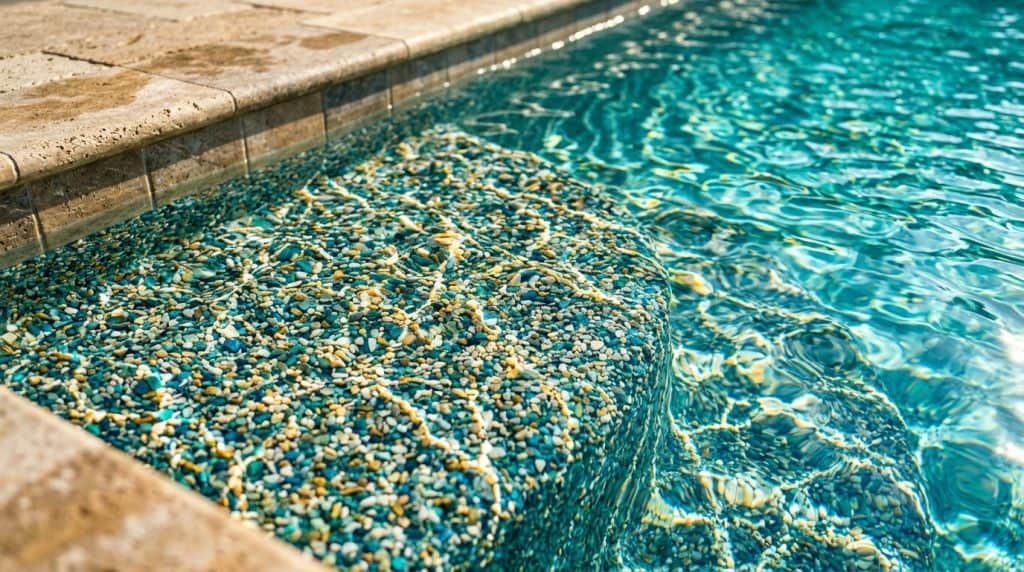
Exposed pebble finishes, pioneered by Pebble Technology International and replicated in products like Stonescapes, stand as the gold standard for enduring durability in coastal Florida. These finishes utilize naturally tumbled river stones embedded in fortified hydraulic cement. After pneumatic application, technicians hand-wash and acid-rinse the top layer of cement paste to expose the smooth, rounded pebbles beneath.
Pebble finishes are virtually inert chemically, rendering them impervious to acid etching, aggressive algae penetration, and harsh mineral staining. While the textured pebble feel is slightly firmer beneath the feet compared to silky marcite, modified mini-pebble and polished pebble variations provide supreme barefoot comfort. In Central Florida backyards, a properly installed pebble finish frequently delivers fifteen to twenty-five years of pristine structural service, easily offsetting its higher initial investment.
| Finish Type | Average Lifespan in FL | Relative Cost | Chemical Resistance | Texture Underfoot |
|---|---|---|---|---|
| Standard Marcite | 5 – 8 Years | $ (Baseline) | Low (Prone to etching) | Very Smooth |
| Modified Quartz | 10 – 12 Years | $$ (Moderate) | High | Smooth with Slight Texture |
| Pebble Tec / Aggregate | 15 – 25+ Years | $$$ (Premium) | Maximum (Chemically Inert) | Natural Textured / River Stone |
Essential Pre-Resurfacing Structural Inspections
Prior to re-plastering or resurfacing, tile line restoration is often required; understand cleaning options with our guide on removing hard water calcium scale from pool tile. Applying an expensive new coat of aggregate over an unstable concrete shell or decaying perimeter beam invites premature delamination and hairline cracking within months.
Ensure your underlying shell is structurally sound before applying new aggregate by reviewing acoustic vs pressure pool leak detection methods to eliminate subsurface plumbing fractures. Additionally, because resurfacing requires an empty basin, contractors must protect against hydrostatic shell flotation; learn the safeguards in our guide on draining a pool in Florida without structural popping. Completing these diagnostic prerequisites guarantees that your new interior investment cures under optimum physical conditions.
The Future of Pool Interior Polymers and Sustainable Aggregate Cures
Technological innovation in pool chemistry and polymer chemistry continues to refine residential pool surfaces throughout the Sunshine State. Advanced pozzolanic additives and micro-glass beads are transforming traditional plaster formulations, yielding higher tensile strengths and enhanced resistance to subtropical solar bleaching. Integrating automated filtration and chemical monitoring ensures your newly resurfaced pool retains its brilliant architectural radiance across countless Florida summers.