If you own a home in Tampa, St. Petersburg, or Clearwater, your pool deck isn’t just a place to sunbathe; it’s the centerpiece of your outdoor living space. However, the very things that make the Tampa Bay area beautiful—the relentless sun and the thick, tropical humidity—are the sworn enemies of your pool pavers. As a CPO (Certified Pool Operator) with years of experience navigating the unique challenges of the Florida climate, I have seen countless homeowners make the same expensive mistake: choosing the wrong sealer for our high-moisture environment.
One day your pavers look like a million bucks; the next, they look like they’ve been coated in a thin layer of spoiled milk. This phenomenon is known as “blushing,” and it is the primary reason why I’m writing this guide. If you are currently staring at a hazy deck, searching for a milky white paver sealer fix florida residents can actually rely on, or if you’re trying to decide between solvent and water-based products, you’re in the right place. Let’s dive deep into the science of sealing in the Sunshine State.
The Great Debate: Solvent-Based vs. Water-Based Sealers
In the world of professional hardscaping, there are two main camps. For decades, solvent-based sealers were the industry standard. They provide that high-gloss “wet look” that makes the colors of the stone pop. However, in Florida, solvent-based sealers often lead to heartbreak. Here is why the tide is turning toward water-based technology.
Solvent-Based Sealers: The High-Risk Reward
Solvent sealers work by dissolving acrylic solids in a powerful chemical solvent. When applied, the solvent evaporates, leaving a hard plastic film over the paver. While they look stunning initially, they are “non-breathable.” In a state where the water table is high and humidity often hits 90%, moisture is constantly rising from the ground through the bottom of your pavers. If that moisture hits a non-breathable solvent barrier, it gets trapped. This leads to the dreaded “blush” or cloudiness.
The Better Choice: Breathable Water-Based Sealer for Pool Pavers
Modern chemistry has changed the game. A high-quality breathable water based sealer for pool pavers is designed specifically for humid climates. Instead of forming a thick, suffocating plastic film, these sealers penetrate the pores of the paver. They allow water vapor to escape from the stone while still providing a protective barrier against UV rays, chlorine, salt, and organic stains. At Tampa Bay Pool Care, we almost always recommend water-based solutions for our local clients because they significantly reduce the risk of future maintenance nightmares.
Diagnostic Checklist: Why Did My Paver Sealer Turn White?
Before you can fix the problem, you need to understand why it happened. If you’re looking at a hazy mess, run through this checklist to diagnose the cause:
- Trapped Moisture: Was the deck slightly damp when the sealer was applied? Even a morning dew can ruin a solvent application.
- Over-Application: Was the sealer applied too thick? When the layer is too heavy, it can’t cure properly, leading to a cloudy appearance.
- Efflorescence: Are those white spots actually “salt” rising from the stone? If you seal over efflorescence without cleaning it first, it becomes trapped and magnified.
- High Humidity: Was the sealer applied during a typical Florida afternoon when the humidity was over 75%? High humidity slows the evaporation process, causing the acrylic to “clump” and turn white.
The Milky White Paver Sealer Fix: Florida Edition
If you’ve already fallen victim to the blush, don’t panic. You don’t necessarily need to rip out your pavers. The fix depends on what type of sealer was used originally.
Fixing Solvent-Based Blushing (The Xylene Reset)
If a solvent sealer turned white, it’s often because the acrylic “blushed” due to moisture. Professionals often use a “Xylene wash.” Xylene is a powerful solvent that re-liquefies the existing acrylic. By applying Xylene and working it into the surface, you can often “reactivate” the sealer, allowing the trapped moisture to escape before the sealer re-sets. However, this is a temporary fix if the underlying moisture issue isn’t addressed.
The Ultimate Fix: Strip Blushed Cloudy Sealer Off Pool Deck
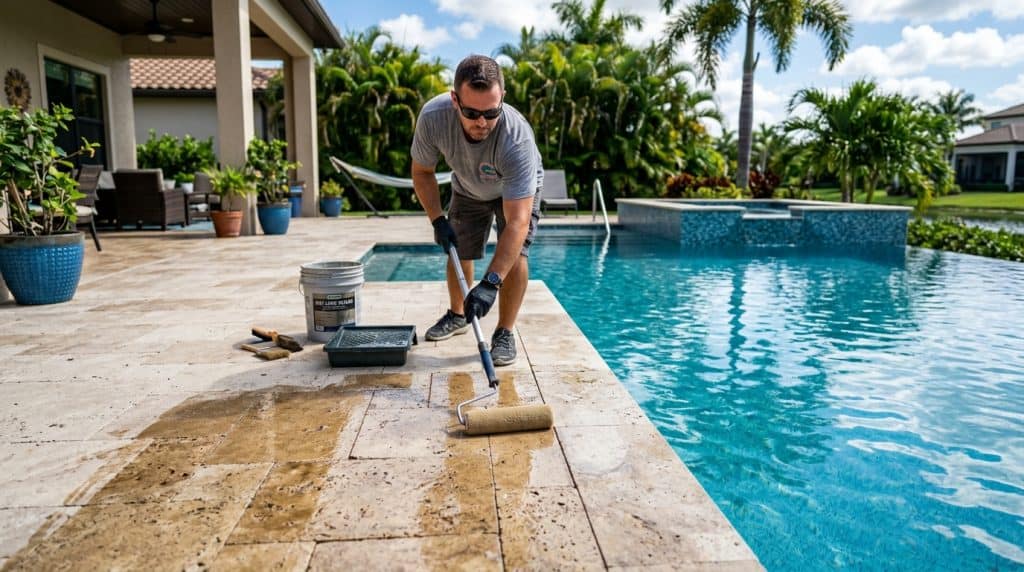
If the blushing is severe, or if you have multiple layers of old, failing sealer, the only real solution is to strip blushed cloudy sealer off pool deck surfaces entirely. This is a labor-intensive process that involves:
- Chemical Stripping: Using a professional-grade biodegradable stripper to break down the old acrylic.
- Pressure Washing: Carefully washing away the residue without damaging the paver’s surface or blowing out all the joint sand.
- Acid Etching/Cleaning: Using a mild phosphoric acid solution to open the pores of the stone and remove efflorescence.
- Drying: This is the most critical step. In Florida, you need at least 24–48 hours of dry weather before applying a new sealer.
The CPO Pro-Tips for a Perfect Seal
Sealing pavers in Tampa isn’t like sealing them in Arizona. We have to play by the rules of the tropics. Here is how we ensure a long-lasting, clear finish every time.
1. The “Tape Test” for Moisture
Before you even open a can of sealer, take a square of clear plastic and tape it tightly to a section of your pavers. Leave it for 24 hours. If there is condensation under the plastic the next day, your pavers are too wet to seal. This simple test saves thousands of dollars in repairs.
2. Timing is Everything
Never seal in the afternoon during the summer. Between the 4:00 PM rain showers and the rising humidity, you’re asking for trouble. The “sweet spot” for Florida sealing is early morning (after the dew has evaporated) on a day with a clear forecast for the next 24 hours.
3. Use Joint Stabilizing Sealer
One of the biggest benefits of sealing is “joint stabilization.” This involves using a sealer that hardens the sand between the pavers, preventing weeds from growing and ants from mining the sand out. A quality water-based sealer will soak into that sand and turn it into a mortar-like consistency while remaining breathable.
Post-Sealing: How Long Wait Before Walking on Sealed Pavers?
This is the most common question we get after a job is finished. Because of Florida’s humidity, “dry to the touch” does not mean “ready for use.” Using the deck too early can leave permanent footprints or scuff marks in the curing acrylic.
- Foot Traffic: You should generally how long wait before walking on sealed pavers? Wait at least 4 to 6 hours for light foot traffic (barefoot or socks). If the humidity is particularly high, wait 12 hours.
- Heavy Furniture: Do not slide your heavy lounge chairs or fire pits back into place for at least 48 hours. The sealer needs time to reach its full Shore D hardness.
- Pets: Keep pets off for 24 hours. Their claws can easily gouge the soft, curing sealer, and the chemicals aren’t great for their paws until fully cured.
- Vehicles (for driveways): If you’re sealing a paver driveway, wait a full 72 hours before driving on it to prevent “hot tire pickup,” where the heat from your tires pulls the sealer right off the stone.
Maintenance: Keeping Your Deck Pristine
Once you’ve achieved that perfect, non-cloudy finish, maintenance is key. In Tampa, organic growth (mold and algae) loves to feast on the proteins in some low-quality sealers. To keep your deck looking new:
Regular Rinsing: Rinse away pool chemicals and salt water weekly. Even though the pavers are sealed, letting salt sit on the surface can eventually degrade the finish.
Soft Washing: Avoid high-pressure washing once the deck is sealed. A “soft wash” with a very mild bleach solution and a garden hose is usually all you need to kill any surface spores without stripping the sealer.
Why Professional Application Matters in Tampa Bay
While DIY kits are available at big-box stores, they are often “one size fits all” products that don’t account for the unique porousness of Florida limestone or the intensity of our UV index. A professional CPO understands the “Hydrostatic Pressure” issues we face here. We use industrial-grade, breathable water based sealer for pool pavers that contains UV inhibitors specifically formulated for Latitude 28 (that’s us!).
Furthermore, a professional has the equipment to “flood coat” the joints properly. This ensures the sand is stabilized deep down, not just on the surface. If you’ve struggled with weeds or shifting pavers in the past, a professional seal is the only way to lock everything in place permanently.
Summary: Don’t Let the “Blush” Ruin Your Summer
Your pool deck is a significant investment in your home’s value and your family’s enjoyment. Don’t let a “milky white” haze ruin the view. By choosing a breathable, water-based product and respecting the Florida weather window, you can achieve a finish that is both beautiful and durable.
If you are currently dealing with a failed sealer job or if you want to ensure your new pavers are protected the right way the first time, reach out to the experts who know the Tampa climate inside and out. We specialize in restoration and protection that stands up to the heat.
Ready to restore your pool deck’s glory? Whether you need to strip blushed cloudy sealer off pool deck surfaces or you’re looking for a fresh, breathable application, we are here to help. At Tampa Bay Pool Care, we bring the expertise of a Certified Pool Operator to every inch of your backyard oasis. Contact us today for a consultation and let’s get your pavers looking their best!
Quick Recap Table for Florida Homeowners
| Feature | Solvent-Based Sealer | Water-Based (Breathable) |
|---|---|---|
| Humidity Tolerance | Low (Risk of Blushing) | High (Best for Florida) |
| Appearance | High Gloss / “Plastic” Look | Natural to Satin “Wet Look” |
| Breathability | No (Traps moisture) | Yes (Releases vapor) |
| Ease of Repair | Difficult (Requires Xylene) | Easy (Can be recoated) |
By following these guidelines, you’ll avoid the common pitfalls of Florida paver maintenance and ensure your pool area remains the envy of the neighborhood for years to come.