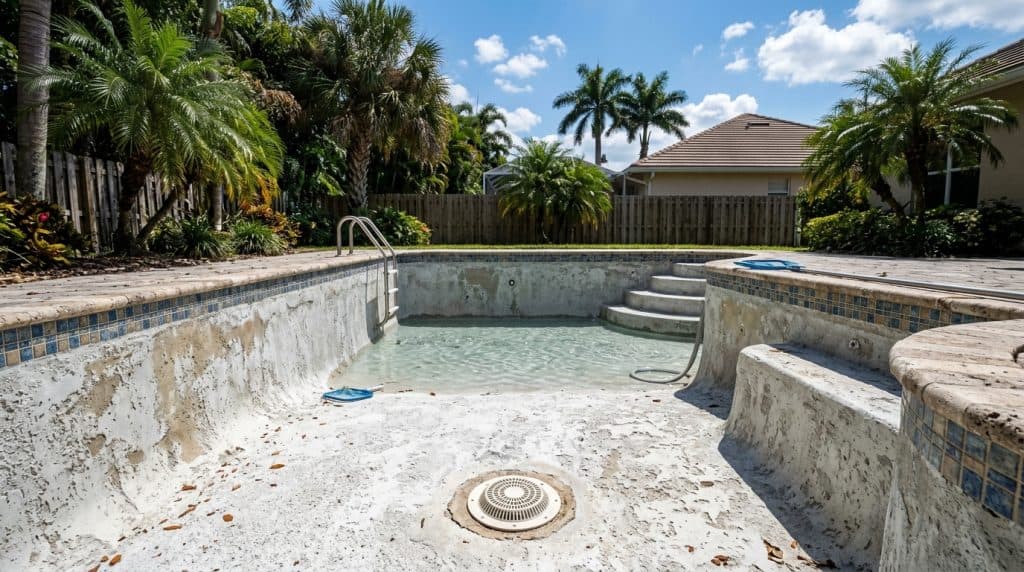
Florida’s saturated subterranean limestone and volatile coastal water tables create an unforgiving environment for in-ground structures. While an inground swimming pool appears anchored permanently into backyard soil, removing its internal water weight can trigger catastrophic structural flotation within hours. Understanding the subterranean hydrology across Tampa Bay is essential before even considering draining your basin.
The Physics of Hydrostatic Pressure and Florida’s Porous Soil
Draining an inground vessel in Central Florida requires an appreciation of basic physics and hydrodynamics. When you invest in professional weekly pool service in Tampa, water chemistry and physical cleanliness take center stage, yet that thousands-of-gallons volume also serves a vital structural mission. A typical fifteen-thousand-gallon concrete pool contains over one hundred and twenty thousand pounds of stabilizing downward ballast. In Florida, where the surrounding ground consists of sandy soil atop porous limestone, heavy seasonal rainfall rapidly elevates the subterranean water line to within inches of the surface.
According to Archimedes’ principle of buoyancy, any object submerged in a fluid experiences an upward buoyant force equal to the weight of the fluid displaced by that object. When full, the internal weight of swimming pool water easily counteracts the external hydrostatic groundwater pushing against the exterior gunite or fiberglass shell. However, when a homeowner empties the basin, the pool effectively becomes a hollow concrete ship. Without adequate downward counterweight, the buoyant pressure exerted by groundwater against the floor and walls can shear plumbing pipes, crack the main structure, or literally lift the entire shell upwards out of the ground.
Can a Swimming Pool Actually Pop Out of the Ground?
The alarming phenomenon known as shell popping is not an urban myth; it is an annual reality across Hillsborough, Pinellas, and Pasco counties. During the summer storm season or immediately following severe weather events, groundwater levels rise dramatically. Homeowners attempting DIY water removal frequently witness fiberglass pools buckling inward or concrete shells rising six to twenty-four inches above the surrounding paver deck. Once a pool lifts, it never settles back into its original position, resulting in severed suction lines, broken electrical conduits, and permanent total loss of the swimming facility.
Homeowners most often attempt complete water draining to remedy high chemical stabilizer, but safer partial dilution methods are detailed in our guide on cyanuric acid chlorine lock. Pumping hundreds of gallons out of the pool during saturated ground conditions represents the single most dangerous mistake a Florida homeowner can make, often turning an easily treatable chemical dilemma into a tens-of-thousands-of-dollars structural insurance nightmare.
The Function and Limitations of Hydrostatic Relief Valves
Most modern gunite swimming pools are constructed with one or two hydrostatic relief valves installed directly inside the main drain sump. These spring-loaded or mechanical plug valves are engineered as emergency safety mechanisms. When exterior groundwater pressure exceeds the internal water pressure of an emptying pool, the valve opens upward, permitting groundwater to flood into the interior shell to equalize pressure and prevent flotation.
Unfortunately, relying blindly on hydrostatic relief valves in Florida carries substantial risk. Over months and years of operation, sand, algae spores, and calcium deposits frequently accumulate inside the sump, seizing the mechanical springs or cementing the O-ring seals shut. If a homeowner begins draining pool in florida while relief valves are jammed with sediment, no water can enter to equalize pressure, and the shell quickly succumbs to subterranean buoyancy forces. Furthermore, even when a valve operates properly, the incoming groundwater in Tampa Bay is frequently rich in dissolved iron and tannins, staining clean plaster surfaces brown upon contact.
When Complete Draining Becomes Unavoidable: Contractor Safeguards
There are rare legitimate scenarios where an in-ground swimming pool must be emptied, most notably during major structural renovations or full resurfacing. When draining is mandatory for structural remodeling, professional contractors utilize specialized hydrostatic relief valves; explore surface materials in our guide to marcite vs quartz vs Pebble Tec pool resurfacing. In these professional scenarios, certified technicians execute rigorous safeguarding protocols rather than simply inserting a submersible pump and walking away.
Commercial pool contractors typically install temporary wellpoint dewatering systems around the perimeter of the pool before opening drainage valves. By sinking perforated vacuum pipes deep into the adjacent sand and continuously running commercial trash pumps, technicians artificially lower the localized water table below the deepest point of the pool floor. Only when the surrounding earth is verified dry will technicians remove the internal sump plugs and pump down the basin. Never mistake catastrophic structural water loss for routine evaporation; learn how to spot critical plumbing defects in 5 early warning signs your pool is leaking.
Safe Water Exchange Methods: The Dilution Protocol
For residential pool owners struggling with high total dissolved solids, excessive calcium hardness, or stabilized cyanuric acid saturation, complete drainage is virtually never necessary. Certified pool operators utilize the continuous dilution or “push-pull” exchange method, which replaces contaminated water while keeping the pool completely full at all times. By placing a submersible pump on the deepest step discharging water while simultaneously introducing fresh city water from a hose at the opposite shallow end, chemical concentrations drop steadily without compromising downward hydrostatic weight.
| Method | Shell Popping Risk | Plaster Delamination Risk | Suitability for Florida |
|---|---|---|---|
| Complete Pump-Down | Extremely High | Severe Sun Blistering | Emergency Contractor Only |
| Partial Drain (1/3 Max) | Moderate (Dry Season Only) | Moderate | Acceptable in Winter |
| Continuous Flow Dilution | Zero Risk (Pool Stays Full) | Zero Risk | Recommended Best Practice |
Protecting Shell Integrity Across Changing Florida Seasons
Modern groundwater monitoring technologies, including subterranean soil moisture sensors and satellite-linked rainfall telemetry, continue to modernize coastal backyard pool maintenance throughout Florida. As municipal stormwater regulations and water conservation initiatives expand across the Suncoast, adopting closed-loop water treatment techniques and partial dilution cycles safeguards both structural equity and environmental resources against unpredictable aquifer surges.