In Florida’s climate of intense sun and heavy rainfall, distinguishing between natural evaporative water loss and an active underground pipe fracture challenges even attentive homeowners. Subsurface plumbing leaks not only squander thousands of gallons of municipal water but can swiftly wash away soil beneath concrete decks, causing expensive structural collapses. Pinpointing subterranean voids requires advanced diagnostic engineering.
Why Traditional Visual Inspections Fall Short Underground
When an in-ground swimming pool loses water faster than normal atmospheric rates, homeowners naturally inspect visible plumbing connections, pump seals, and filter valves. However, the vast majority of severe structural breaches occur unseen beneath thick concrete paver decks, underground suction trenches, or through hairline fractures along deep shell returns. Scheduling professional pool leak detection in Tampa Bay transforms guesswork into precision science by isolating underground pipe systems without disruptive demolition.
Modern diagnostic specialists utilize two primary non-invasive methodologies: acoustic listening technologies and hydrostatic pressure testing. Understanding how these complementary pool leak detection methods operate allows homeowners to make informed decisions when protecting their swimming pool investment and surrounding property foundation.
How Hydrostatic Pressure Testing Isolates Plumbing Lines
Hydrostatic pressure testing represents the primary diagnostic phase for identifying fractures inside buried PVC pipe runs. Technicians begin by removing directional return fittings, skimmer weir doors, and dedicated suction cleaner ports. Specialized expanding pneumatic test plugs, equipped with Schrader valves and pressure gauges, are inserted into each plumbing terminal to isolate individual lines from the main filtration circulation loop.
Once sealed, the isolated pipe segment is pressurized with compressed air or water to approximately fifteen to twenty pounds per square inch (PSI). The technician observes the connected analog or digital gauge over a monitored twenty-minute testing window. If the line maintains steady pressure without deviation, that plumbing circuit is verified structurally sound. Conversely, an immediate or gradual drop in gauge pressure unequivocally confirms a pipe fissure, fractured coupling, or root intrusion along that specific subterranean circuit.
Acoustic Listening Devices: Pinpointing the Exact Rupture Point
While pressure testing confirms that a plumbing line is compromised, it cannot identify where beneath thirty feet of travertine or sandy soil the fracture lies. This is where acoustic leak detection equipment proves indispensable. When pressurized water or air escapes through a pipe crack into surrounding soil, it generates distinct high-frequency sound vibrations caused by turbulence and friction against the jagged PVC edge.
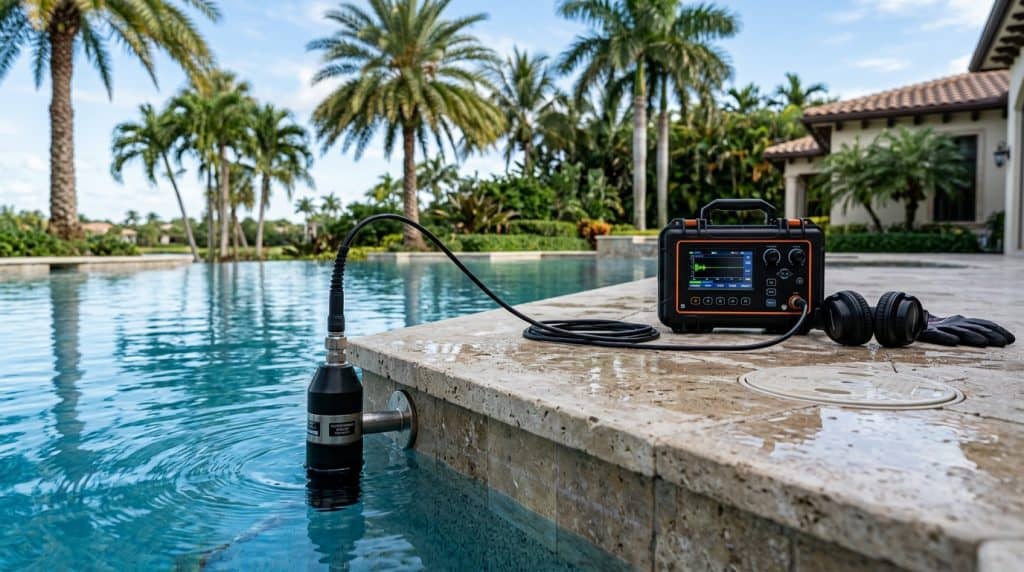
Specialists deploy sensitive electronic ground microphones, listening discs, and hydrophones (submersible underwater microphones) connected to digital acoustic amplifiers with frequency-filtering headphones. By walking along the known layout of the buried pipe while injecting a precise mixture of compressed air and water into the line, the technician listens for the distinctive bubbling, hissing, or rumbling sonic signature. The sound amplitude peaks directly above the subterranean rupture point, allowing contractors to mark a single paver for surgical excavation rather than trenching through entire patios.
Structural Dye Testing: Inspecting the Shell and Fixtures
Plumbing lines account for roughly half of all pool water loss; the remaining breaches occur through the pool vessel itself. Common structural culprits include deteriorating vinyl liners, cracked skimmer throat throats, separated perimeter tile grout, and unsealed light niche conduits. To evaluate these zones, specialists perform localized dye testing.
With the filtration pump completely shut off to eliminate water currents, the technician floats along suspected structural joints using a syringe filled with concentrated, viscous fluorescent dye. The dye is placed fractions of an inch from skimmer seals, suction drain plates, and surface cracks. If an active structural fissure is present, the escaping water current immediately draws the ribbon of dye into the crack like a miniature whirlpool, confirming the exact breach point for underwater epoxy injection or structural patching.
| Diagnostic Method | Primary Application | Equipment Utilized | Key Advantage |
|---|---|---|---|
| Pressure Testing | Suction, Return, and Main Drain Lines | Expanding Plugs & PSI Gauges | Definitively isolates which pipe is leaking |
| Acoustic Listening | Underground Buried PVC Runs | Ground Mics & Sound Amplifiers | Pins point-of-leak to within inches |
| Precision Dye Testing | Skimmer Throats, Lights, Fittings | Fluorescent Viscous Dyes | Non-destructive visual confirmation |
Connecting Diagnostics with Comprehensive Repair Solutions
Before scheduling acoustic testing, homeowners should first verify suspected water loss using the steps outlined in our guide to 5 early warning signs your pool is leaking. Performing an initial bucket test establishes baseline evaporation rates and confirms whether professional diagnostic intervention is warranted.
When structural dye testing identifies shell fissures rather than plumbing breaches, explore long-term plaster remedies in our guide on marcite vs quartz vs Pebble Tec pool resurfacing. Furthermore, underground suction leaks frequently introduce air into the circulation line, which can trigger pump damage explained in our article on why your pool pump motor makes screaming noises. Addressing subterranean hydraulic issues promptly preserves both equipment lifespan and structural stability.
Future Advancements in Hydro-Acoustic and Ultrasonic Leak Detection
The field of swimming pool diagnostic engineering continues to advance rapidly with the integration of digital hydro-acoustic telemetry, tracer gas sniffing (using helium-nitrogen mixtures), and thermal imaging cameras. These sophisticated non-destructive detection systems enable technicians across Tampa Bay to discover microscopic fissures earlier than ever before, safeguarding residential foundations against subsurface erosion and keeping Florida backyards pristine year-round.